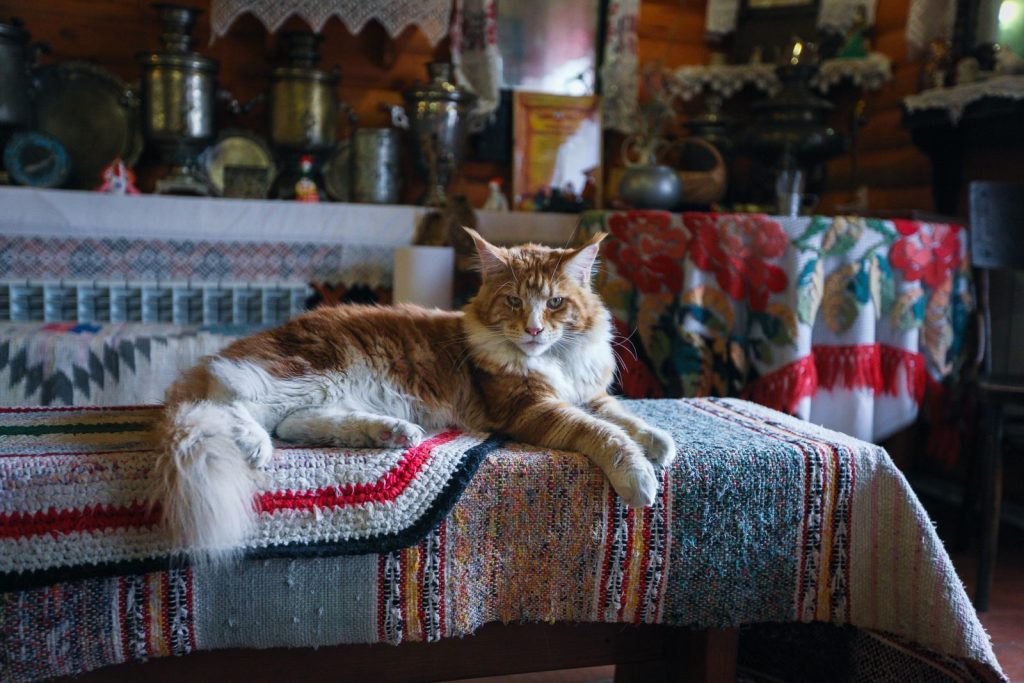

A fully coated Maine Coon can look almost unreal. The breed combines a large rectangular body, substantial bone, oversized ears, tufted paws, a shaggy coat, and an exceptionally full tail. On some cats, the longer fur around the chest and neck creates a mane-like outline, while the body coat can look woolly enough to inspire comparisons with sheep. Those descriptions are playful, but the appearance itself comes from recognizable breed traits rather than the cat literally resembling another animal in anatomy or coat type.
The exact Maine Coon pictured in the original viral-style title was not identified, so this article does not invent a name, owner, location, or backstory. Instead, it looks at the real features that make Maine Coons so visually dramatic. Breed standards emphasize their size, shaggy coat, prominent ear furnishings, long plumed tail, and sturdy build. Those traits can combine differently from cat to cat, which is why some Maine Coons appear especially lionlike, woolly, or larger than life when photographed from the right angle.
Maine Coons Are Large Cats
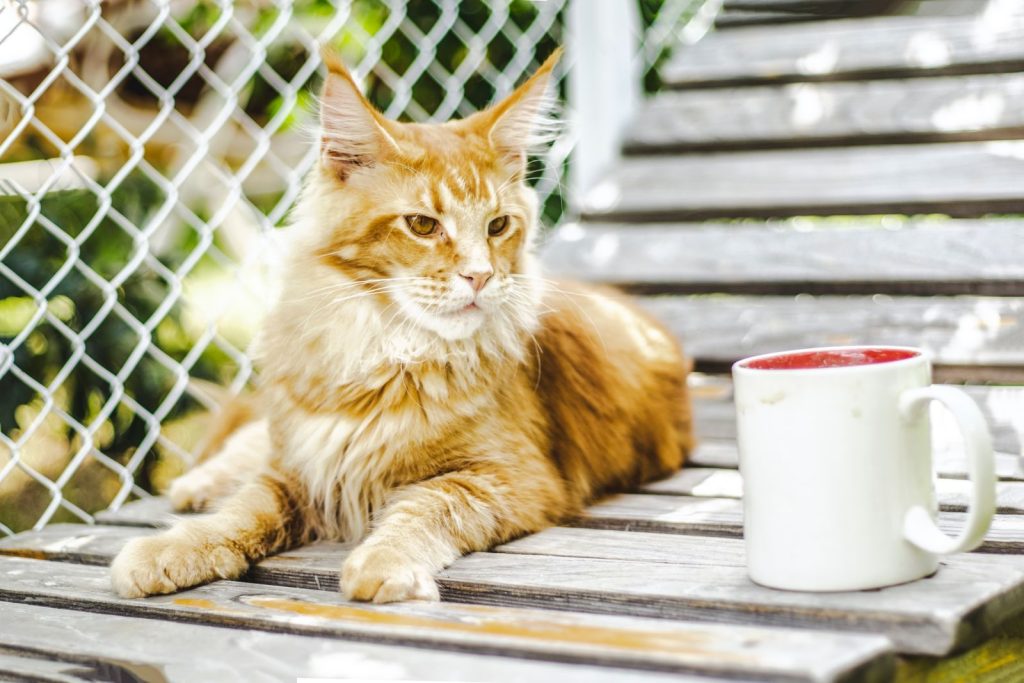
Size is a major reason Maine Coons look so imposing in photographs. The breed is built on a long, rectangular frame with substantial bone, a broad chest, and strong musculature rather than a compact body shape.
Perspective can exaggerate that size even further when a cat sits close to the camera. A large head, broad chest, and long body create a silhouette that can make ordinary furniture, laps, or doorways look surprisingly small around them. Maine Coons also mature more slowly than many smaller breeds.
Their Coats Look Shaggy

The Maine Coon coat is not uniformly long from nose to tail. Fur tends to be shorter over the shoulders and longer along the sides, stomach, and back legs, which helps create the breed’s characteristic shaggy outline.
The coat can look especially full during colder seasons or in well-coated adults, although individuals vary. The result is less like the smooth curtain of some longhaired breeds and more like a rugged, layered covering, which helps explain comparisons with wool, fleece, or winter clothing.
Neck Fur Forms a Ruff
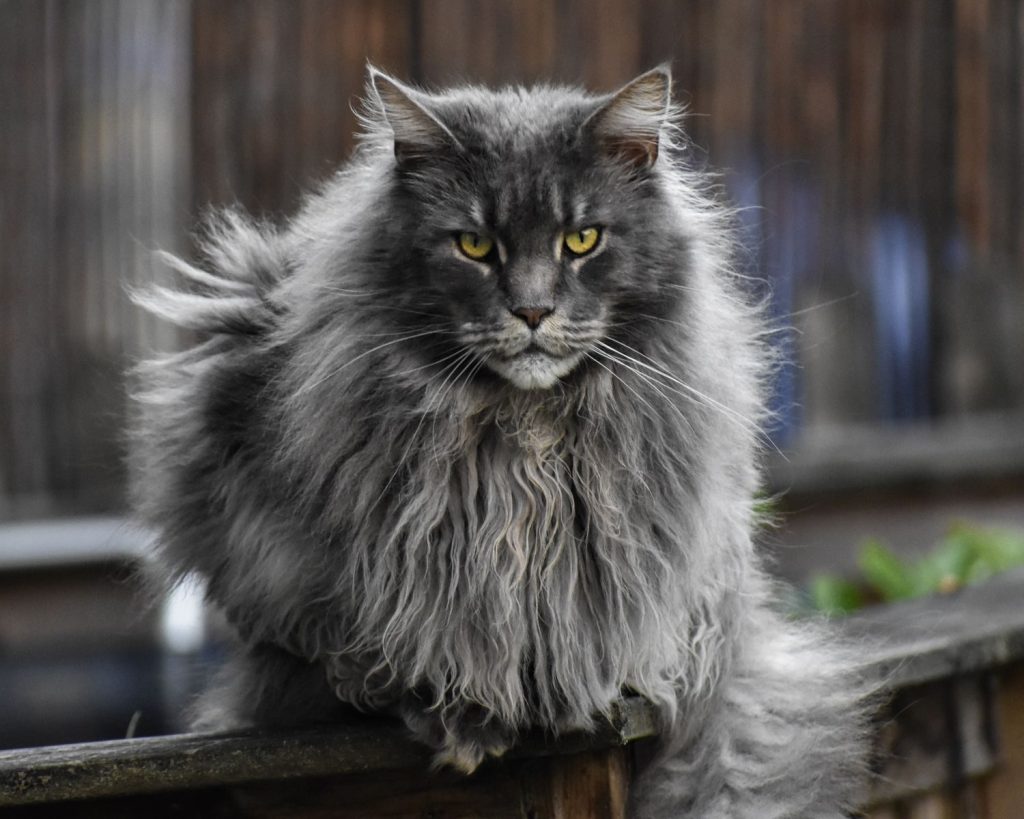
Longer fur around the front of the chest and neck can create the visual impression of a mane. Breed descriptions commonly refer to a frontal ruff, although its fullness varies among individual Maine Coons and can change with age or season.
When photographed from the front, that ruff widens the outline beneath the face and makes the head appear framed by fur. Combined with a square muzzle and large ears, the effect can look distinctly lionlike without being an actual lion-style mane.
Tails Add Lionlike Drama
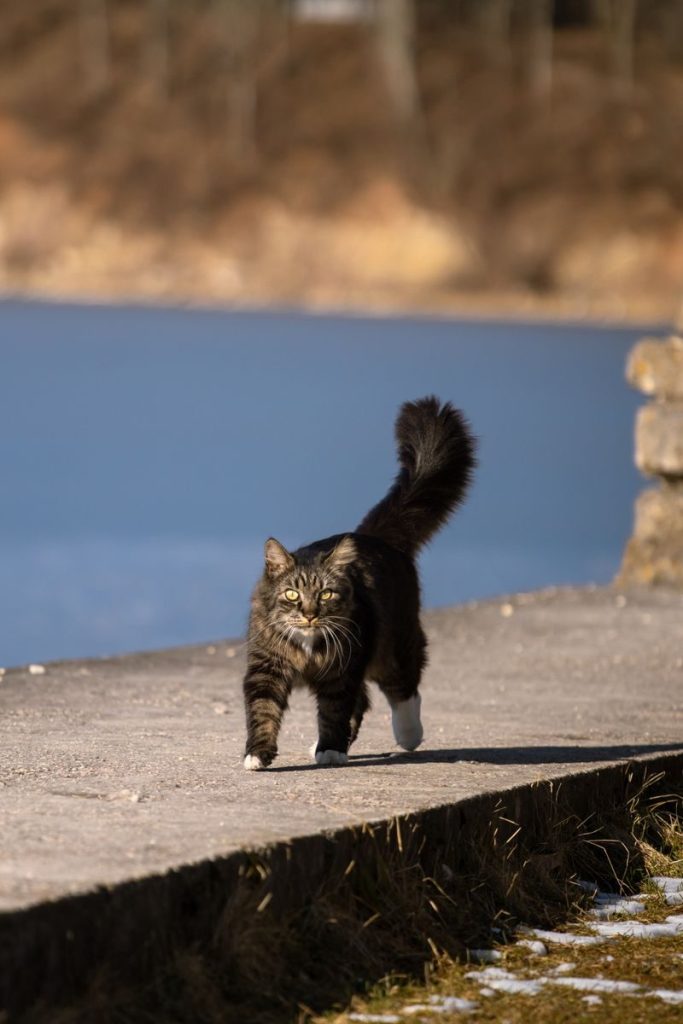
A Maine Coon’s tail is one of its most eye-catching features. It is long, heavily furnished, and often carried in a way that makes the dense fur look even larger than the underlying structure.
When the tail is raised or curled around the body, it adds dramatic volume to the cat’s silhouette. In photographs, that plume can contribute to the same grand, wild appearance people associate with storybook animals. It also visually balances the breed’s long body and substantial frame.
Ear Tufts Change the Silhouette
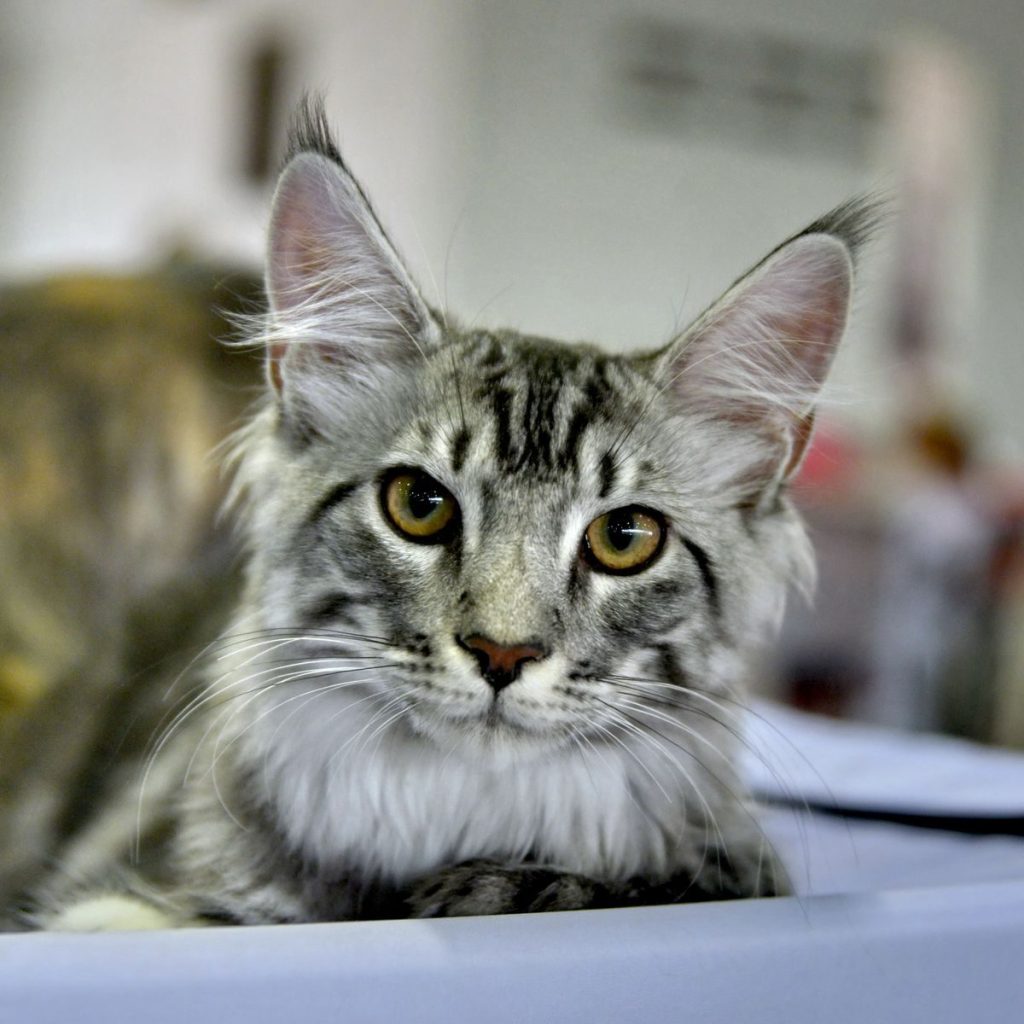
Large ears with visible furnishings and tufts give Maine Coons another exaggerated feature that photographs capture easily. Those tufts extend the outline of the head upward and outward, making the cat appear more rugged or wild.
Not every Maine Coon has identical ear furnishings, and tuft length alone does not prove breed identity. It is simply one recognized feature that can contribute to the overall appearance. Combined with a heavy coat, square muzzle, and alert expression, the ears can make the face look especially dramatic.
Big Paws Add to the Look

Maine Coons tend to have substantial feet that match their large bodies. Extra fur around and between the toes can make those paws appear even broader, especially when a heavily coated cat is sitting upright.
The effect adds to the sturdy, oversized impression associated with the breed. Large-looking paws should still be judged in proportion to the whole cat, and they are not enough on their own to identify a Maine Coon. Body shape, coat, head structure, tail, and pedigree all provide better context.
Coat Color Changes the Effect

Color and pattern can strongly change how the same Maine Coon features are perceived. Dark tabbies may emphasize facial markings and create a traditionally wild look, while pale silver, cream, or smoke coats can make the fur appear softer or more woolly.
White areas can visually enlarge the chest ruff, and strong tabby striping can draw attention to the face and body length. There is no single correct lionlike appearance. The dramatic effect comes from coat texture, markings, structure, lighting, and individual variation working together.
Grooming Keeps the Coat Healthy

A huge coat may look effortless in a photograph, but longhaired cats benefit from regular grooming. Brushing removes loose hair, helps prevent tangles, and makes it easier to notice mats or skin problems before they become uncomfortable.
Owners should pay special attention to areas where friction encourages tangles, including behind the ears, under the front legs, the belly, and the back legs. Grooming should be gentle and routine. Painful mats, irritated skin, or a sudden decline in self-grooming deserve professional attention rather than forceful brushing.
Featured Image: Photo by Nikita Belokhonov on Pexels