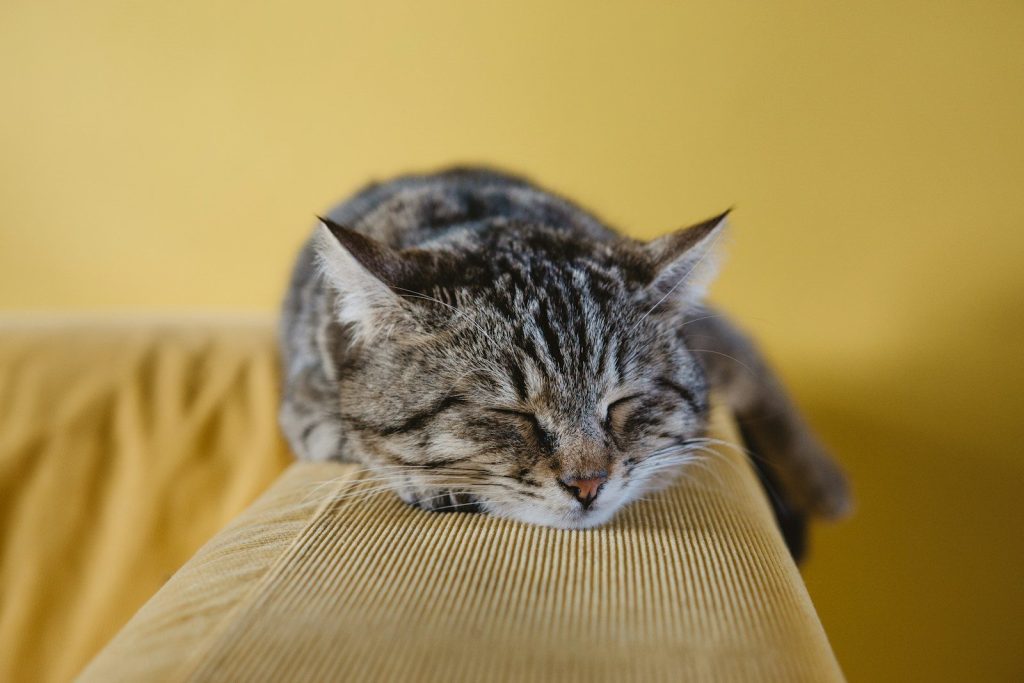

A kitten sleeping on the couch for hours can make new owners wonder whether something is wrong. In most cases, plenty of sleep is completely normal. Kittens use large amounts of energy for growing, playing, exploring, and learning about their surroundings.
A soft couch also provides warmth, comfort, familiar smells, and a secure place to rest. Owners should pay more attention to how the kitten behaves when awake. Normal sleepers should still eat, play, move comfortably, and respond normally between naps.
Kittens Need Plenty of Sleep

Kittens generally sleep more than average adult cats because their bodies are growing while they are also learning, playing, and exploring intensely when awake. Cats Protection notes that kittens are likely to sleep more because growth uses a great deal of energy and they need additional rest to recharge. The exact number of hours can vary with age, health, environment, and individual temperament. Instead of comparing one kitten with another, owners should learn the normal pattern for their own pet and pay attention when sleep suddenly increases or active periods become unusually weak or short.
Sleep Saves Energy

Cats naturally alternate periods of activity with substantial rest. Even indoor kittens retain behavioral patterns connected with stalking, chasing, climbing, and pouncing, all of which can use energy quickly. A kitten may race through the house, wrestle with a toy, eat, and then fall asleep soon afterward. That cycle is not unusual. Sleep gives the body time to recover between active periods, while growing kittens also have additional developmental demands. Owners do not need to keep a healthy kitten awake during the day in an attempt to make it sleep more at night.
The Couch Feels Comfortable
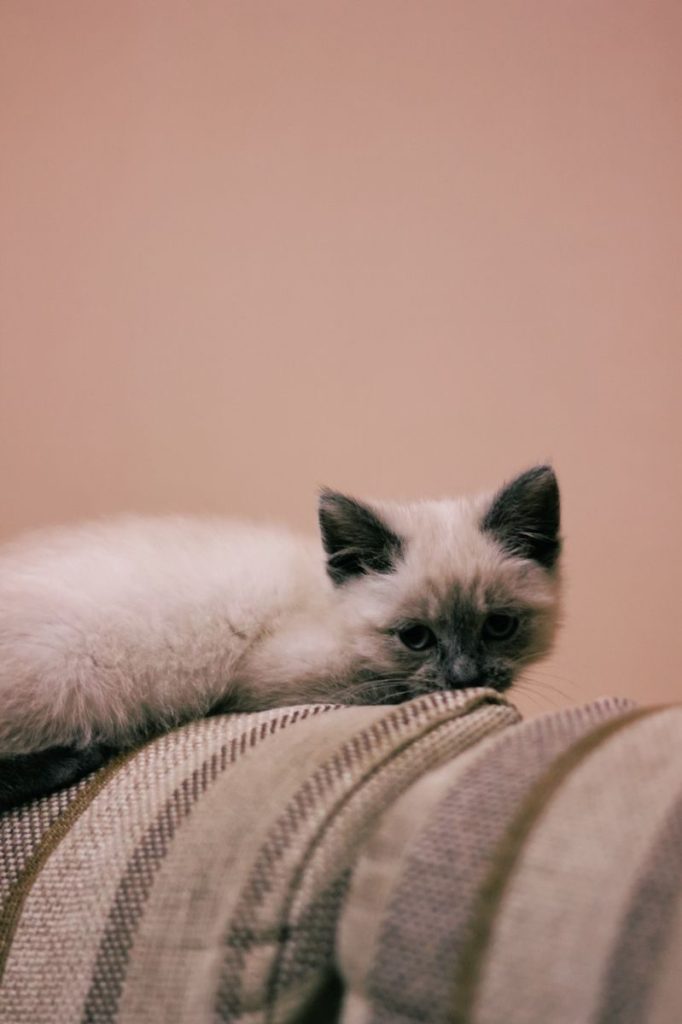
A couch can be an appealing sleeping place because it is soft, warm, slightly elevated, and covered with familiar household scents. Cats Protection notes that cats commonly choose warm, comfortable, safe places and may rotate among several favorite sleeping areas. A kitten choosing the sofa instead of a purchased cat bed is therefore not unusual or disrespectful of the expensive bed. If the sleeping location is safe, the kitten can usually be allowed to choose. Providing additional blankets, beds, boxes, or elevated resting places simply gives the animal more comfortable options around the home.
Light Sleep Looks Alert

A resting cat is not always deeply asleep. Cats may doze lightly while remaining aware of sounds and movement around them, which is why ears or tails can move even when the body appears relaxed. Cats Protection notes that cats can remain alert to their surroundings during lighter rest. A kitten may open its eyes quickly when someone enters the room and then return to sleep seconds later. This pattern is normal. Owners should avoid repeatedly testing whether the kitten is asleep by touching or startling it, because uninterrupted rest is more important than satisfying human curiosity.
Twitching Can Be Normal

During deeper sleep, a kitten may twitch its paws, whiskers, face, or mouth. Cats Protection says these small movements can occur normally during sleep and are likely connected with dreaming. Brief twitching in an otherwise relaxed kitten is therefore usually not a reason for alarm. More concerning episodes would involve prolonged stiffening, repeated uncontrolled movements, drooling, loss of awareness after waking, or difficulty returning to normal behavior. If an episode looks unusual, recording it safely for a veterinarian can be useful. Normal sleep twitching should remain brief and occur in a kitten that otherwise seems well.
Let Sleeping Kittens Rest
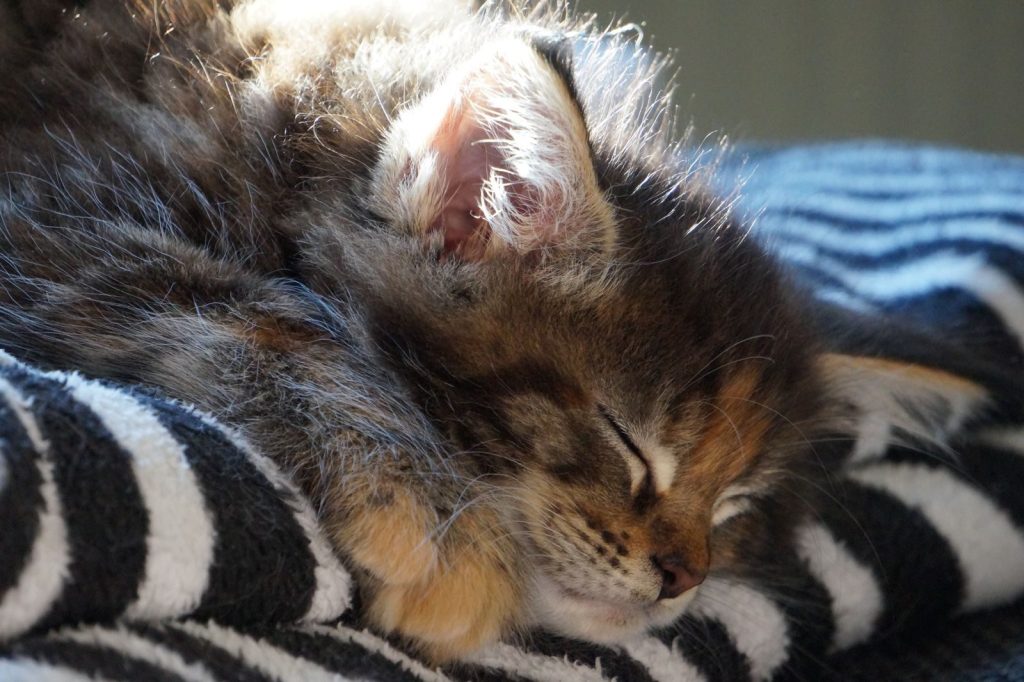
A sleeping kitten should generally be allowed to wake on its own. Cats Protection advises against disturbing cats while they sleep because some may become disoriented and react defensively when suddenly touched. Children should learn the same rule, especially when a kitten is deeply asleep under a blanket or on a cushion. Resting areas should feel safe rather than becoming places where the animal expects constant handling. Play, grooming, and cuddles can be offered when the kitten is awake and receptive. Respecting sleep helps create predictable routines and reduces unnecessary stress around resting spaces.
Check Moving Furniture

Couches can create hidden hazards when they contain reclining mechanisms, fold-out beds, or deep gaps where a small kitten can crawl unseen. Before operating moving furniture, check where the kitten is and inspect spaces beneath cushions or mechanisms if necessary. The same caution applies to blankets that completely hide a tiny animal from view. A peaceful couch nap should remain safe even when the furniture is being used by people. Household members can reduce risk simply by developing the habit of checking before sitting heavily, folding a sofa bed, or activating a recliner.
Watch for Sudden Changes
Sleeping a lot is normal for kittens, but a noticeable increase from the animal’s usual pattern can be important. Cats Protection advises contacting a veterinarian when a cat begins sleeping much more than normal or hiding more, because an underlying medical problem may be involved. Extra concern is warranted when unusual sleepiness occurs with poor appetite, weakness, vomiting, diarrhea, breathing changes, or reduced interest in play. Young kittens can become unwell quickly, so owners should not dismiss obvious lethargy as simply needing another nap. The change from normal behavior matters most.
Judge the Whole Kitten

One photograph of a sleeping kitten cannot reveal whether it is healthy. A better assessment considers appetite, growth, play, grooming, litter-box habits, breathing, movement, and how the kitten behaves after waking. An animal that sleeps for hours but wakes bright, hungry, coordinated, and eager to play is very different from one that remains weak or withdrawn. The couch may simply be the most comfortable place in the room. Owners should enjoy the peaceful nap while staying familiar with the kitten’s normal routine, because that baseline makes meaningful changes easier to recognize early.
Featured Image: Photo by Sabri Tuzcu on Unsplash