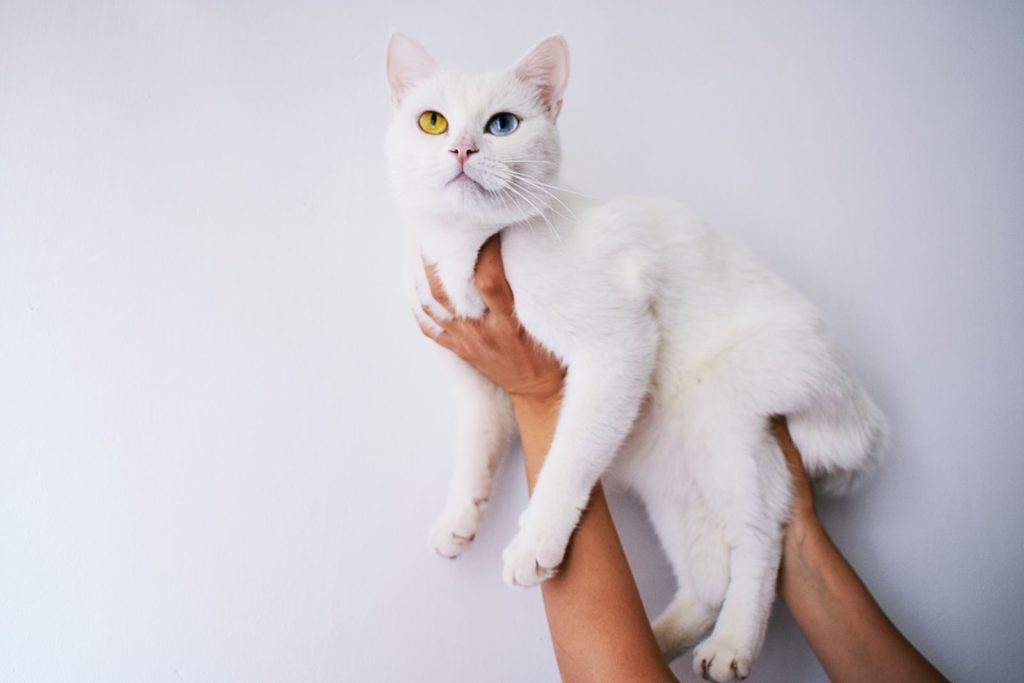

A fluffy white cat with bright blue eyes can be striking, but this combination also has a genuine connection with congenital hearing loss. Certain genes involved in white pigmentation can affect structures needed for normal hearing development.
That does not mean every blue-eyed white cat is deaf. Some hear normally, while others may have hearing loss in one or both ears. Appearance indicates an increased risk, not a diagnosis, and veterinary testing can provide a reliable answer when hearing is uncertain.
White Fur Is a Color Trait

White fur does not identify a single cat breed. Many pedigreed and mixed-breed cats can appear completely white, and different genetic mechanisms can produce that appearance. That matters because coat color alone cannot tell an owner what the cat’s personality, ancestry, or health will be. The hearing connection discussed in white cats is linked to certain pigmentation genetics rather than to one particular breed. A photograph of a fluffy white cat can therefore reveal its visible color, but it cannot establish the animal’s breed or determine whether it has inherited hearing loss.
Blue Eyes Reflect Pigment
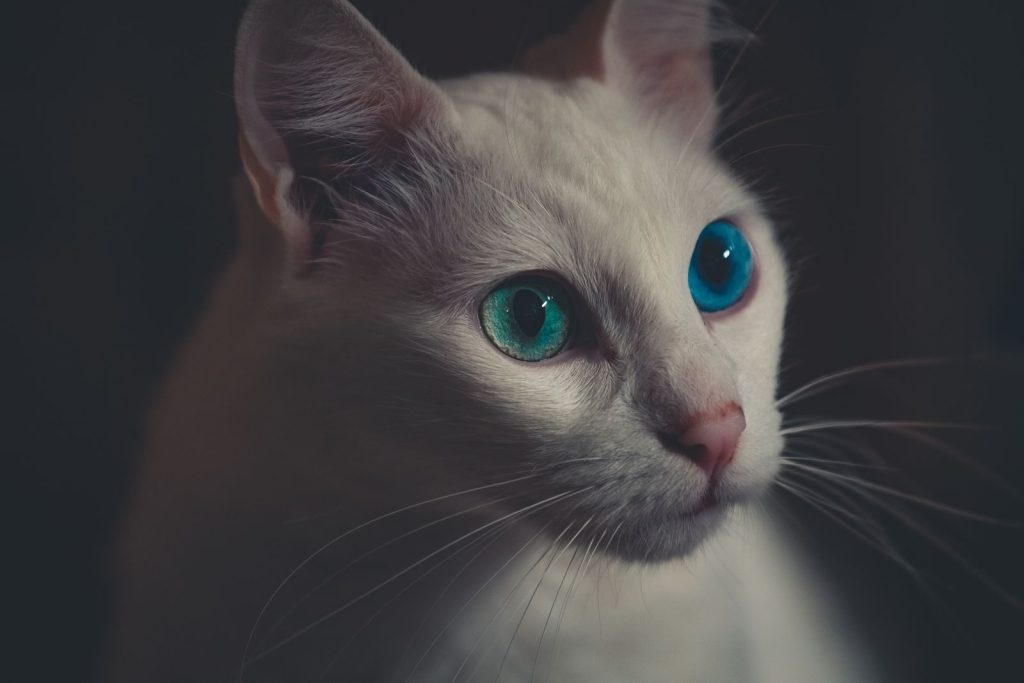
Blue eyes are associated with reduced pigment in the iris, but the eyes themselves do not cause deafness. The connection exists because some genetic processes affecting pigmentation can also influence development of structures involved in hearing. This is why white fur, blue eyes, and congenital deafness can sometimes appear together. It is more accurate to describe them as related genetic traits than to say blue eyes damage a cat’s ears. A blue-eyed white cat may hear perfectly well, while another with the same outward appearance may have partial or complete congenital hearing loss.
Deafness Risk Is Higher

Veterinary references consistently recognize an increased risk of congenital deafness in white cats with blue eyes. Merck Veterinary Manual specifically notes that cats with this appearance are sometimes, but not always, deaf. That qualification is essential because the color combination is a risk factor rather than a diagnosis. Owners should not assume a kitten cannot hear simply because its coat is white and its eyes are blue. The appropriate conclusion is that hearing deserves attention, especially if the cat fails to respond consistently to sounds or seems unusually easy to startle.
One Ear May Be Affected
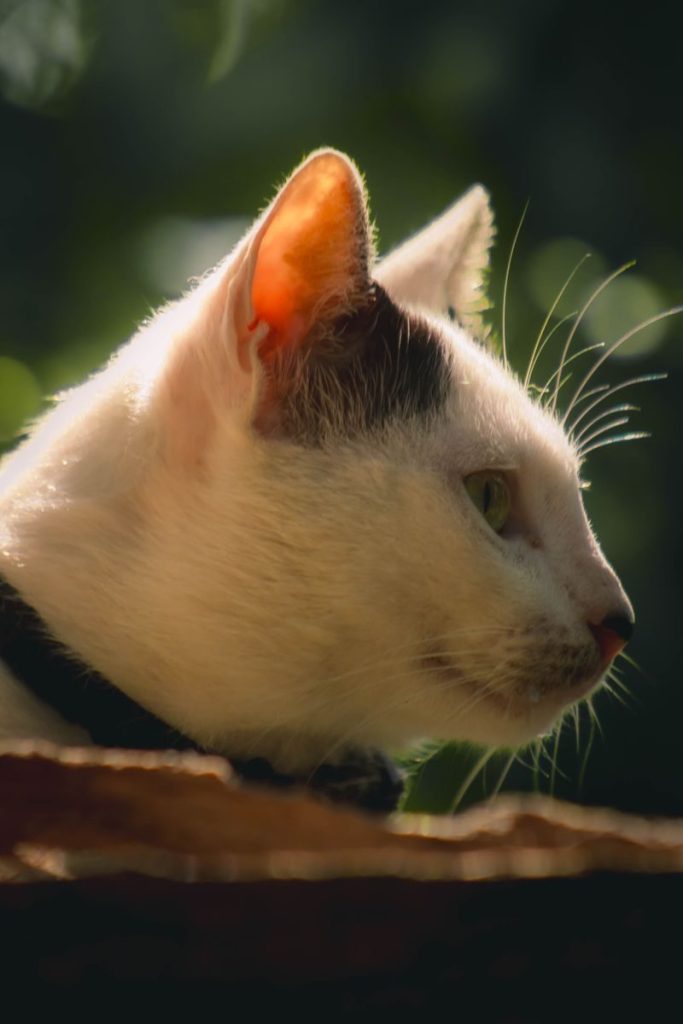
Congenital deafness can be unilateral, affecting one ear, or bilateral, affecting both ears. One-sided hearing loss is particularly easy to miss because the functioning ear still allows the cat to respond when someone speaks or an object makes noise. The animal may have more difficulty locating where a sound originated, but ordinary household behavior can still look normal. Merck notes that cats deaf in only one ear can be difficult to identify without specialized testing. That is why simple clapping or calling from behind the cat cannot reliably rule out partial deafness.
BAER Testing Checks Hearing
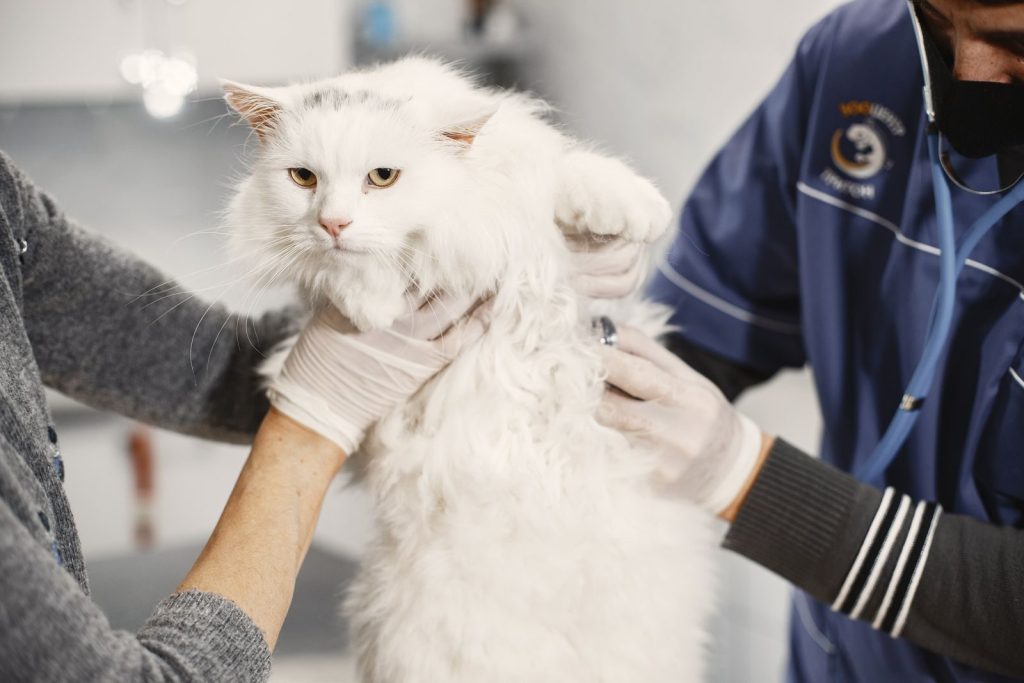
The brainstem auditory evoked response, commonly called a BAER test, can identify deafness in one or both ears by measuring the nervous system’s response to sound. Merck lists BAER testing as a method for assessing congenital hearing loss in cats. Unlike informal household tests, it does not depend on whether the cat notices vibration, air movement, another animal’s reaction, or visual cues. BAER testing can be especially useful when precise hearing status matters, including for breeding decisions or when an owner suspects that a cat responds differently depending on which side a sound comes from.
Deaf Cats Can Adapt Well

Congenital deafness does not automatically prevent a cat from living a comfortable, active life. Merck notes that many deaf or partially deaf cats adapt well. They can learn routines through sight, vibration, scent, and predictable interactions with people. Owners may use hand signals, visible movements, or gentle floor vibrations to get attention instead of relying only on voice. Approaching where the cat can see you also reduces the chance of startling it while asleep. The goal is not to treat the cat as helpless, but to make communication match the senses it actually uses.
Outdoor Safety Needs Extra Care

A deaf cat cannot hear approaching vehicles, dogs, people, or other hazards, so unrestricted outdoor access creates additional risk. Merck recommends that deaf or partially deaf cats only go outdoors on a leash, reflecting the importance of controlled access. Secure indoor living, a catio, or another enclosed outdoor space can provide stimulation without relying on hearing for safety. Identification should also be kept current in case the animal escapes. A deaf cat may not respond when called, making visual contact and secure containment more important than they would be for a cat with normal hearing.
Looks Cannot Diagnose Hearing

A white cat with blue eyes may hear normally, be deaf in one ear, or be deaf in both. No photograph can establish which situation applies. Owners should watch the individual cat rather than treating coat and eye color as a diagnosis. If hearing loss is suspected, a veterinarian can assess the ears, consider other possible causes, and recommend specialized testing when needed. Hearing can also be lost later because of infection, trauma, medications, aging, or other conditions, so not every deaf white cat was necessarily born deaf. Appearance provides a clue, not the final answer.