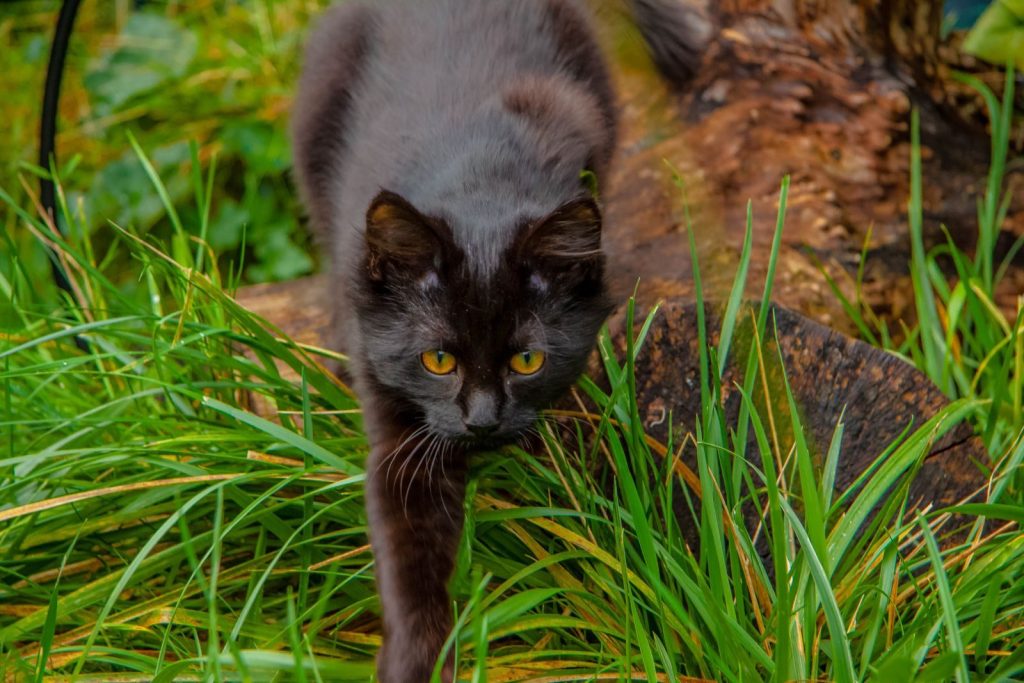

Tiny kittens crouching behind furniture or peeking over a blanket can look like miniature predators planning an extremely obvious sneak attack. The comedy has a real behavioral foundation. Kittens practice stalking, pouncing, chasing, biting, and clawing during play, and these movements overlap with parts of adult predatory behavior. A photo can freeze one stage of that sequence and make a tiny kitten look unusually serious or dramatic. The behavior is often developmentally useful and playful, however, rather than evidence that a kitten is genuinely aggressive.
Play is especially important during kittenhood because it provides physical activity, environmental exploration, and opportunities to learn social limits. Kittens raised with littermates can receive immediate feedback when a bite or swat becomes too rough because another kitten may stop playing or respond. Humans can support the same developmental period by providing safe toys, avoiding hand-wrestling, and giving kittens frequent chances to chase and pounce appropriately. The resulting “ambushes” may never be very sneaky, but they are often part of normal feline play.
Stalking Starts During Play

Kittens commonly lower their bodies, watch a target, creep forward, and then rush or pounce. These movements resemble parts of hunting behavior, even when the target is only a toy, sibling, paper ball, or moving piece of fabric.
The serious expression can make the scene look aggressive, but context matters. Loose, energetic play with pauses and re-engagement differs from a fearful or defensive encounter. Watch the whole interaction rather than judging a kitten from one dramatic pose. Playful kittens also tend to return willingly to the game.
Littermates Teach Bite Control
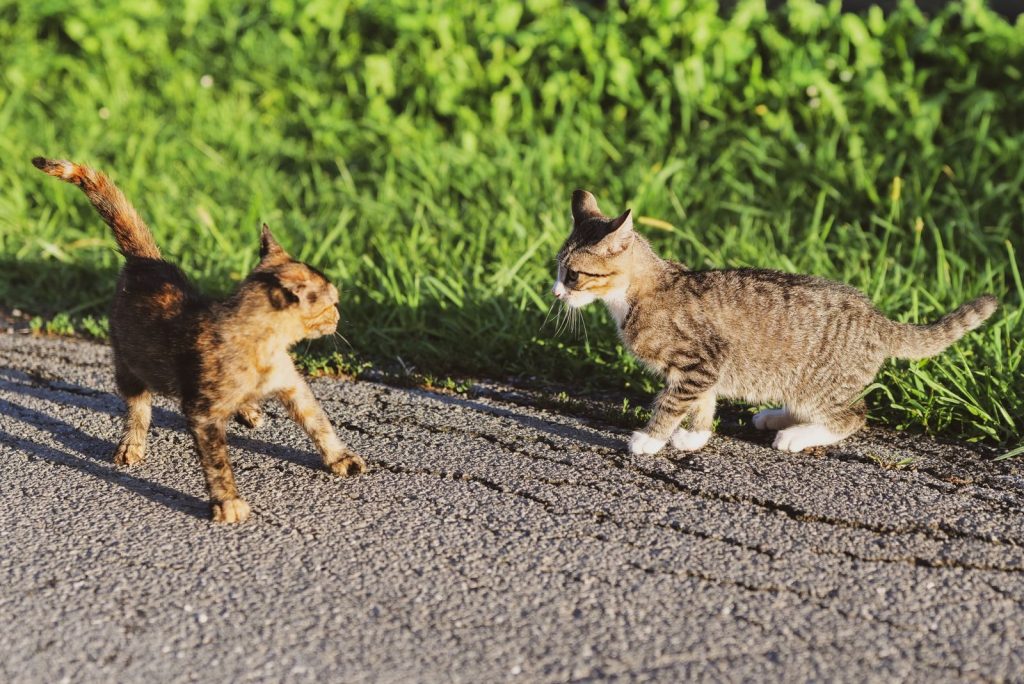
Play with littermates gives kittens opportunities to learn that teeth and claws have consequences. When one kitten bites too hard, the other may pull away, protest, or end the interaction, providing immediate social feedback.
Kittens raised without those experiences may need especially consistent human guidance during play. People should avoid encouraging hard biting with bare hands. Toys provide a safer target and reduce the chance that normal play develops into painful attacks on skin. That lesson becomes increasingly important as kittens grow stronger.
Crouching Prepares the Pounce

A kitten may flatten its body close to the floor before launching forward. The crouch lowers the body and allows the hind legs to prepare for a quick burst of movement toward an interesting target.
In a photograph, this posture can look hilariously secretive because the kitten often remains fully visible. The important point is that crouching can be part of play or hunting-style focus, so surrounding body language and context determine its meaning. The target and surrounding situation provide essential context.
Wiggling Prepares the Jump
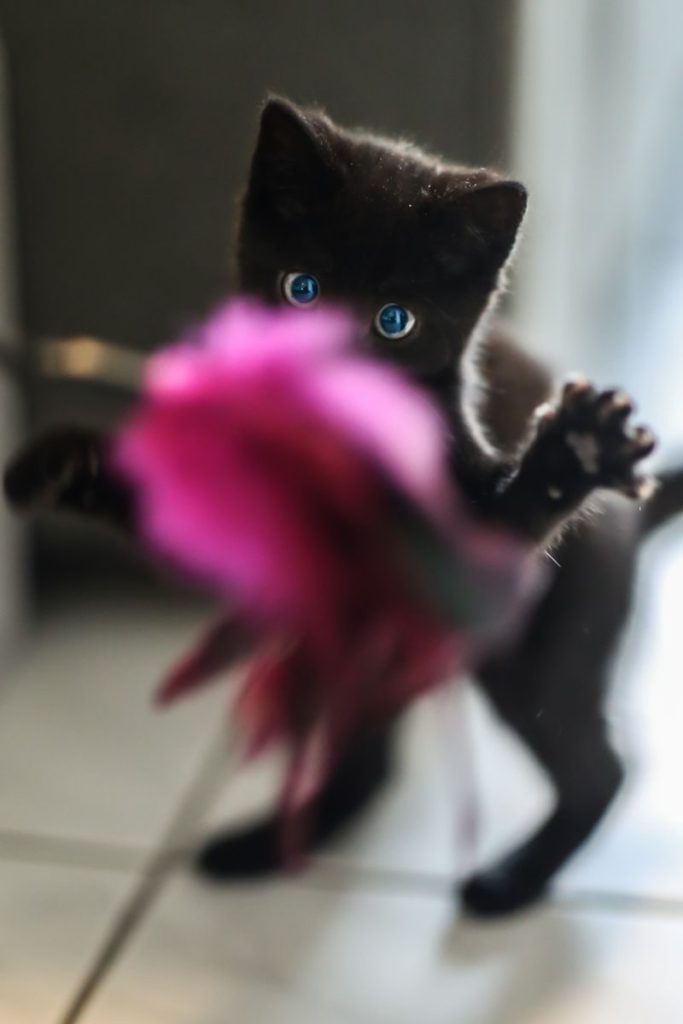
Many cats perform a small rear-end wiggle before pouncing. The movement is easy to notice in playful kittens and often appears immediately before the hind legs push the body forward toward a toy or other target.
The exact mechanics can vary, so it is better not to assign a dramatic mental explanation. What owners can safely recognize is the sequence: attention, crouching, preparation, then rapid movement. It is a familiar part of energetic feline play. The behavior is especially noticeable during focused play.
Moving Toys Work Best

Toys that move unpredictably can encourage stalking, chasing, and pouncing more effectively than objects that remain completely still. Wand toys are useful because a person can control the movement while keeping teeth and claws away from hands.
Change direction, pause occasionally, and let the kitten catch the toy sometimes. Constantly keeping it out of reach can become frustrating. Interactive play works best when the kitten gets opportunities to pursue, grab, release, and begin again. That success can help keep the game satisfying.
Hands Should Stay Out
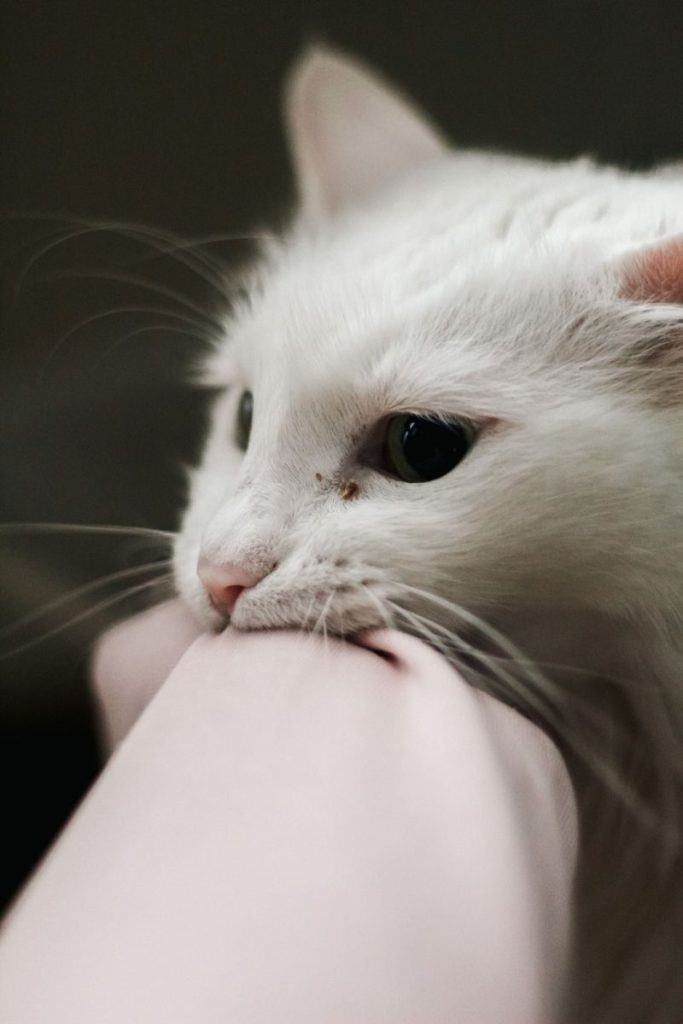
A kitten attacking fingers may look harmless because the bites and scratches are small at first. Encouraging that game teaches the kitten that human skin is an acceptable target during hunting-style play, which becomes less enjoyable as it grows.
Redirect pouncing toward toys before rough contact becomes a routine habit. Avoid hitting or frightening the kitten after a bite. Consistent redirection and appropriate play opportunities are safer ways to shape how the kitten uses its energy. Everyone handling the kitten should use the same approach.
Short Sessions Still Count

A kitten may chase intensely for a few minutes, stop, and then become interested again when a different toy appears. A pause does not always mean the kitten has finished playing for the day.
Several manageable play sessions can fit naturally around a kitten’s sleep and feeding routine. Watch for fatigue or overstimulation rather than forcing a fixed duration. Healthy play should remain voluntary, safe, and suited to the kitten’s age and physical ability. Frequent opportunities can be more useful than one marathon session.
Safe Play Builds Skills
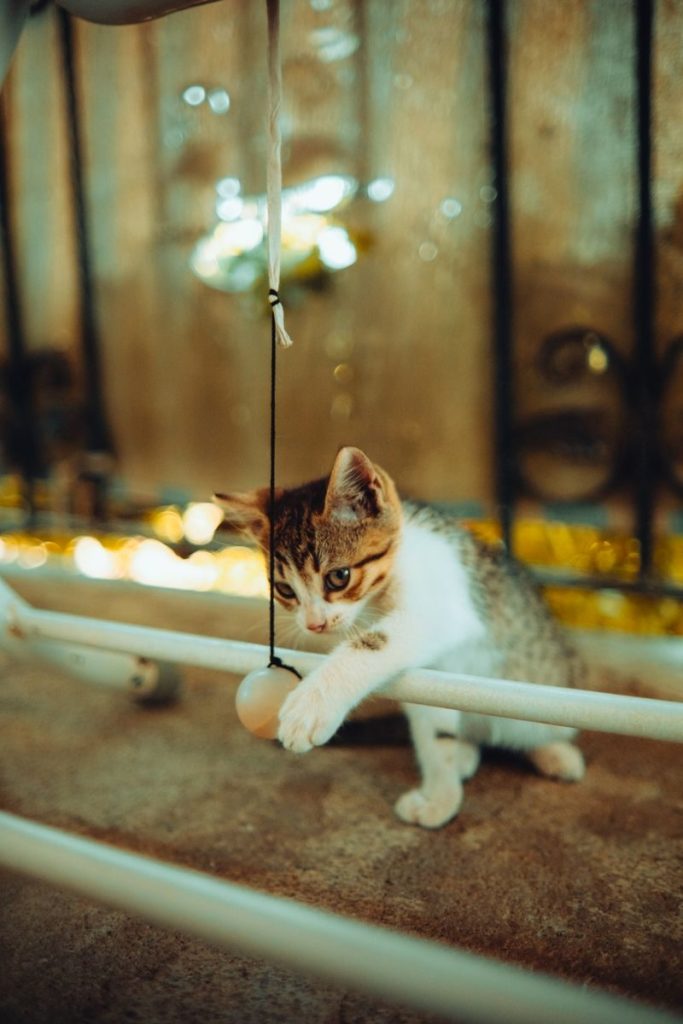
Appropriate play helps kittens practice coordination, balance, timing, chasing, grabbing, and social interaction. It also gives them an acceptable way to express behaviors that might otherwise be directed toward ankles, hands, cords, or fragile household objects.
Provide varied toys, climbing opportunities, scratching surfaces, and safe spaces for rest. Supervise items that can entangle or be swallowed. The funniest “sneak attacks” are the ones that happen in an environment designed to keep both kittens and people safe. Good play supports both enrichment and household harmony.
Featured Image: Photo by Alice The Ladybug on Pexels