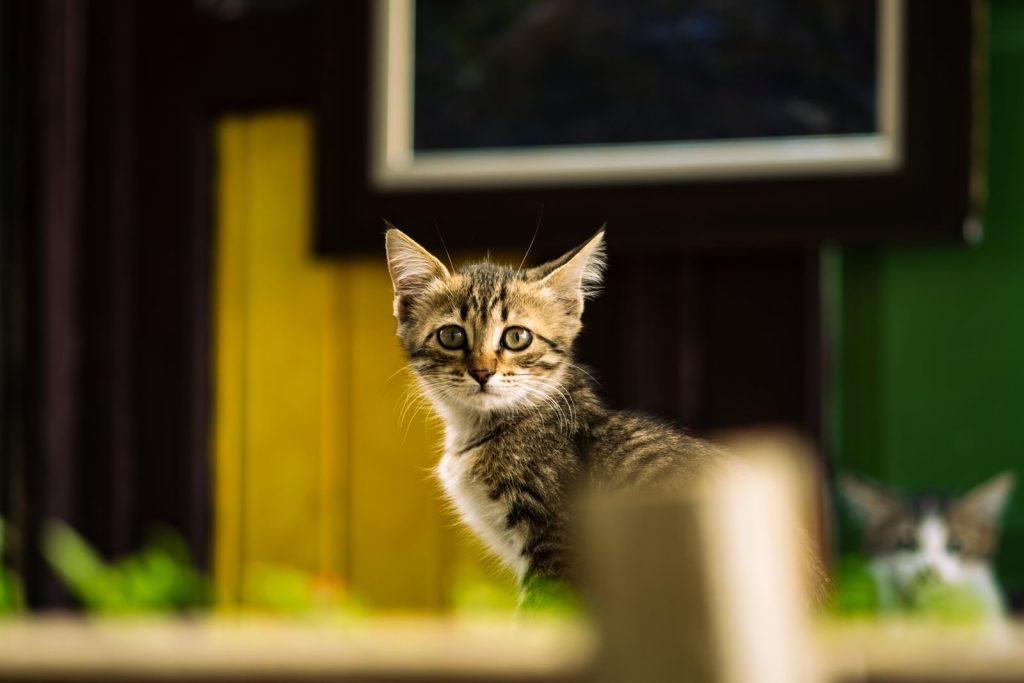

When a cat suddenly freezes and stares at an empty corner, people sometimes joke that it has detected a ghost or something humans cannot see. There is no need to reach for a supernatural explanation. Cats experience the same environment through sensory systems that differ from ours in important ways. They can hear higher-frequency sounds, rely heavily on smell, see better than people in low light, and use sensitive whiskers to gather information close to the face. A seemingly empty room may contain plenty of feline-relevant signals.
A cat that turns toward a wall may be reacting to a faint scratch, insect movement, airflow, scent, vibration, or high-pitched noise that people have not noticed. Veterinary references note that some feline senses are considerably more sensitive than human senses, while research on hearing has documented a much broader upper-frequency range in cats. Those abilities do not mean every odd reaction is normal, however. Repeated staring, disorientation, sudden behavior change, balance problems, or unusual responsiveness can also justify a veterinary examination.
Cats Hear Higher Frequencies

Cats can detect much higher-pitched sounds than humans, including frequencies above the usual human hearing range. That means a cat may react to squeaks, electronic noises, or small-animal sounds that people in the same room cannot hear.
A sudden head turn toward an apparently silent wall can therefore have an ordinary explanation. The sound may be real even when humans miss it. Hearing ability varies among individuals, and age or ear disease can reduce sensitivity. Their hearing can make a quiet room surprisingly busy.
Smell Carries Hidden Information
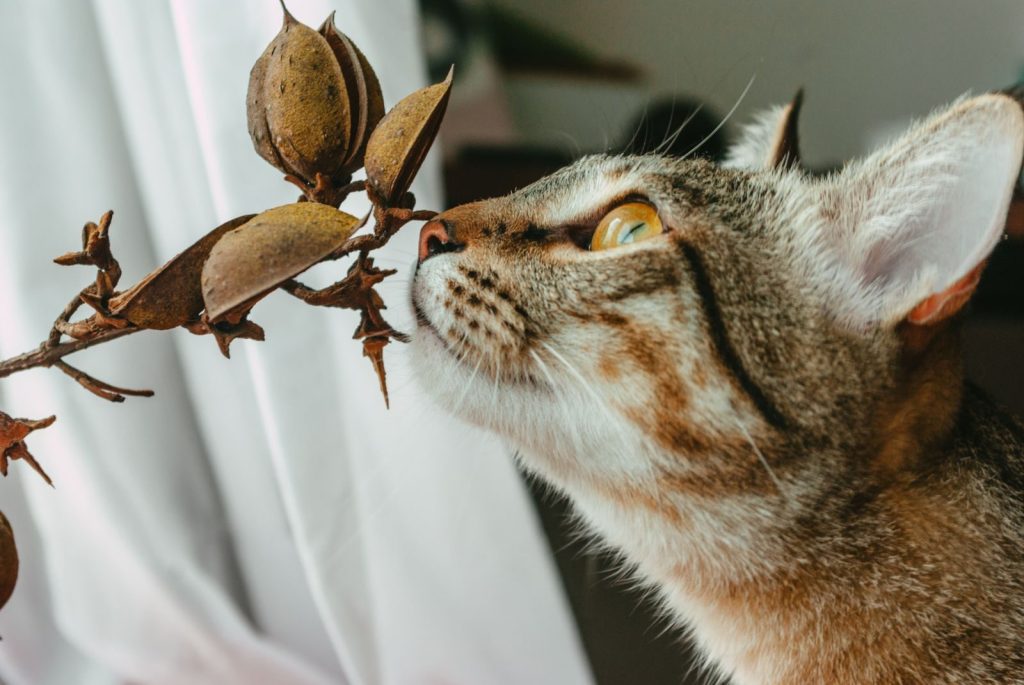
Smell plays a major role in how cats investigate their surroundings and communicate. Odors left by people, other animals, food, cleaning products, outdoor air, or scent marks can provide information long after the original source has moved away.
Humans may see an empty doorway while a cat is investigating a scent trail. Sniffing, cheek rubbing, or prolonged interest in one location does not prove anything mysterious. The cat may simply be processing chemical information that people barely notice. For a cat, that invisible scent trail may be obvious.
Low Light Favors Cat Vision
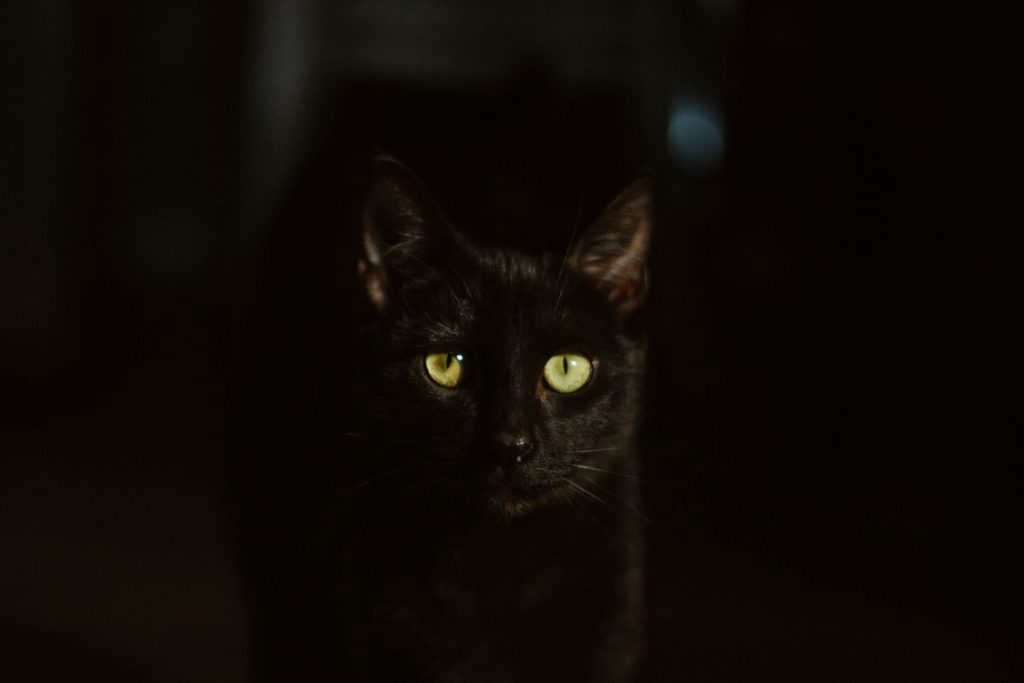
Cats are well adapted to seeing in dim conditions, although they cannot see in complete darkness. Their eyes gather available light efficiently, helping them notice movement in low-light environments where human vision becomes much less useful.
A tiny insect moving near a curtain or a subtle shadow across the floor may therefore capture a cat’s attention first. Better low-light performance does not mean cats see invisible objects; it means they can use limited light differently from us. Available light is still necessary for feline vision.
Whiskers Detect Nearby Changes
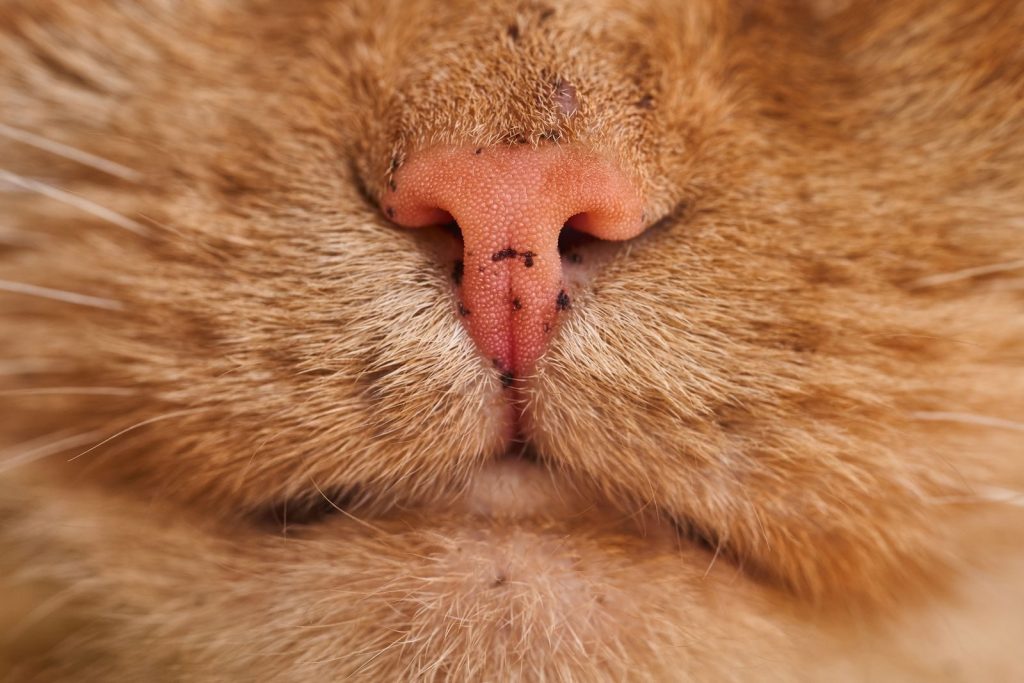
Whiskers are specialized sensory hairs that help cats gather information close to the face. They can respond to contact and subtle changes around nearby objects, supporting navigation when something is too close for clear visual focus.
Air movement around furniture, narrow gaps, or objects can also provide useful sensory cues. That is one reason whiskers should never be trimmed for cosmetic purposes. They are functional structures connected to the cat’s sensory system, not decorative fur. Protecting them supports normal sensory exploration.
Tiny Movements Grab Attention

Cats are highly responsive to movement, an ability closely connected with predatory behavior. A nearly invisible insect, shifting reflection, dangling thread, or movement behind furniture may hold a cat’s attention even when a person sees nothing unusual.
Before assuming the cat is staring at “nothing,” watch the area carefully from different angles. Small prey-like movement can be difficult for humans to notice. The cat’s fixed gaze may simply reflect intense visual tracking of a very small target. Cats can remain focused on such movement for surprisingly long periods.
Ears Pinpoint Faint Sounds
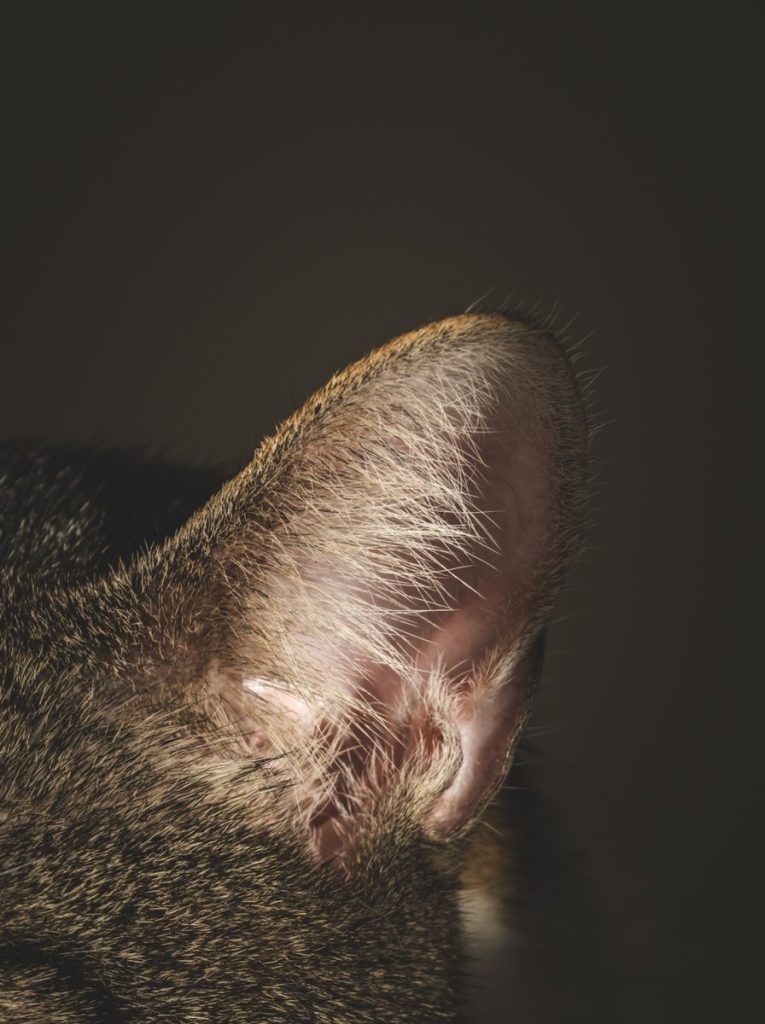
A cat can rotate its outer ears toward a sound source, helping it collect and localize noises. When a cat suddenly points both ears toward a ceiling, wall, or doorway, hearing may be driving the reaction before anything becomes visible.
Homes contain many subtle sound sources, including pipes, appliances, insects, rodents, neighbors, and electronics. A cat’s response does not reveal exactly what produced the sound, but the ear position can show that the animal is actively listening. Watching the ears can reveal where attention is directed.
Airflow Can Trigger Reactions

Drafts moving under doors, through vents, or around furniture can carry scents and create subtle changes near a cat’s face and whiskers. Curtains, hanging objects, and loose materials may also move slightly before a person notices the airflow.
Those tiny environmental changes can produce sudden orientation, sniffing, or stalking behavior. Checking for an open window, vent, insect, or moving object is more useful than assuming the cat has detected something supernatural that humans cannot perceive. Ordinary environmental clues often explain these sudden reactions.
Strange Behavior Can Need Care
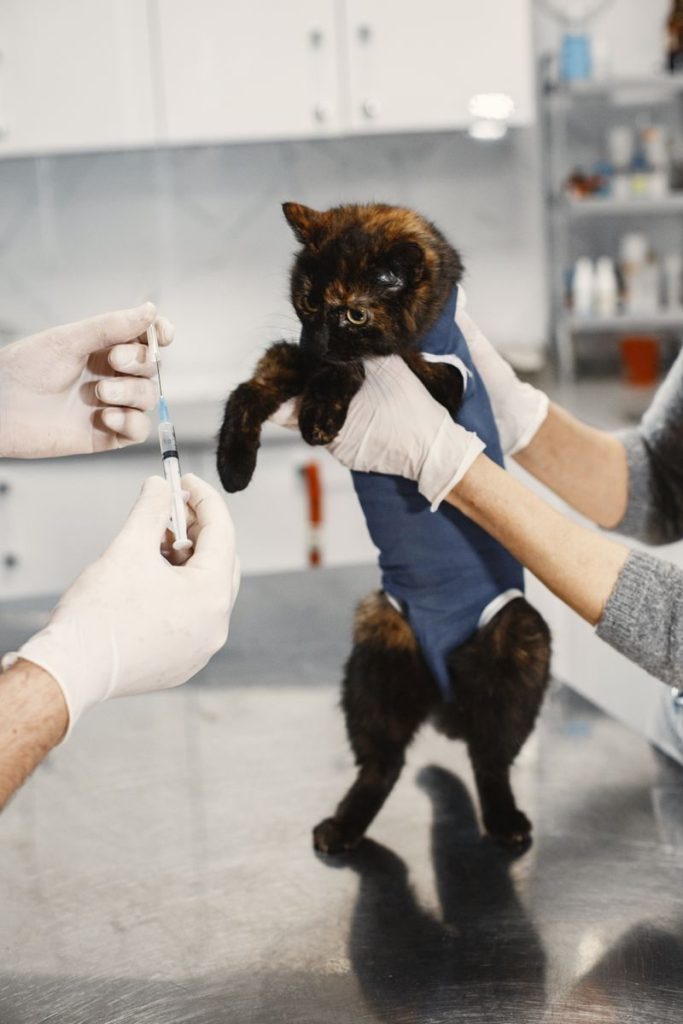
An occasional intense stare is often easy to explain through normal sensory attention. Concern rises when the behavior is new, repetitive, or accompanied by disorientation, circling, weakness, balance problems, seizures, vision changes, or other abnormal signs.
Those situations should not be diagnosed from a video or social-media clip. A veterinarian can evaluate whether pain, eye disease, hearing changes, neurological problems, or another medical issue could be involved and advise on appropriate next steps. Prompt assessment is especially important when other symptoms appear.
Featured Image: Photo by Kaan Keskin on Pexels