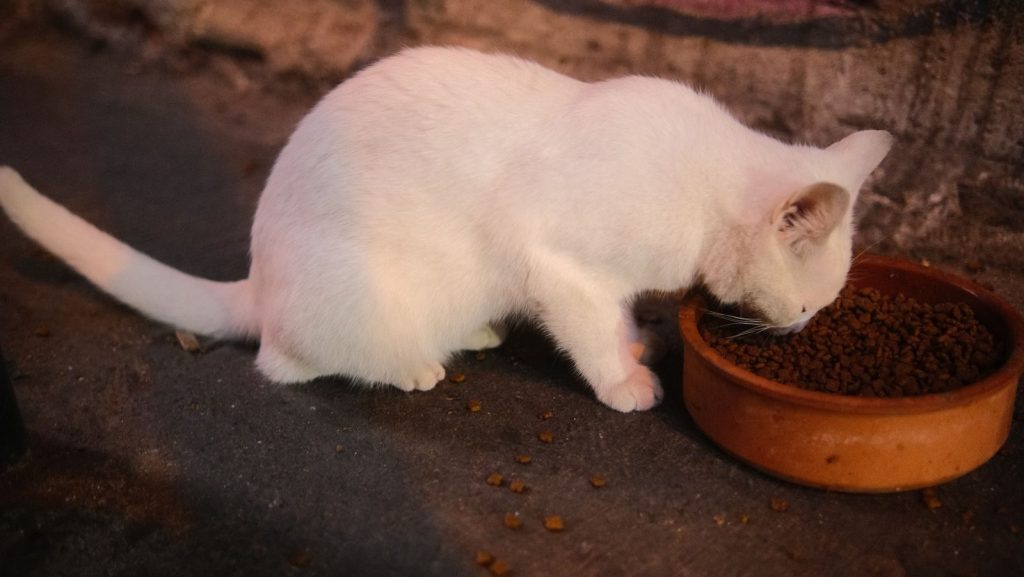

A cat that vomits yellow fluid early in the morning but seems normal after eating may have gone too long with an empty stomach.
One possible explanation is bilious vomiting syndrome, but it is considered rare in cats. Repeated vomiting should still be discussed with a veterinarian.
An Empty Stomach Can Matter

Cats can vomit bile or stomach acid after their stomach has remained empty for a long period. Bile is usually yellow-green, so empty-stomach vomiting may appear as yellow or greenish liquid rather than recognizable food.
Morning Timing Is a Clue

Bilious vomiting syndrome typically causes vomiting overnight or first thing in the morning, particularly after a long fast. A cat affected by it may otherwise continue eating, drinking, playing and behaving normally.
Eating May End the Episode
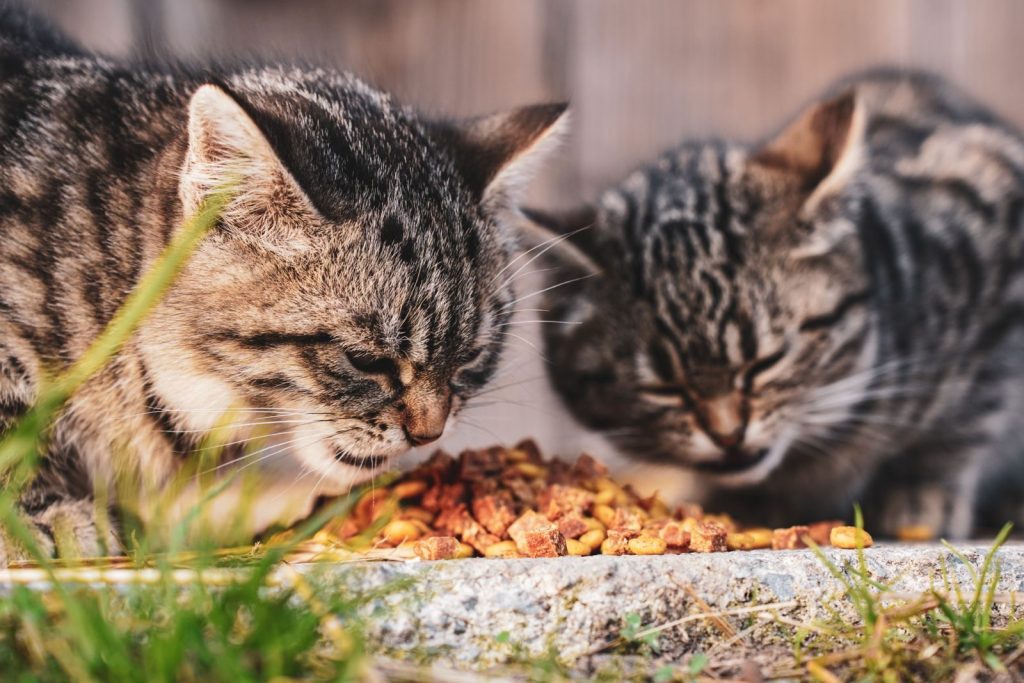
If the irritation is associated with an empty stomach, eating may stop that particular episode because food restarts digestive activity. However, improvement after breakfast does not prove that bilious vomiting syndrome is the cause.
A Bedtime Snack May Help

Veterinary guidance notes that feeding a small meal shortly before bedtime can sometimes help cats with bilious vomiting syndrome by reducing the length of the overnight fast.
Smaller Meals Can Be Useful

Instead of increasing the cat’s total daily calories, the same amount of food can be divided into several smaller meals. PetMD suggests three to six small meals daily for cats being managed for bilious vomiting syndrome.
Other Illnesses Can Look Similar

Morning vomiting can also occur with gastrointestinal disease and other medical problems. PetMD notes that bilious vomiting syndrome in cats can resemble persistent vomiting caused by other diseases, so diagnosis should not be based on timing alone.
Track What Actually Happens

Record when vomiting occurs, what it looks like, what the cat ate and whether appetite, weight or behavior changes. A clear pattern can provide useful information when a veterinarian investigates recurrent episodes.
Know When It Is Urgent
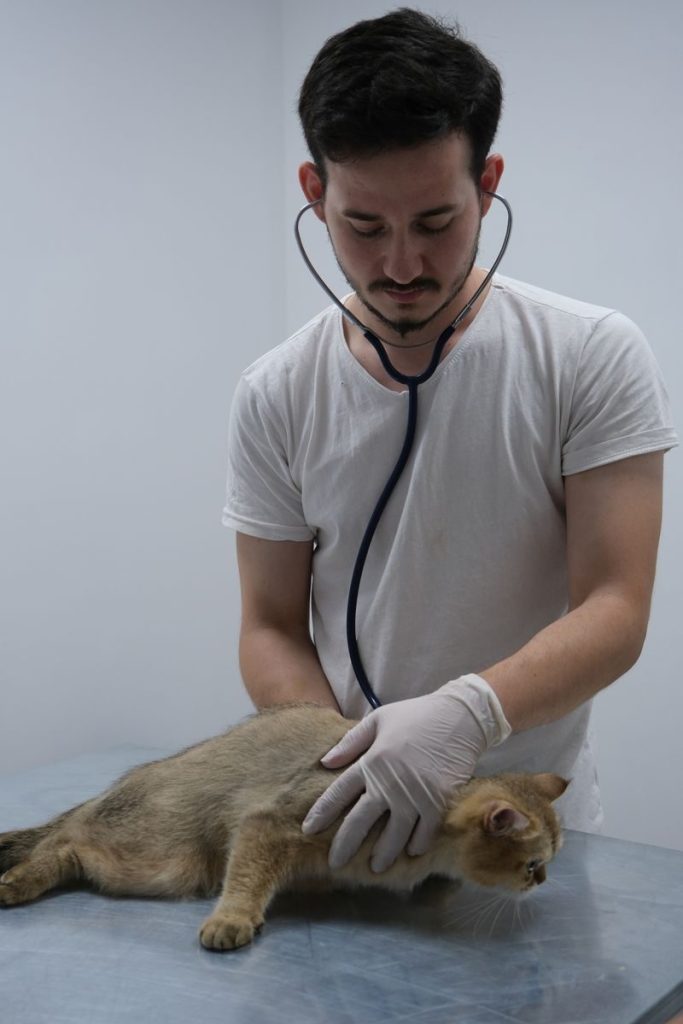
Seek prompt veterinary care if a vomiting cat becomes weak or lethargic, stops eating, or vomits repeatedly within a short period. Those signs are not something to manage simply by adding a nighttime snack.
Featured Image: Photo by Eyüpcan Timur on Pexels