
A cat’s stare can feel strangely intense because feline communication depends heavily on posture, eyes, ears, tail position, and movement rather than words. A fixed gaze does not have one universal meaning. A cat may be tracking motion, anticipating food, watching a person, assessing another animal, or simply focusing on something interesting. The useful question is not only, “Why is my cat staring?” but also, “What is the rest of the cat’s body doing at the same time?” Context matters every time.
Eye contact becomes easier to interpret when it is read as part of a complete body-language picture. Soft eyes and slow blinking can appear during relaxed social interactions, while wide eyes, dilated pupils, flattened ears, tension, or rapid tail movement can suggest arousal, uncertainty, fear, or conflict. Lighting also changes pupil size, so pupils alone are never a perfect emotional meter. Sudden or persistent eye changes, especially with squinting, discharge, unequal pupils, or apparent vision trouble, deserve veterinary attention promptly.
Staring Can Mean Focus
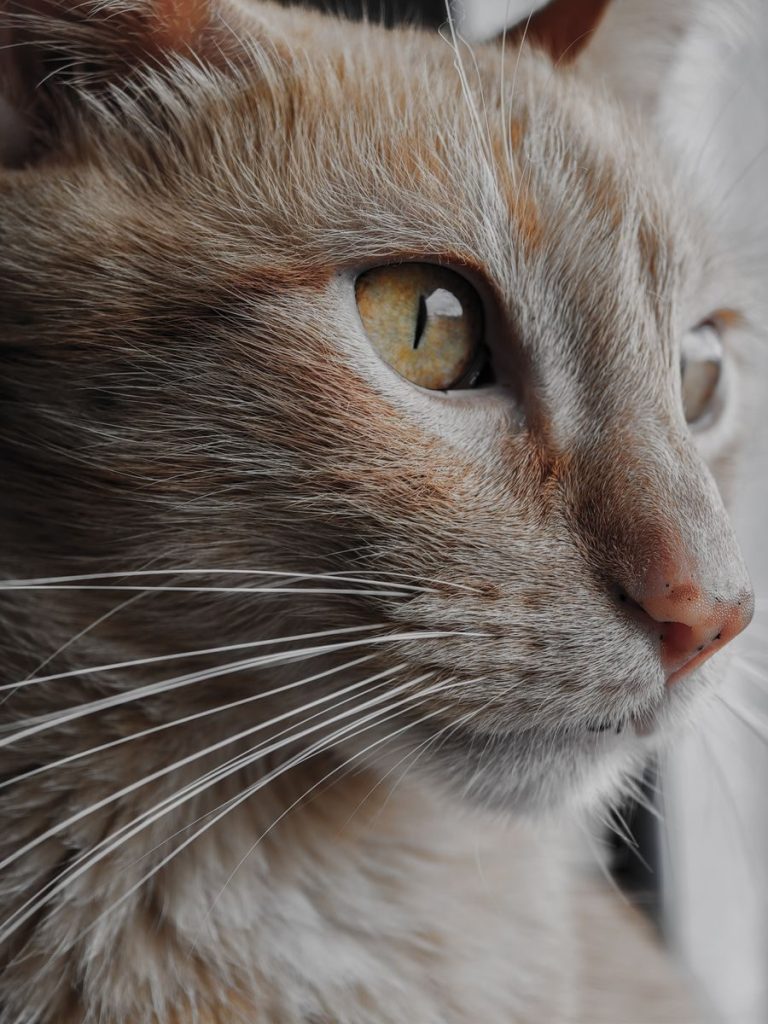
Cats are skilled at tracking tiny movements, so an unwavering stare may simply mean something has captured their attention. A bird outside, an insect on the wall, a dangling toy, food preparation, or a person moving across the room can all produce intense watching.
If the cat’s body remains loose, the ears are neutral, and no warning signs appear, concentration is often the simplest explanation. Context matters because the same fixed gaze can mean something very different when paired with crouching, flattened ears, growling, or a tense tail.
Slow Blinks Can Signal Ease
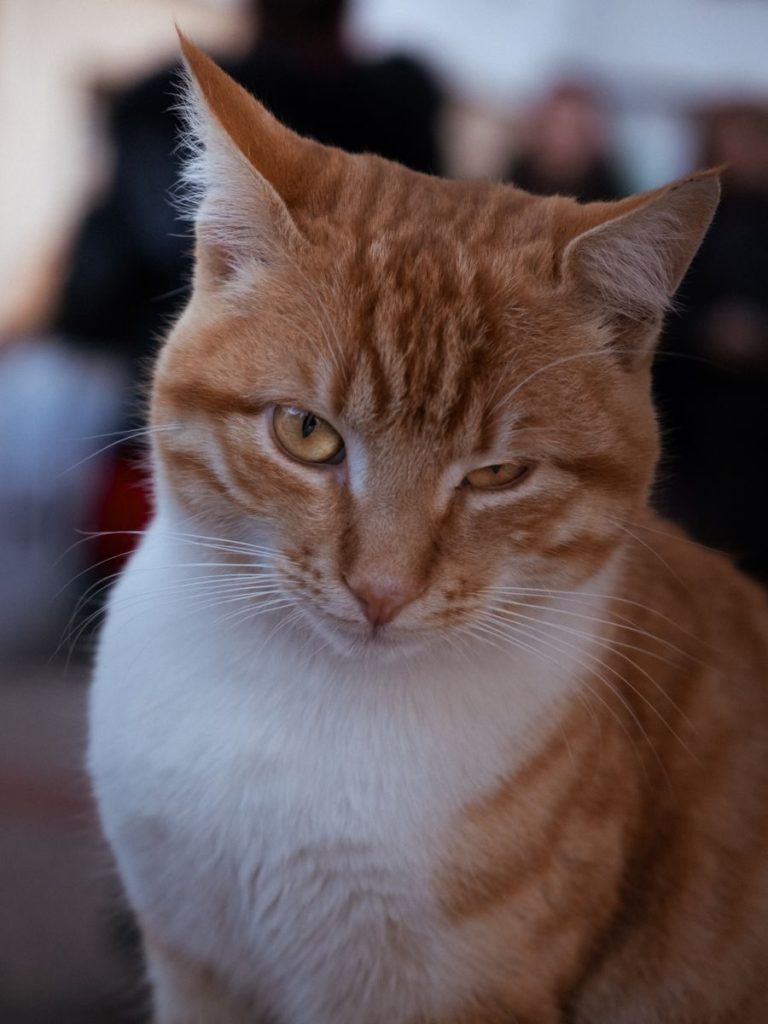
A slow blink looks very different from a hard, fixed stare. Cats may partly close their eyes and blink slowly during relaxed social interactions, especially when they feel comfortable enough to remain near a familiar person without watching every movement.
Owners can respond by softening their own gaze and blinking slowly rather than staring directly. A slow blink does not prove affection on its own, but when it appears with relaxed posture, neutral ears, and voluntary closeness, it generally fits a calm and nonthreatening interaction.
Wide Pupils Need Context
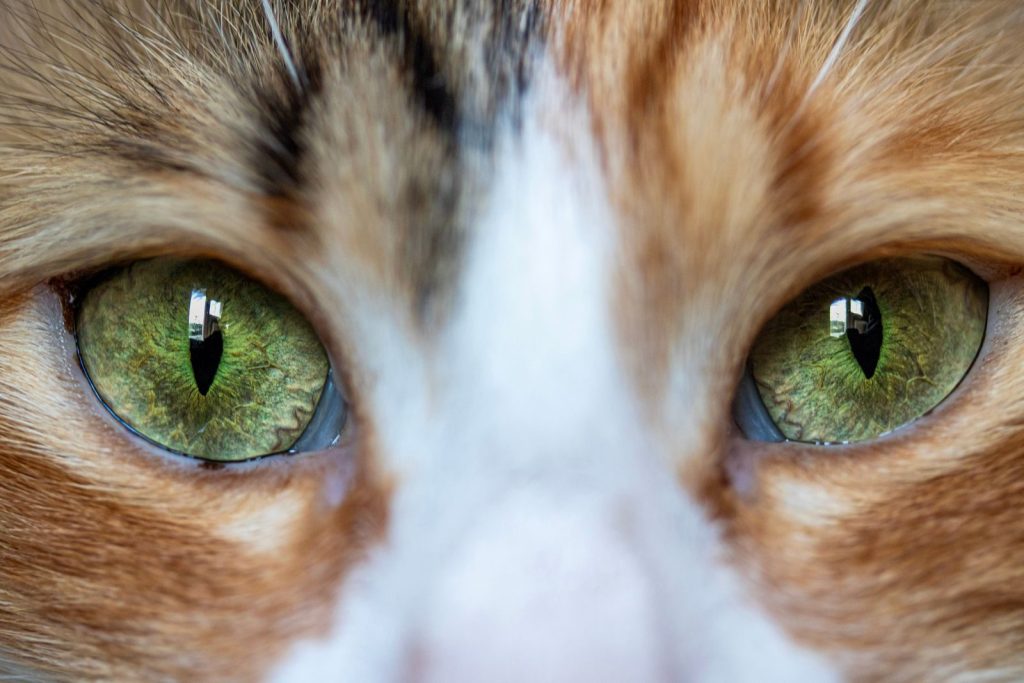
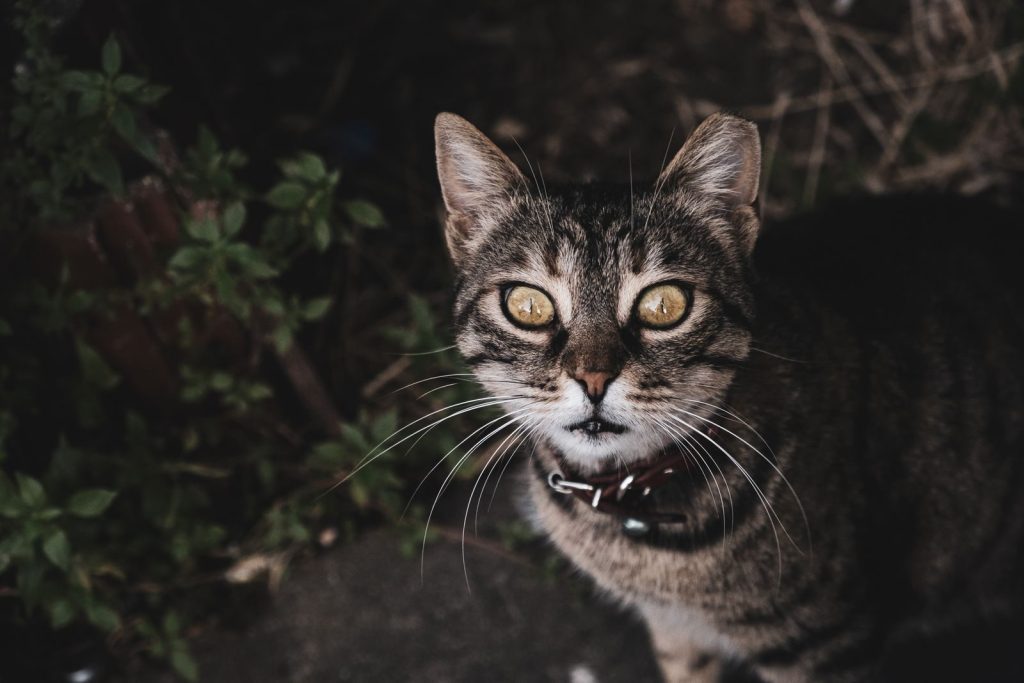
Large pupils can make a cat’s stare look dramatic, but pupil size has several possible causes. Darkness naturally enlarges the pupils so more light can enter the eye, while excitement, play, fear, stress, and other forms of arousal can also cause dilation.
That is why pupils should never be treated as a perfect emotional meter. Look at the ears, tail, posture, lighting, surroundings, and what happened immediately before the stare. One visual clue can be useful, but several signals together give a much clearer picture.
Ears Change the Message
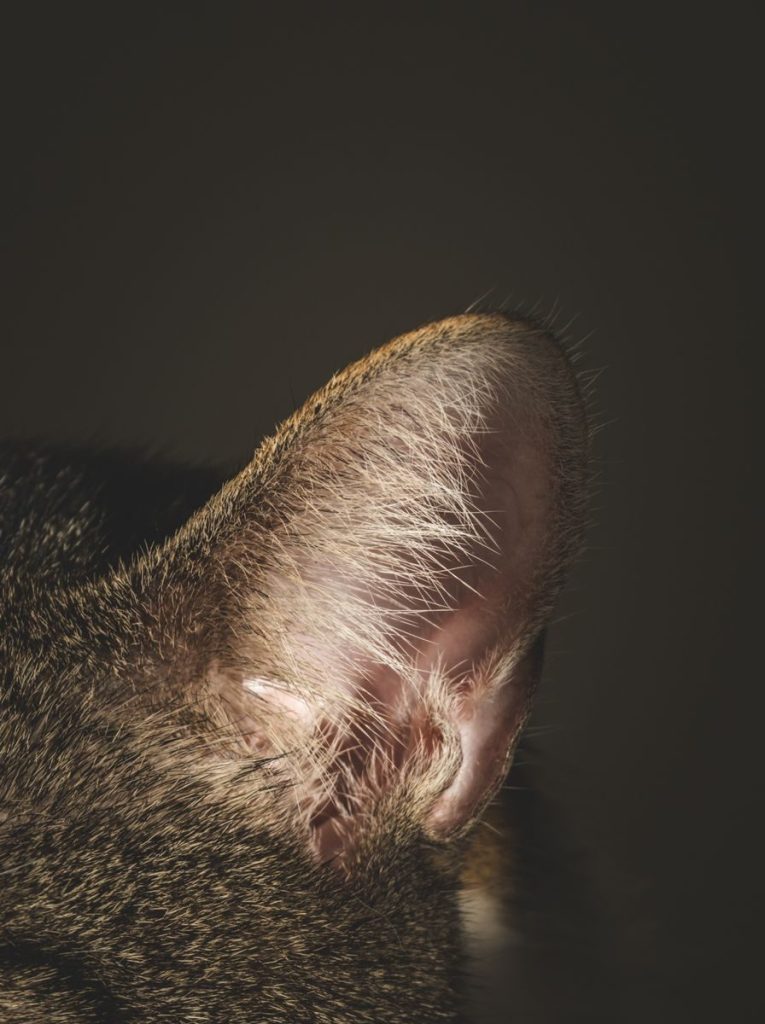
The ears can completely change how a stare should be interpreted. Forward or neutrally positioned ears often appear when a cat is interested and comfortable, while ears turned sideways or flattened back can accompany fear, uncertainty, irritation, or defensive behavior.
A staring cat with a loose body and forward ears may simply be curious. A cat that stares while crouching, growling, hissing, or pinning its ears should be given more space. Reading several signals together is safer than assigning one fixed meaning to eye contact.
Tail Movement Adds Clues
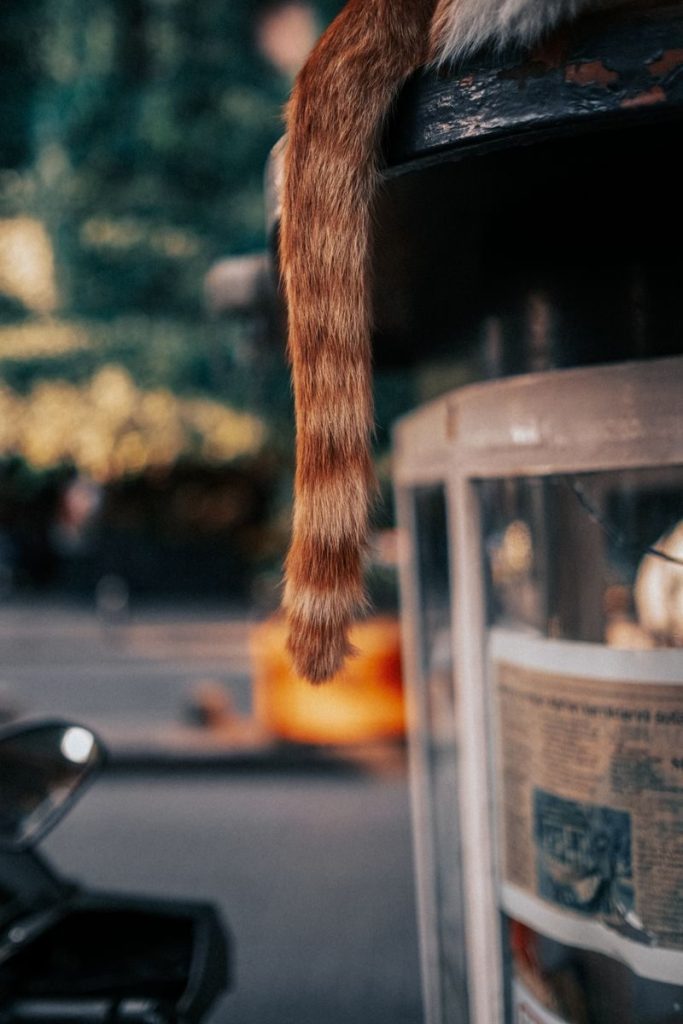
A cat’s tail adds another useful piece of information. Rapid side-to-side movement can appear as arousal or irritation increases, especially when it is paired with dilated pupils, pinned ears, tense muscles, or attempts to move away from unwanted contact.
A still or gently positioned tail beside relaxed posture suggests a different situation. Play, hunting focus, fear, and conflict can share some visual features, so consider the whole scene. What happened just before the stare often explains more than the stare itself.
Hunting Focus Looks Intense
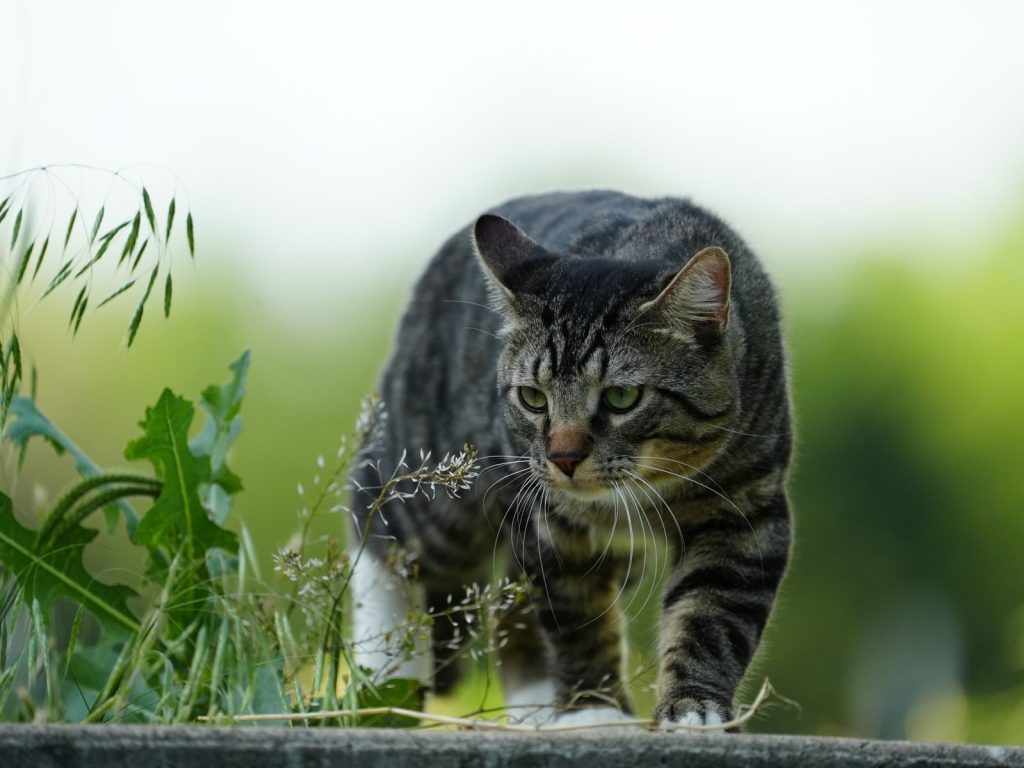
Play and predatory behavior can produce some of the most serious-looking feline faces. Cats may crouch, stare, stalk, wiggle, and suddenly pounce at toys or moving targets because these actions resemble parts of the natural hunting sequence.
In a safe play setting, that intensity can be completely normal. Use wand toys, balls, or other suitable objects rather than hands and feet. Regular opportunities to chase and pounce help give cats an appropriate outlet for these behaviors while reducing the chance that people become play targets.
Stress Can Look Like Staring
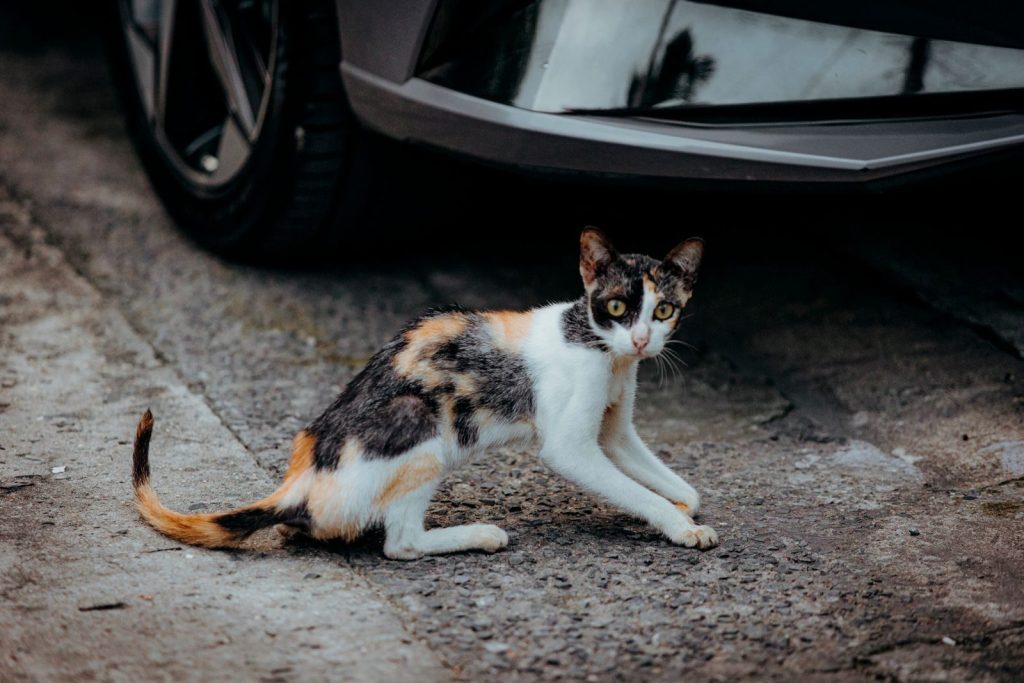
A motionless stare can also occur when a cat feels uncertain or stressed. Wide eyes, dilated pupils, a lowered body, ears held sideways or back, hiding, lip licking, hissing, or attempts to retreat add important context to what the eyes are showing.
Direct prolonged eye contact can increase tension during unfamiliar encounters. Instead of moving closer to test the reaction, reduce pressure and allow the cat an escape route. Quiet handling, distance, and choice are usually more helpful when several fear or stress signals appear together.
Eye Changes Can Need a Vet
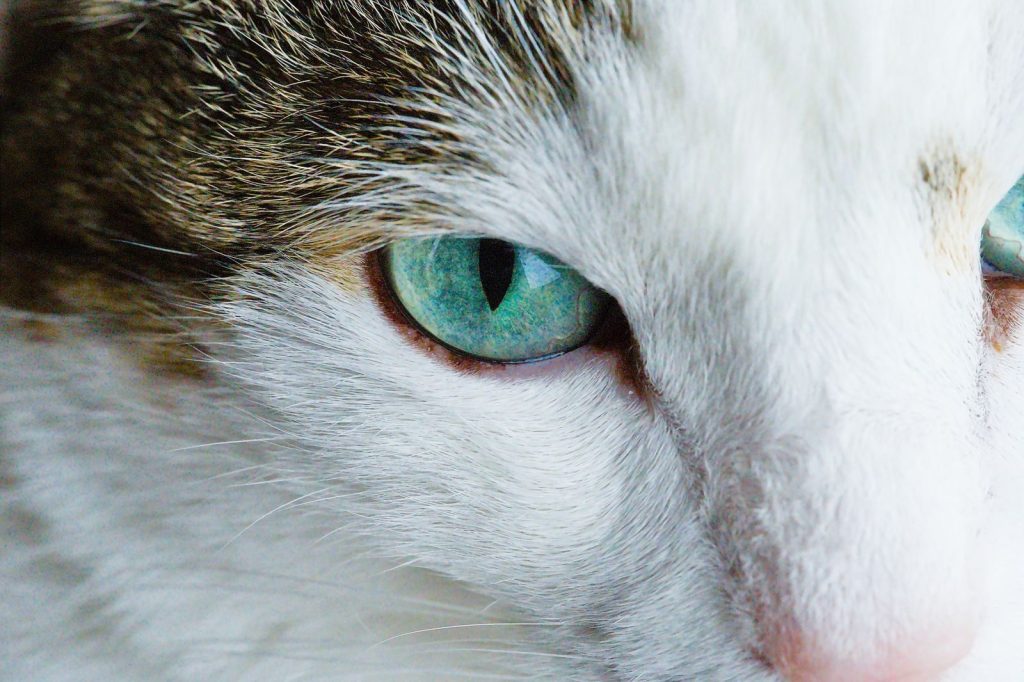
Not every unusual stare is behavioral. Eye disease, pain, vision problems, neurological conditions, or other illness can change how a cat looks or responds. Squinting, discharge, cloudiness, unequal pupils, persistent redness, or sudden changes in vision deserve veterinary attention.
A cat that suddenly stares blankly, seems disoriented, bumps into objects, or behaves unlike its normal self should also be evaluated. Owners should avoid diagnosing the cause from appearance alone because eye problems can worsen quickly and may threaten comfort or vision.
Featured Image: Photo by Tolga deniz Aran on Pexels