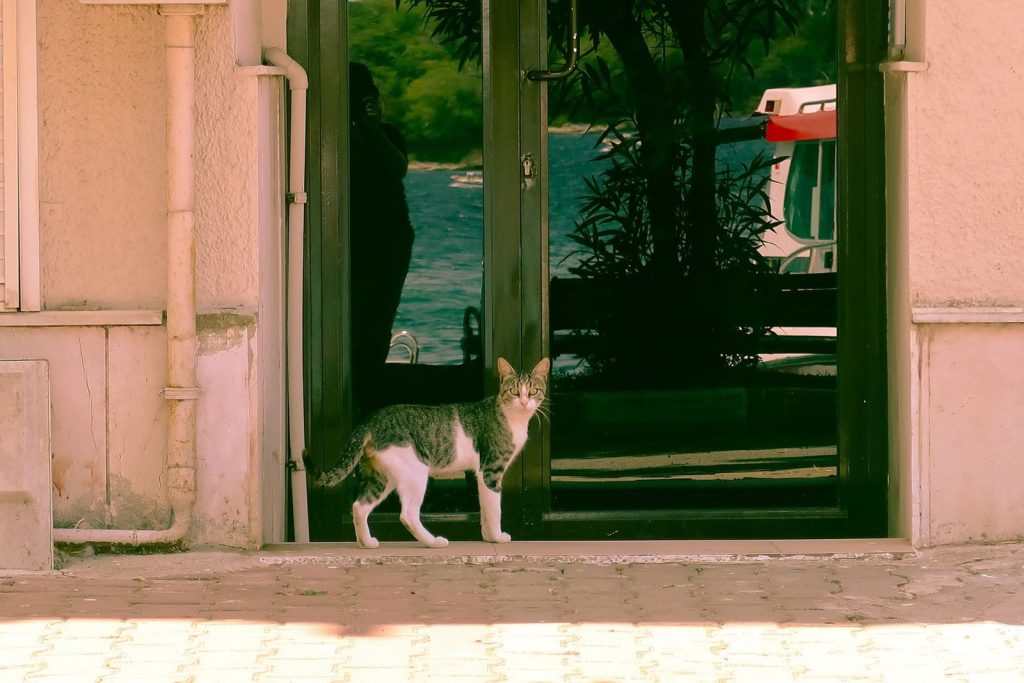

A cat balancing on top of a door looks like a perfect combination of confidence and poor planning, but the exact viral clip behind this title could not be reliably traced. Rather than inventing a name or pretending to know how the cat reached the perch, the behavior itself can be explained. Climbing is normal for cats, and elevated locations can provide observation, distance from activity below, and access to places that feel less crowded.
The problem is that a door is not designed as feline furniture. It is narrow, unstable, and capable of moving suddenly if someone pushes or closes it. Cats are capable climbers, yet getting down can sometimes be more difficult than getting up, particularly when the landing options are awkward. Owners can reduce the risk by offering stable vertical alternatives such as cat trees, shelves, and secure perches instead of allowing doors and other moving household structures to become regular climbing stations.
Climbing Is Normal Cat Behavior

Cats naturally use vertical space, and climbing allows them to explore an environment in three dimensions rather than staying entirely at floor level. VCA notes that high resting areas can provide opportunities to relax while observing surroundings. That means a cat on top of a cabinet, shelf, or other elevated surface is not necessarily being mischievous. The drive itself is normal. The owner’s job is to make sure acceptable climbing routes lead toward stable places that can safely support the animal, rather than fragile or moving household objects.
Height Can Feel More Secure

An elevated perch can give a cat visual information about people, other pets, entrances, and activity without requiring close contact. VCA describes high resting places as valuable parts of a cat-friendly environment, especially when an animal wants to observe while remaining out of the way. This is one reason simply lifting a cat down from every high spot may not solve repeated climbing. If the underlying need for vertical space remains, another unsuitable perch may become attractive. A safe cat tree or shelf gives that same preference an appropriate outlet.
Door Tops Are Awkward Perches

Unlike a cat shelf, the upper edge of an interior door offers very little room for paws and can shift unexpectedly. A cat may reach it from nearby furniture, a frame, or another elevated surface, but staying balanced becomes more difficult when the door moves. The safest response is prevention. Keep climbable furniture away from risky doorways when necessary, avoid moving a door while a cat is above it, and provide more attractive stable alternatives nearby. A funny balancing act can become an accident quickly if the support suddenly changes position.
Getting Down Can Be Harder

Cats Protection notes that cats can sometimes find descending more difficult than climbing upward. The body mechanics are different, and an animal that confidently pulls itself onto a high location may pause when faced with an awkward drop. This is familiar in cats that climb trees and then appear reluctant to descend. The same principle can apply indoors. A narrow door top offers few comfortable turning points or intermediate steps. Providing a stable nearby platform or safe route down can help without forcing the cat into a frightening leap.
Keep the Door From Moving
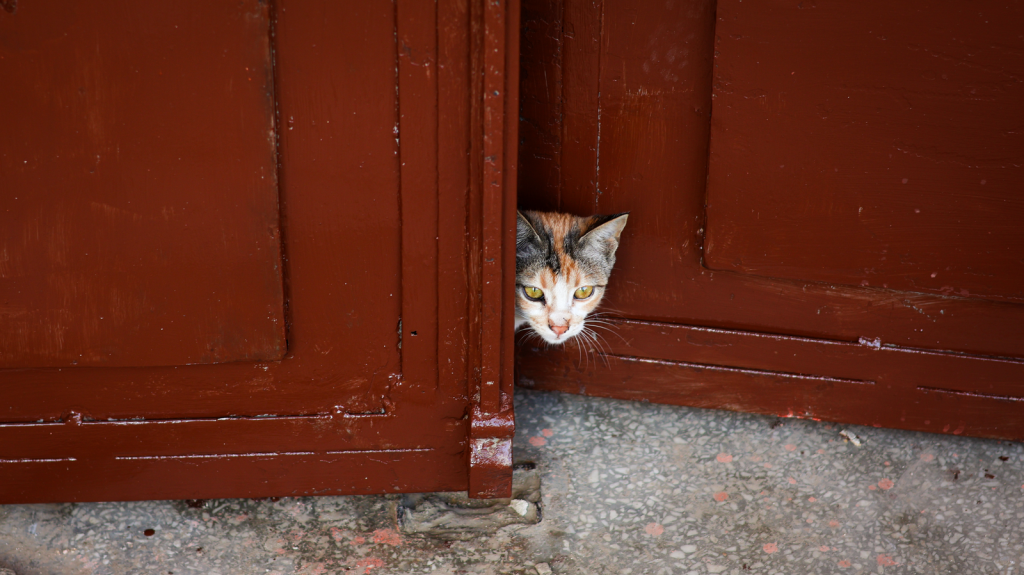
If a cat is already perched on top of a door, the first practical step is to stop the door from swinging. Sudden movement can unbalance the animal or trap paws. Reduce noise and commotion, move other pets away, and give the cat time to assess the route down. If a stable chair, cat tree, or other broad surface can be positioned safely below without frightening the cat, that may create an easier descent. Avoid pulling at the animal from an unstable position where both cat and person could fall.
Offer Better Vertical Space

Repeated door climbing may be a sign that the cat simply needs more appealing high places. A sturdy cat tree, wall-mounted shelf system, window perch, or top level of secure furniture can provide elevation without the instability of a moving door. Placement matters. Cats may favor perches that overlook busy rooms, windows, or areas where other pets spend time. Offering several options also reduces competition in multi-cat homes. The aim is not to stop climbing, which is normal behavior, but to redirect it toward structures designed to support feline movement safely.
Help Without Creating Panic

A stranded-looking cat may still be capable of climbing down if given quiet and time. Cats Protection advises that many cats stuck at height eventually descend themselves, although circumstances differ and genuinely dangerous situations require assistance. Shouting, shaking objects, or repeatedly reaching toward a frightened animal can make footing worse. If the cat is in immediate danger, cannot descend, or is positioned where a fall would be severe, professional help may be necessary. The response should depend on actual risk rather than how dramatic the cat’s expression appears.
Falls Can Require Veterinary Attention

A cat that jumps or falls from an awkward height should be observed closely even if it immediately walks away. VCA notes that injuries after falls are not always obvious at first. Limping, breathing difficulty, reluctance to move, unusual hiding, pain, weakness, or other concerning changes deserve prompt veterinary assessment. Owners should not assume a cat is uninjured simply because cats are famous for landing on their feet. Preventing unstable climbing situations in the first place is much safer than relying on agility to protect the animal after a fall.
Featured Image: Photo by Gülşah PEHLİVAN on Pexels