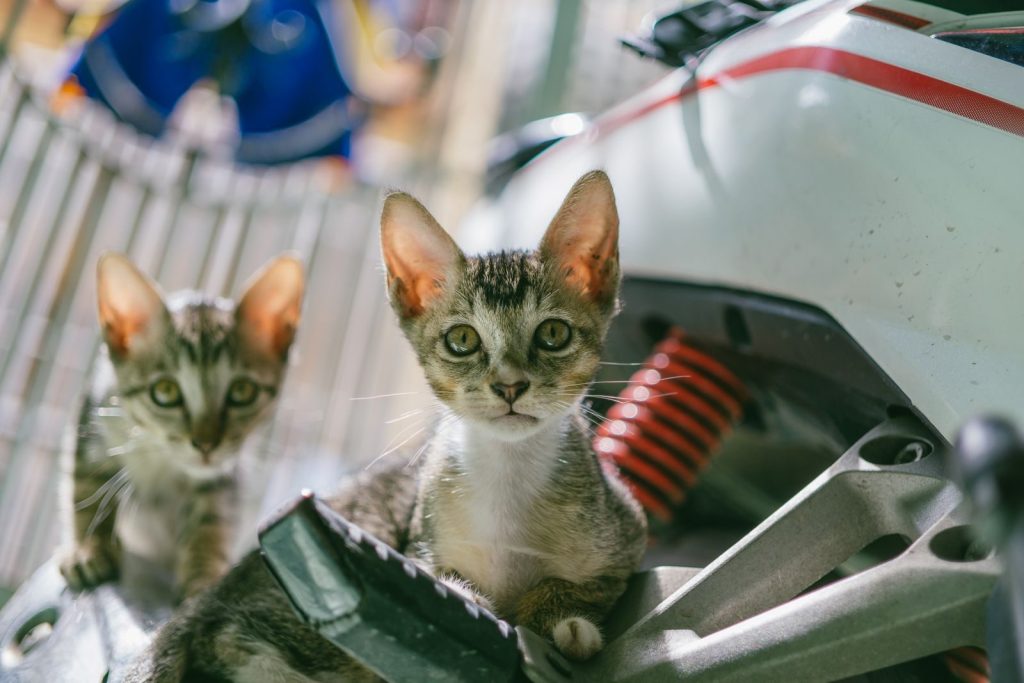

A kitten that suddenly sniffs a returning cat from nose to tail can look as though it is conducting a serious inspection. The behavior is usually less mysterious than it appears. Cats depend heavily on scent to recognize other animals and understand their surroundings, so a familiar companion can seem temporarily different after visiting a veterinarian, spending time outside the home, or traveling in a carrier filled with unfamiliar smells. Careful sniffing is one way the kitten gathers information before deciding how to respond.
The inspection does not automatically mean the kitten has forgotten the other cat, become jealous, or decided to challenge it. A returning cat may smell like disinfectant, medication, unfamiliar people, other animals, or the vehicle used for travel. Stress can also change how both cats behave during the reunion. Most mild sniffing settles without trouble, but owners should watch body language and give both animals room. Hissing, chasing, blocking, or fighting may mean the reunion needs to slow down rather than being forced.
Familiar Scent Changes
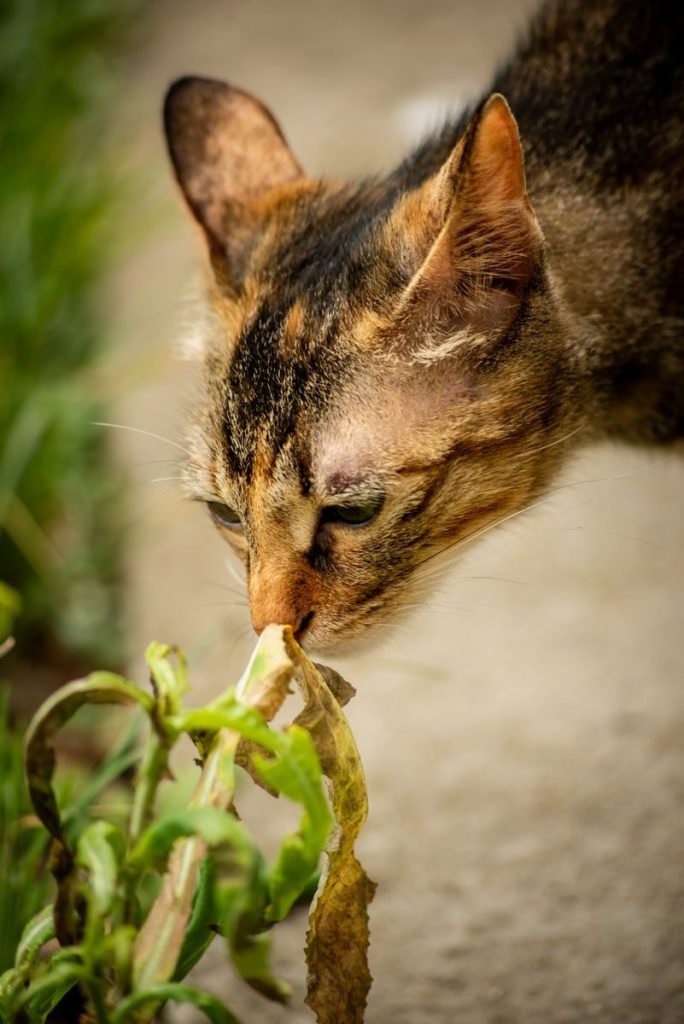
Cats living together gradually become familiar with one another’s individual odors and the shared scent of their home. A cat that leaves for several hours can return carrying a noticeably different mixture of smells. To a kitten with a much stronger sense of smell than a human, that change can be important enough to investigate closely. Sniffing the face, body, or rear of the returning cat helps gather social information. If both animals remain loose-bodied and free to walk away, the inspection is usually a normal part of recognizing what has changed.
Vet Smells Follow Cats Home

Veterinary clinics contain unfamiliar smells from disinfectants, medications, people, carriers, and other animals. A cat returning from an appointment may carry some of those odors on its coat, paws, or bedding. The kitten at home can notice them immediately even when the returning cat looks completely familiar to a person. This scent difference can explain extra sniffing and, in some households, brief hesitation or hissing. The reaction does not prove the cats’ relationship has been damaged. Familiar household odors often become stronger again as the returning cat rests and grooms.
Sniffing Checks Identity
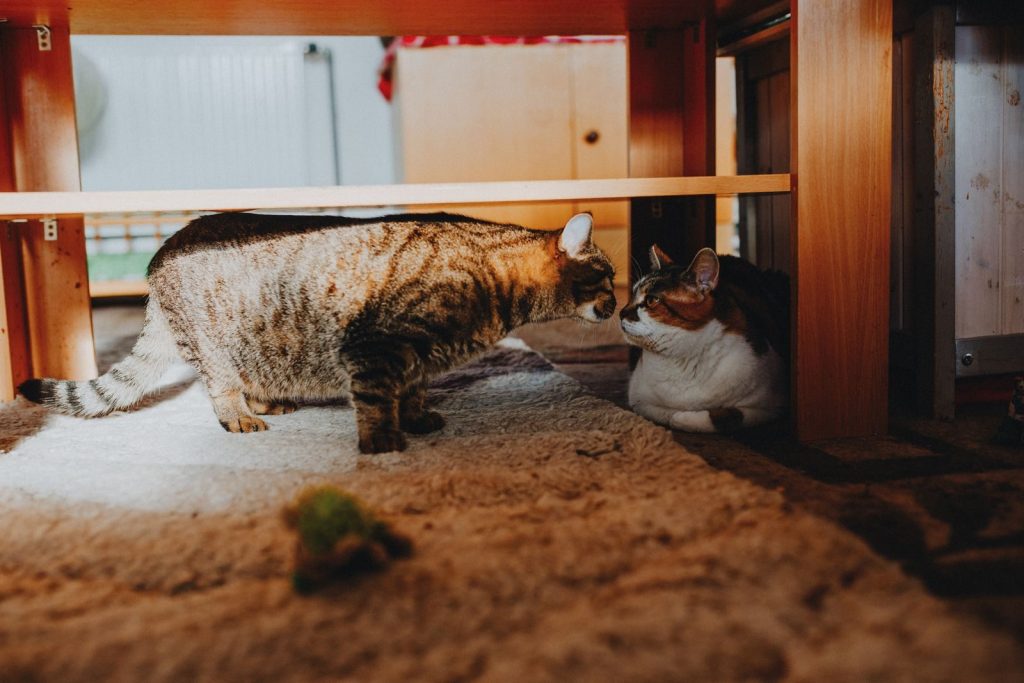
Cats use smell as an important form of social communication. Veterinary behavior guidance notes that cats often sniff one another during greetings and can gather information from scent around the head and rear of the body. A kitten inspecting a returning cat may therefore be checking familiar and unfamiliar odor cues rather than performing a dominance test. Sniffing should be interpreted together with posture. A relaxed kitten that investigates and then moves on is behaving very differently from one that freezes, growls, stalks, or prevents the other cat from leaving.
Hissing Means Uncertainty
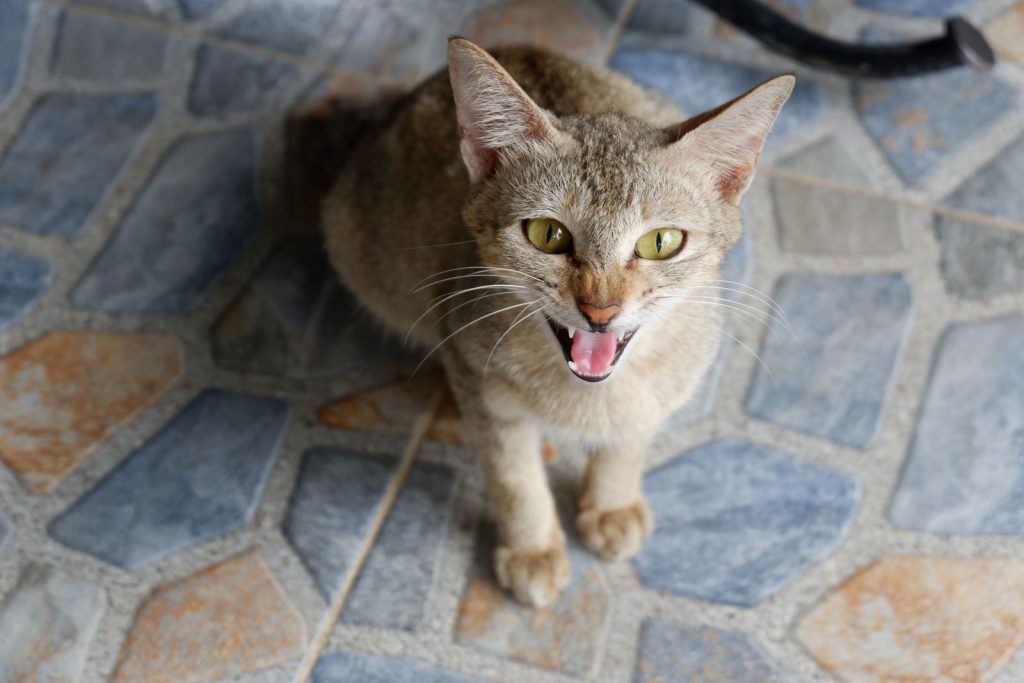
Brief hissing after a cat comes home can sound dramatic, but it is usually a request for more distance rather than proof that the cats suddenly hate each other. The returning animal may smell unfamiliar, while either cat may also be stressed by the reunion. Do not punish hissing or push the animals closer together. Give them space and let arousal fall. A single hiss followed by disengagement is different from repeated chasing, cornering, or fighting. If tension continues, temporary separation can make the next introduction calmer and safer.
Body Language Matters
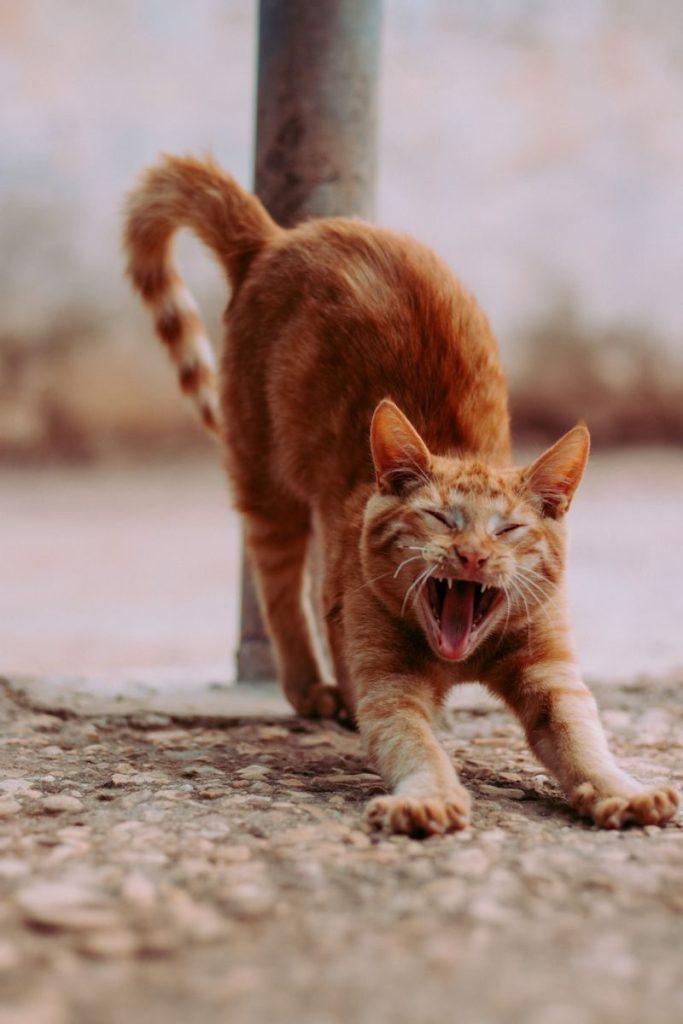
The kitten’s whole body tells more than sniffing alone. Relaxed ears, a loose posture, ordinary movement, and the ability to turn away suggest curiosity rather than serious conflict. Flattened ears, a rigid body, prolonged staring, growling, tail lashing, or attempts to block the returning cat are stronger signs of tension. Owners should respond to those early signals before the interaction escalates. The goal is not to make the cats greet each other immediately. It is to let both animals control distance until the returning cat once again feels familiar and safe.
Give the Cat Space
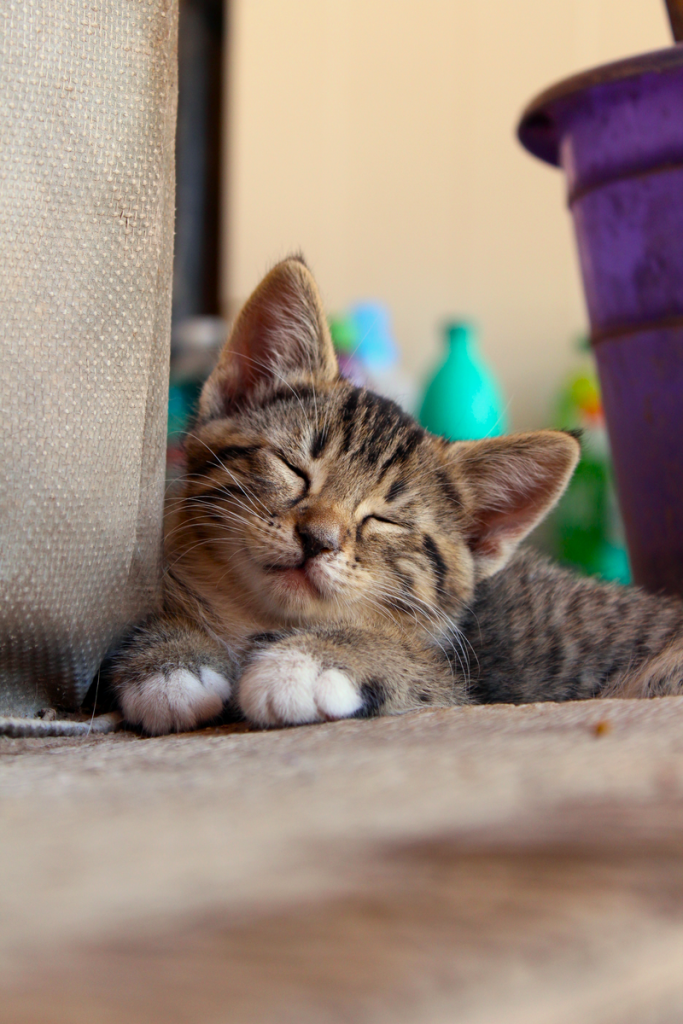
A cat returning from the veterinarian may be tired, frightened, sore, sedated, or simply overstimulated. Even a friendly kitten can become annoying if it immediately follows, sniffs, paws at, or tries to play with a companion that wants to rest. A quiet room with water, a litter tray, familiar bedding, and a comfortable hiding place can help the returning cat recover. If surgery, sedation, or treatment was involved, veterinary discharge instructions should come first. Social contact can resume when the returning cat is alert, comfortable, and interested.
Familiar Bedding Can Help
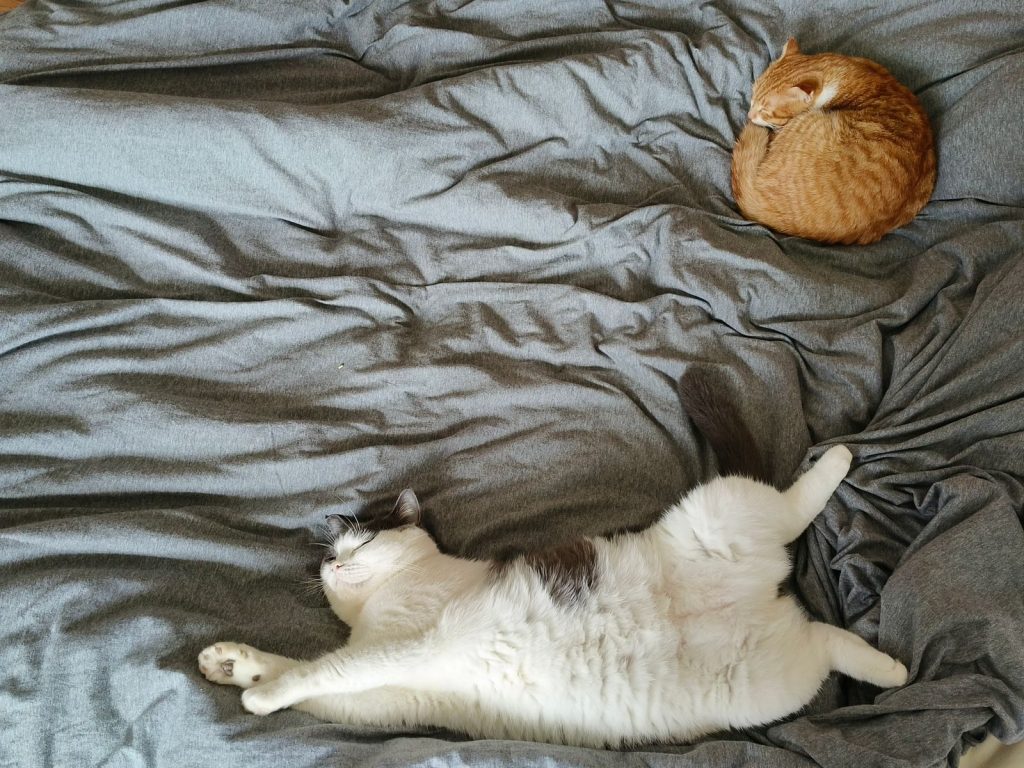
Familiar bedding and household surfaces can help restore the returning cat’s usual scent without forcing direct contact. Letting the cat rest in a known room, groom normally, and spend time on its own bed can gradually reduce the strange smells picked up elsewhere. Some behavior guidance also uses scent swapping when cats need careful reintroduction. Any scent transfer should be gentle and should not involve restraining a stressed cat. The simplest approach is often patience: allow normal home odors to return while keeping interactions calm, brief, and voluntary.
Separate Serious Conflict
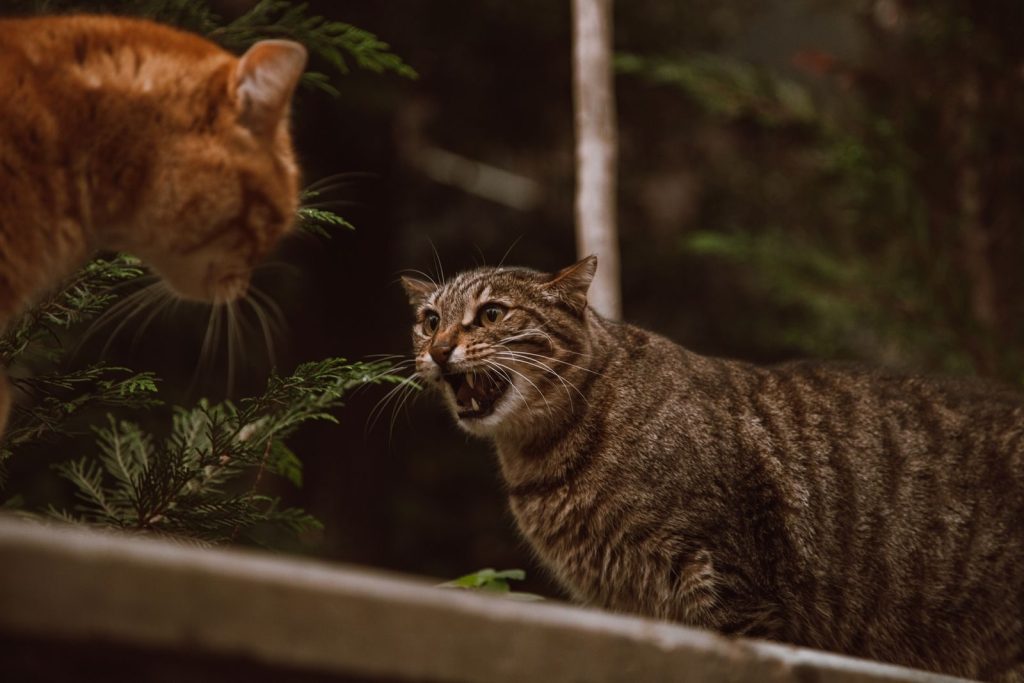
If the reunion progresses to repeated chasing, cornering, screaming, biting, or one cat becoming afraid to reach food, water, or the litter tray, the situation has moved beyond harmless inspection. Separate the cats safely and give each animal its own essential resources. Pain or illness can also change behavior, so a sudden serious conflict between cats that previously lived peacefully may justify veterinary assessment. Reintroduction should then proceed gradually instead of repeatedly placing the cats together. Most mild inspections are brief, but persistent aggression deserves a more careful response.
Featured Image: Photo by FOX ^.ᆽ.^= ∫ on Pexels