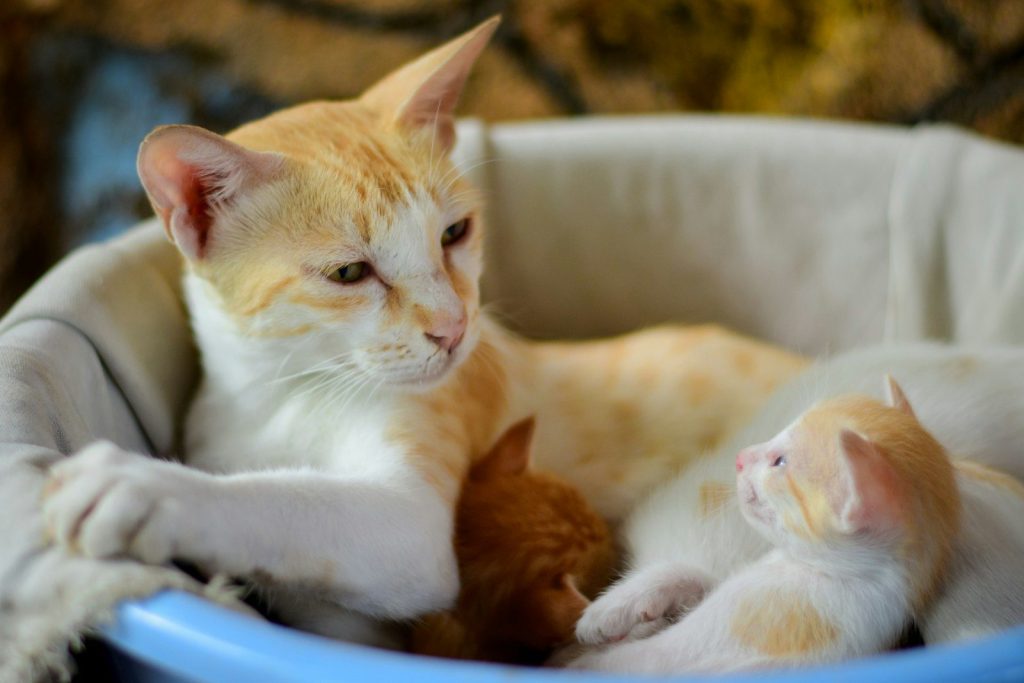

A mother cat lies curled in a quiet nest, softly grooming her newborn kittens. She purrs deeply, wrapping her body around them to block out the world.
This peaceful scene is beautiful to watch, but it is also a complex medical survival system. Science reveals how maternal touch physically shapes a kitten’s future.
The vital heat of a mother’s body
Neonatal kittens are born completely unable to regulate their own internal body temperature. The ASPCA states that they rely entirely on the mother’s skin contact to stay warm and alive. This constant thermal support keeps their fragile digestive systems running smoothly during their first weeks of life. But warmth is only the beginning of her maternal care.
Triggering essential biological functions through grooming
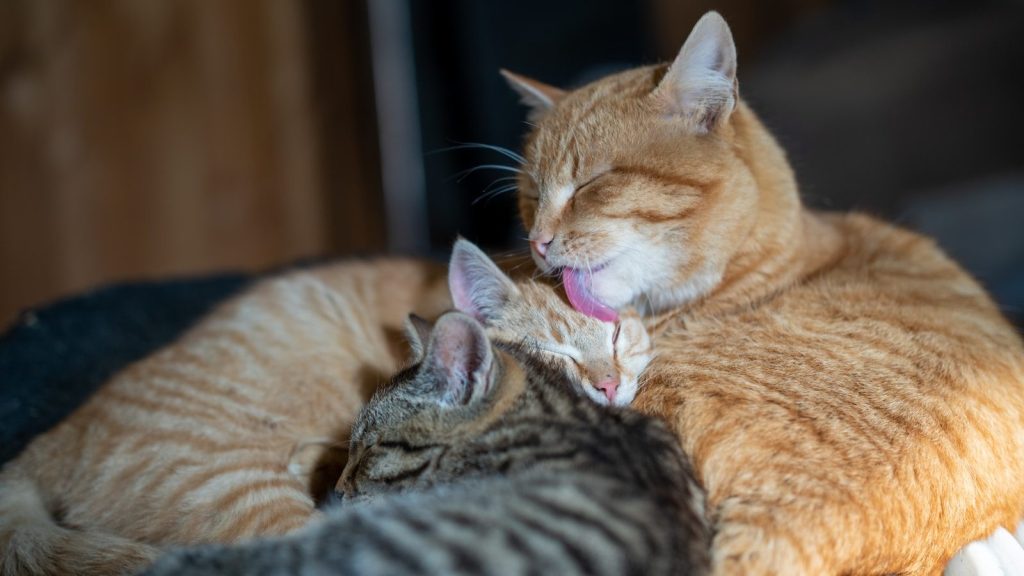
Newborn kittens cannot go to the bathroom or digest food on their own. The mother cat must constantly lick their bellies to stimulate their internal organs and prevent painful blockages. This repetitive physical action is absolutely vital for their basic daily survival. However, her grooming routine also carries a hidden mental benefit.
How tactile stimulation lowers infant stress
Grooming releases powerful calming hormones in a young kitten’s developing brain. Studies from the Cornell Feline Health Center show that maternal touch reduces heart rates and lowers anxiety levels. This early sense of security helps them build resilience against stress as they grow older. Yet, the mother’s deep purr acts as another healing tool.
The physical healing power of feline purrs
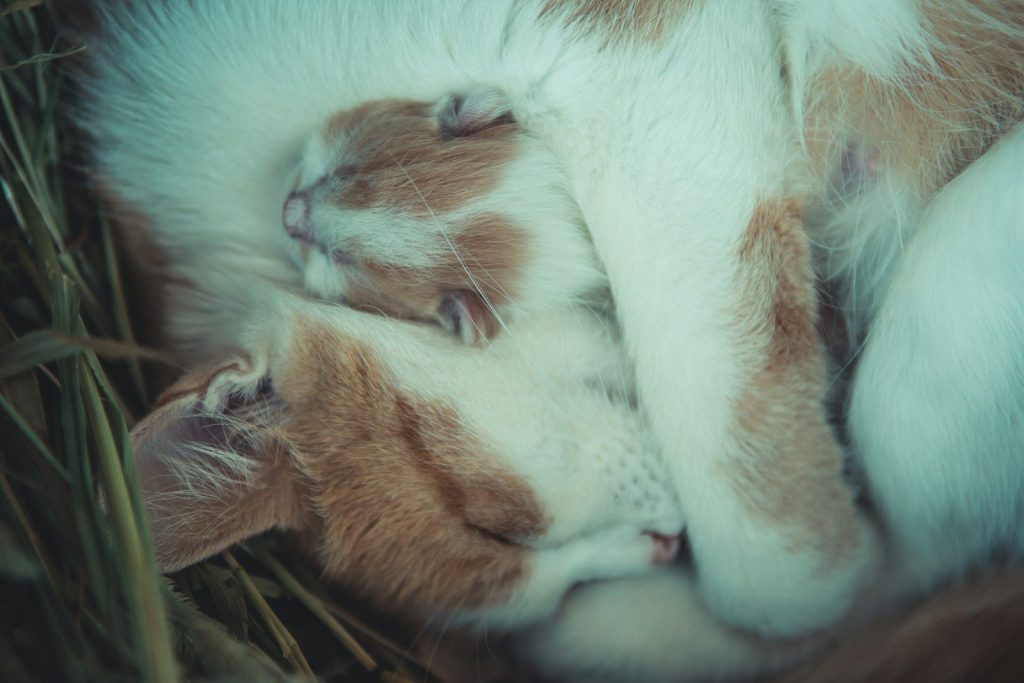
Felines purr at a specific frequency that can actually help repair bones and soothe sore muscles. The mother cat uses this internal vibration to comfort both her babies and her own recovering body after birth. It creates a soothing acoustic shield that wraps the entire nest in absolute peace. But kittens must also learn how to navigate the world.
Teaching critical social boundaries through touch
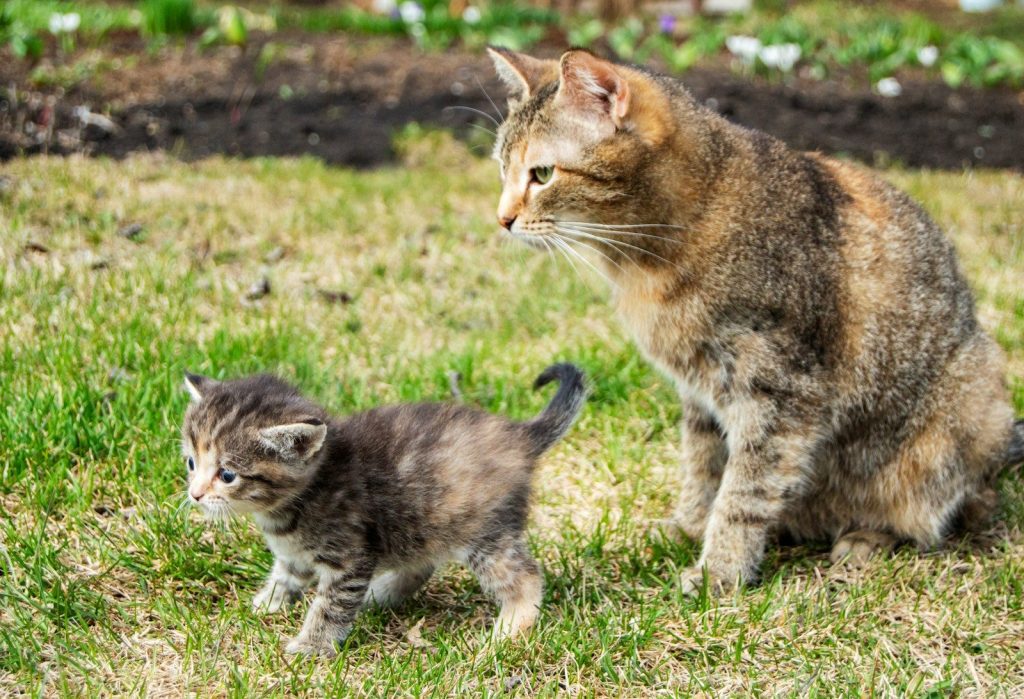
As the kittens grow, the mother uses gentle paw taps and soft nudges to teach them behavioral limits. She shows them how to use their claws safely and when to stay quiet during potential danger. This early physical education prevents them from developing aggressive tendencies later in life. But what happens if a kitten is separated too early?
The impact of early maternal separation
Kittens separated from their mother before eight weeks of life can struggle with chronic anxiety and fear. The American Veterinary Medical Association emphasizes that keeping litters together is crucial for healthy social development. Early touch from a mother shapes their personality and helps them trust the world. Fortunately, human caretakers can help bridge this gap.
How foster parents mimic maternal care
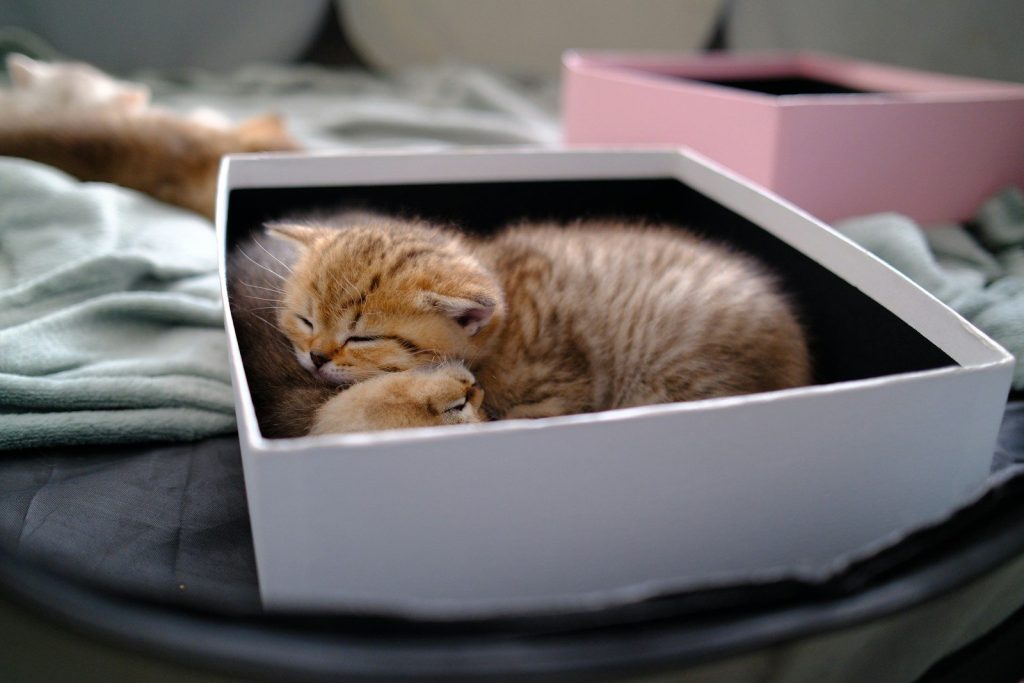
Dedicated humans use warm, damp cotton balls to mimic the grooming action of a mother cat. This hands-on care helps orphan kittens feel secure and physically thrive despite their early loss. It requires immense patience but saves thousands of vulnerable lives every season. But how can regular owners use this healing touch?
Strengthening your bond through gentle touch
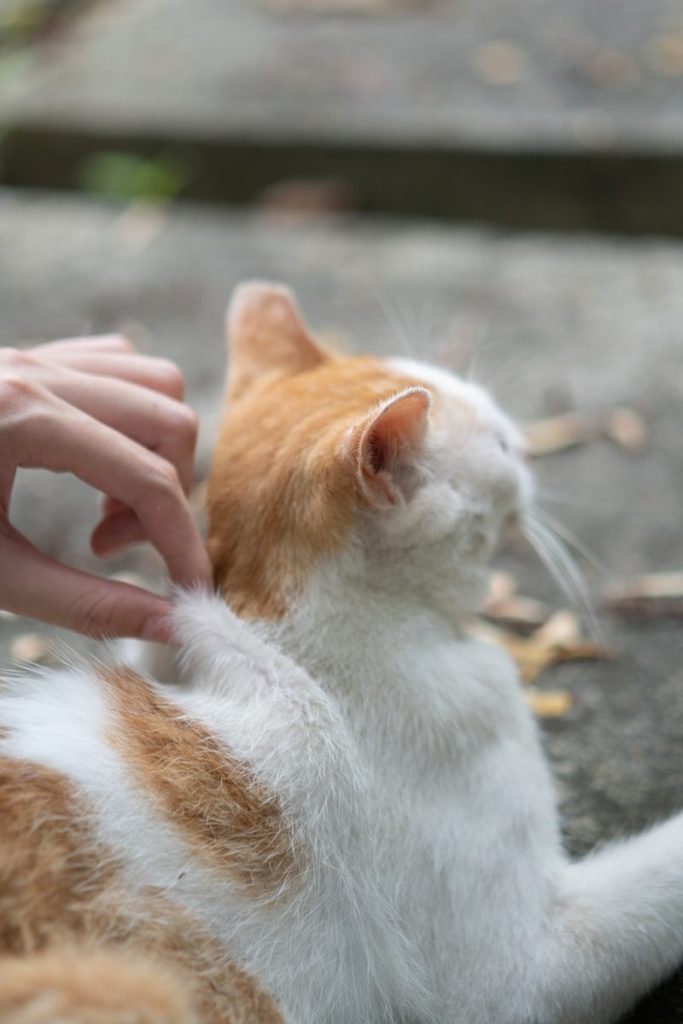
This article is for informational purposes only and does not constitute veterinary advice. Brushing and petting your adult cat mimics maternal grooming and deepens your mutual trust. Respecting their physical boundaries ensures your home remains a safe and loving sanctuary for everyone.
Featured Image: Photo by Prasad Panchakshari on Unsplash