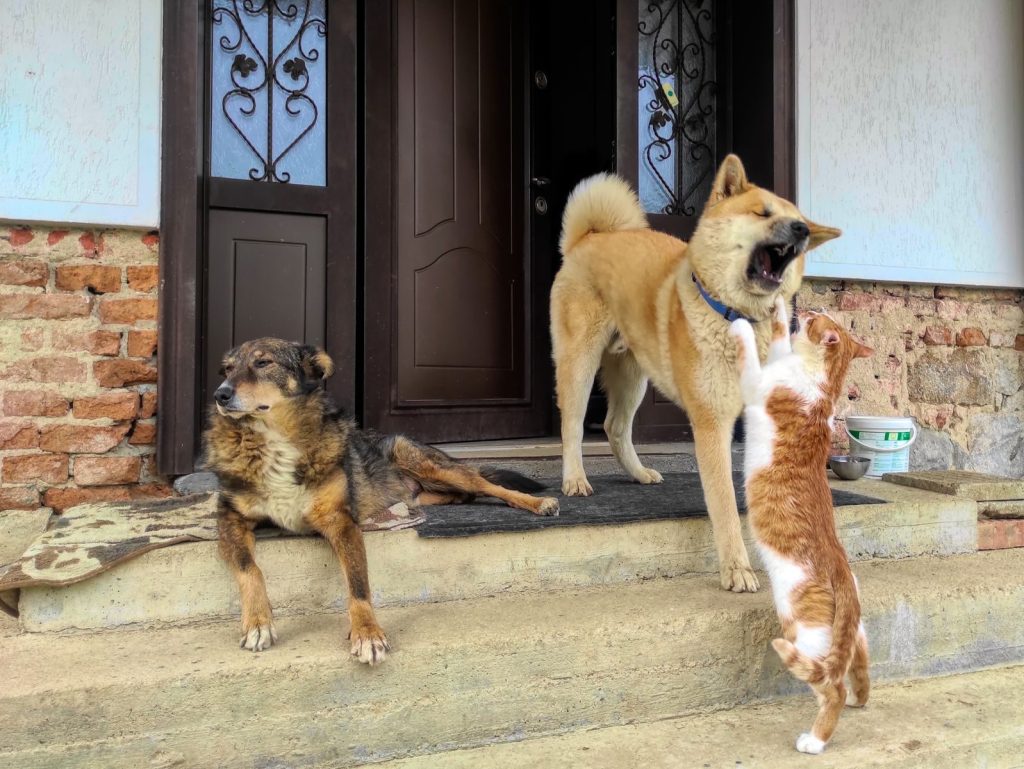

A cat facing an eager dog can look surprisingly authoritative. One hiss, hard stare, or quick paw tap may stop the dog in its tracks, making the moment look like a feline lesson in household rules. Cats are not literally explaining instructions, but they do communicate clear boundaries through posture, distance, vocal signals, and movement. A dog that keeps approaching may receive stronger warnings because the cat is trying to create space, not because it has decided to become the boss of the house.
The safest way to read these encounters is to focus on what both animals are doing, rather than giving the scene a human story. A relaxed cat may tolerate gentle curiosity, while flattened ears, a tense body, hissing, or retreat show that the interaction needs to slow down. Dogs can also become overexcited by a moving cat, so introductions should be controlled and gradual. Giving the cat escape routes and rewarding calm dog behavior helps both animals learn how to share a home without being forced into friendship.
Hissing Means Back Off

A hiss is one of the clearest ways a cat can ask a dog for more distance. It is usually a defensive warning, not proof that the cat wants to start a fight. If the dog continues sniffing, crowding, or following after the hiss, the cat may feel forced to escalate to swatting or fleeing. Owners should calmly call the dog away rather than punish the cat for communicating. When an early warning successfully creates space, the encounter can end without either animal needing to use stronger defensive behavior.
Ears Show Discomfort
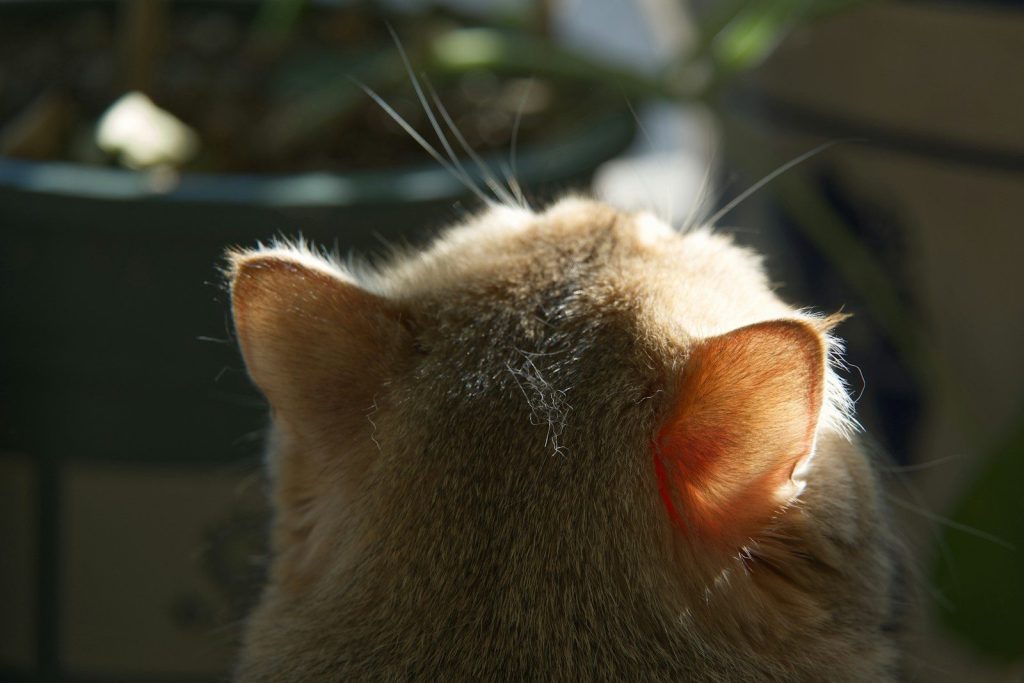
A cat’s ears can provide an early clue that the dog has come too close. Ears turned sideways or flattened backward often appear when a cat feels worried, irritated, or threatened. That signal matters most when it appears with a stiff body, wide pupils, retreating, or hissing. Dogs may not naturally understand every feline cue, so people need to notice the change and create distance. Waiting until the cat swats teaches both animals that subtle warnings do not work, while responding early makes calmer communication more effective.
Tail Movement Adds Context

A rapidly flicking or lashing tail can show rising arousal, especially when the cat’s body is tense and its attention is fixed on the dog. Tail movement alone is not a perfect measure of emotion because cats also move their tails during play or intense concentration. The useful information comes from the complete picture. If the cat is trying to leave, flattening its ears, or hissing while the tail lashes, the interaction should stop. Allowing the cat to retreat prevents a warning display from becoming a physical confrontation.
A Paw Tap Can Warn

A quick paw tap may be playful, but it can also be a direct warning when a dog ignores the cat’s requests for space. Context separates the two. Relaxed animals may bat and return willingly to the interaction, while a defensive cat often looks tense, pulls away, hisses, or keeps the dog at arm’s length. Owners should not encourage repeated approaches because the first swat looks funny. A harder strike with claws can follow if the cat feels trapped, so calm separation is safer than testing its patience.
High Places Give Safety
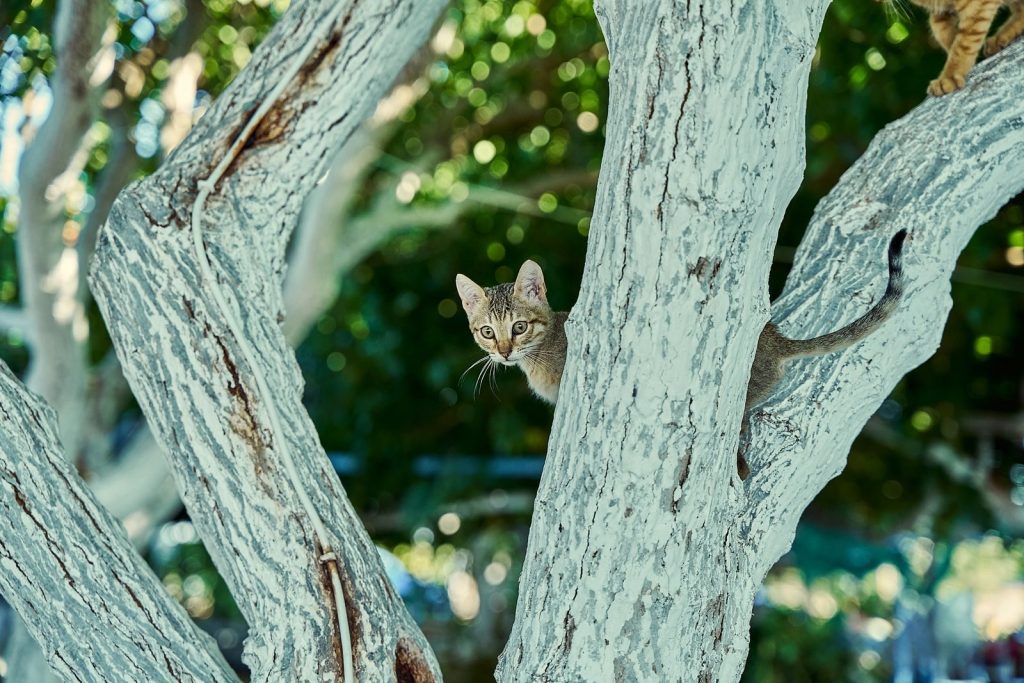
Cats often feel more secure when they can move above floor level and watch a dog from a distance. A sturdy cat tree, shelf, or dog-free room gives the cat an escape option without requiring a confrontation. The route should remain open so the dog cannot wait underneath and block the cat from coming down. Blue Cross recommends providing safe areas and high places during cat-dog introductions. When a cat knows it can leave freely, it has less reason to hiss, swat, or defend a corner simply to protect itself.
Keep the Dog Calm

During early meetings, the dog should be prevented from chasing the cat, even if the dog appears playful rather than aggressive. Chasing can frighten the cat and quickly damage future interactions. A lead, barrier, or other controlled setup allows the dog to observe while the cat chooses whether to approach. Rewarding the dog for looking away, settling, or responding to its handler helps build calmer habits. Short sessions that end before either animal becomes overwhelmed are more useful than forcing them to remain together until they appear to tolerate each other.
Never Force Contact
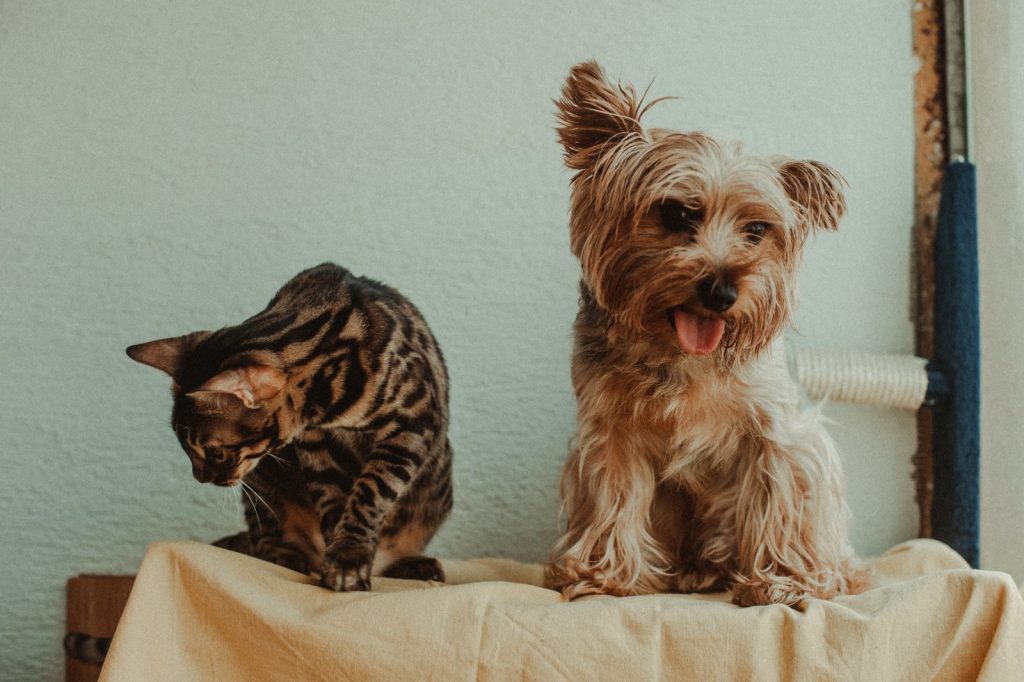
Holding a cat while bringing a dog closer removes the cat’s ability to retreat and can turn an uncertain meeting into a frightening one. Introductions work better when the cat decides whether to approach, while the dog remains under control. The same rule applies after the animals become familiar: a cat sleeping, eating, or using the litter tray should not be repeatedly bothered by the dog. Respecting those boundaries reduces the need for defensive behavior. Friendship is safest when both animals retain the option to walk away.
Peaceful Sharing Is Enough

Some cats and dogs eventually sleep together, play gently, or actively seek each other out. Others never become close friends but learn to share the same home without fear or conflict. Both outcomes can be successful. The important signs are that each animal can eat, rest, move around, and use essential resources without being chased or blocked. A cat that seems to be “explaining the rules” is really communicating boundaries. Humans make those rules easier to follow by managing space, preventing chasing, and rewarding calm behavior from the dog.
Featured Image: Photo by Krasimir Georgiev on Pexels