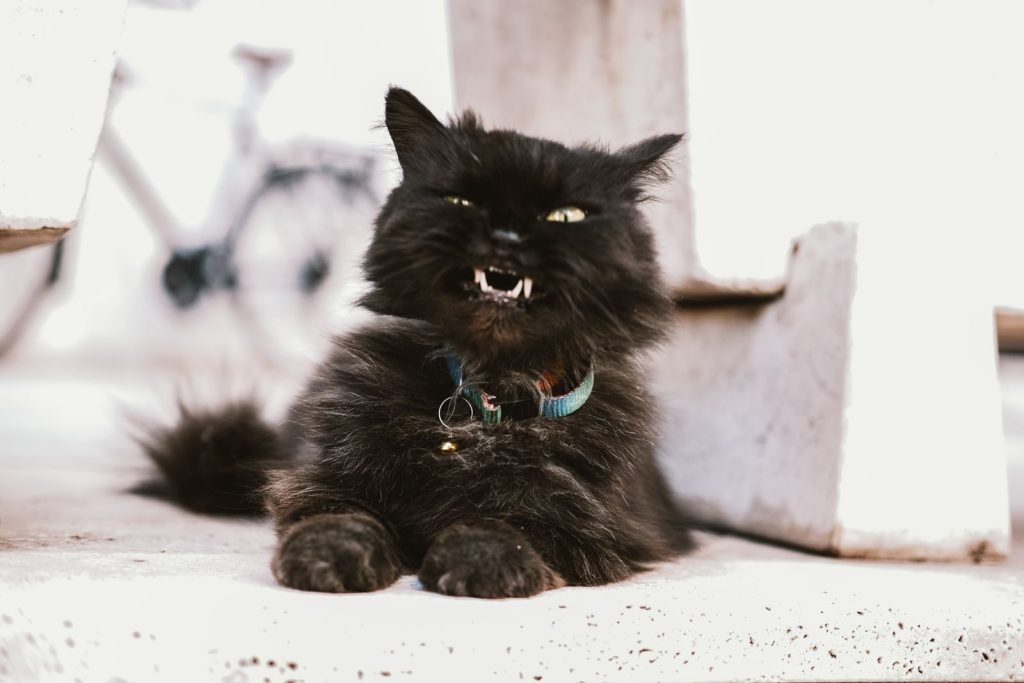

A cat can look spectacularly angry when its ears flatten, tail lashes, pupils widen, and a hiss turns into a swat. But “anger” is only one human label for a much wider set of feline reactions. Fear, pain, frustration, territorial conflict, overstimulation, and redirected arousal can all produce aggressive behavior. That matters because the safest response depends on the cause. Reading the early signals is far more useful than waiting to discover how hard the cat is willing to bite or scratch.
Most cats do not jump from calm behavior to a serious attack without any change in body language, although the early warnings can be subtle and easy to miss. A cat may tense, pull its ears back, flick its tail, stare, freeze, move away, growl, or hiss before using claws or teeth. Punishment can increase fear and make future encounters less predictable. The better approach is to reduce pressure, create distance, and investigate why the cat is becoming aroused, particularly when aggressive behavior appears suddenly.
Early Warning Signs
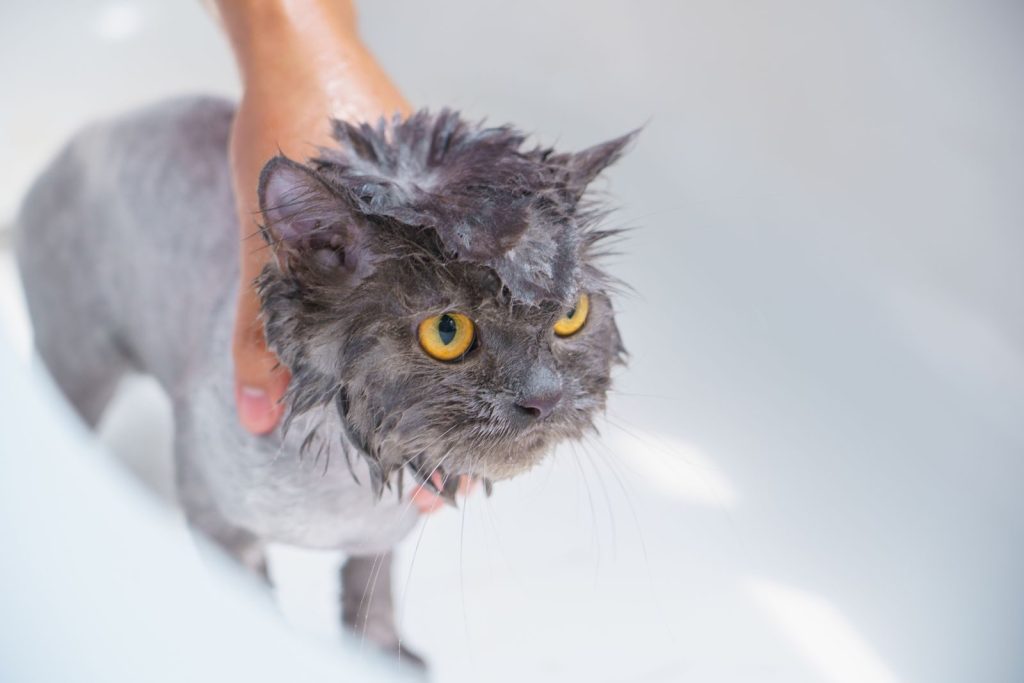
A cat often communicates discomfort before making physical contact. The first signs can be small: a suddenly rigid body, ears turning backward, tail flicking, enlarged pupils, freezing, or an attempt to move away. Veterinary behavior guidance emphasizes watching these changes because they can appear before hissing, swatting, or biting. When an owner notices the early stage and stops the interaction, the cat does not need to escalate its message. Learning one individual cat’s warning signs is especially useful because different cats have different thresholds for handling, noise, unfamiliar people, and other animals.
Hissing Means Back Off
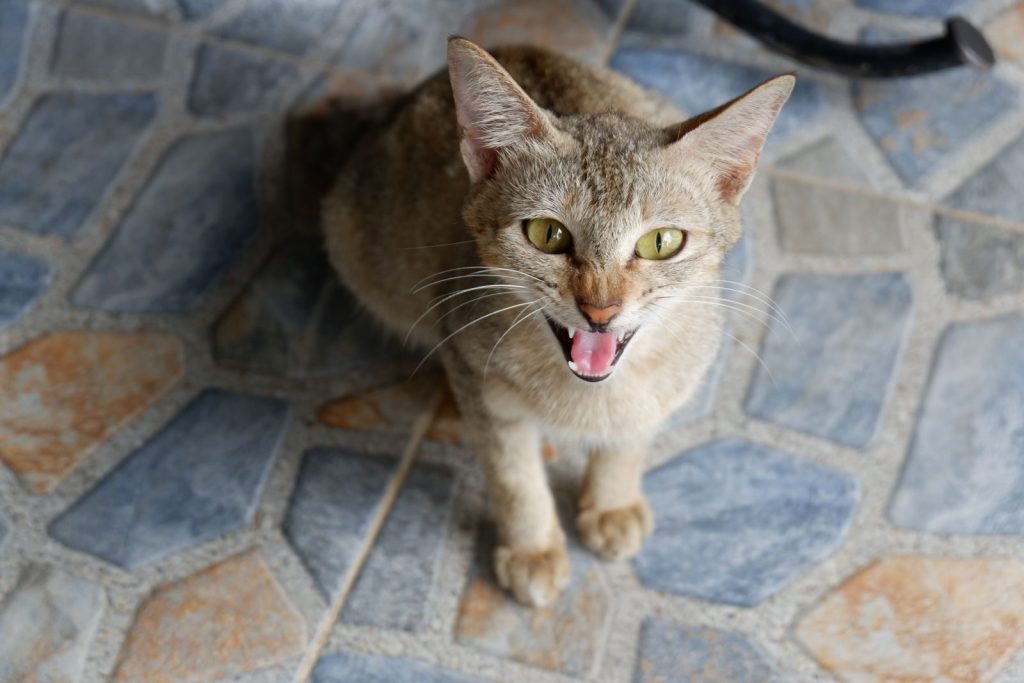
Hissing is usually a defensive warning that asks for more distance. A frightened, frustrated, painful, or overstimulated cat may hiss because something has moved closer than it can comfortably tolerate. The sound is dramatic, but it does not automatically mean an attack is coming. Owners should avoid punishing the hiss or deliberately continuing the interaction to test the cat. Moving away gives the warning a chance to work. If a normally relaxed cat suddenly begins hissing when a certain body area is touched, pain should be considered and a veterinary examination may be appropriate.
Ears and Tail Show Stress

The ears and tail can reveal rising tension before a cat uses its teeth or claws. Ears pulled backward or flattened, a rapidly flicking or lashing tail, and a stiff body can indicate that the animal is no longer comfortable with the situation. These signs are most useful when read together rather than interpreted one at a time. A swishing tail during focused play may not mean the same thing as a lashing tail during unwanted handling. If several stress signals appear together, stopping contact and allowing the cat to leave is usually the safest response.
Swatting Raises the Warning

A swat can range from a restrained warning with claws mostly controlled to a forceful strike capable of causing injury. Context helps separate playful batting from defensive behavior. A cat that is loose-bodied and repeatedly returns to a game is different from one that hisses, flattens its ears, retreats, and then strikes when approached again. If the cat has already tried to create distance, do not continue reaching toward it. Respecting the warning reduces the chance that the next response will be stronger. Frequent defensive swatting also deserves attention to possible fear, pain, or environmental stress.
Biting Can Be Serious
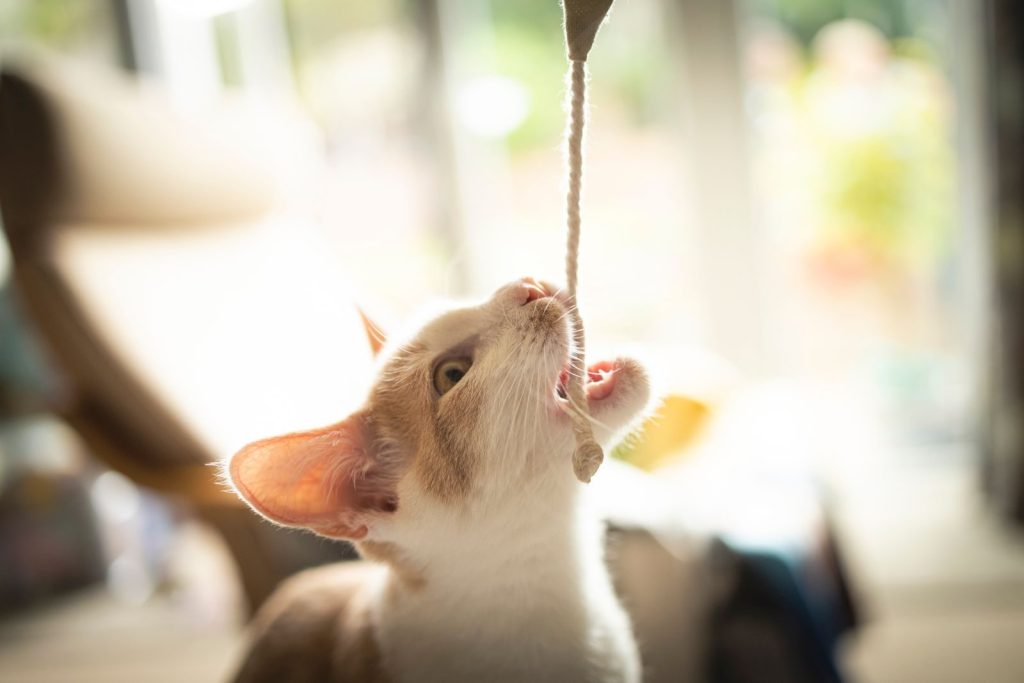
A hard cat bite is not a harmless extension of play. Cat teeth can create deep puncture wounds, and bites can become infected. From the cat’s perspective, biting may occur after fear, pain, restraint, overstimulation, or repeated warnings have failed to stop an interaction. The immediate priority is to deal appropriately with any human injury and then give the cat space. Punishment does not identify or remove the trigger. Repeated biting, or a sudden new tendency to bite, should prompt veterinary or qualified behavior advice so the underlying cause can be addressed rather than ignored.
Fear Can Look Like Anger
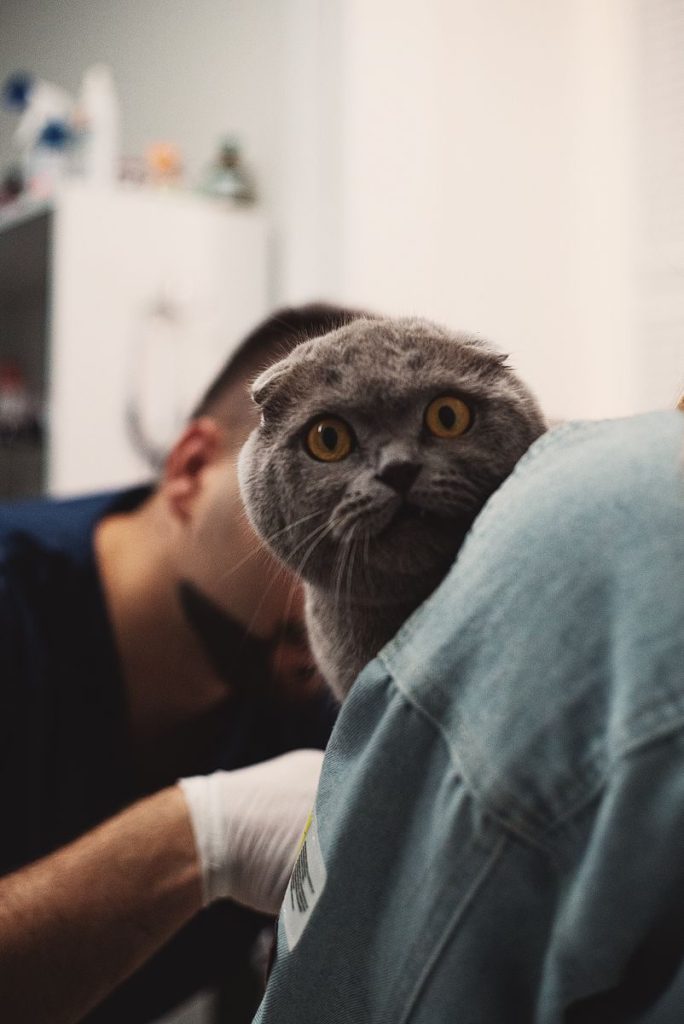
A frightened cat can appear extremely aggressive because defensive behavior is meant to make a perceived threat stop approaching. It may crouch, flatten its ears, hiss, growl, swat, or lunge if escape feels impossible. Veterinary behavior sources describe fear-based aggression as a response to a perceived threat, not evidence that the cat is spiteful. Cornering the animal or forcing contact usually increases the pressure. Give the cat an escape route and reduce stimulation. Persistent fear around people, animals, or routine events may require professional help to identify triggers and build safer associations gradually.
Pain Can Trigger Aggression
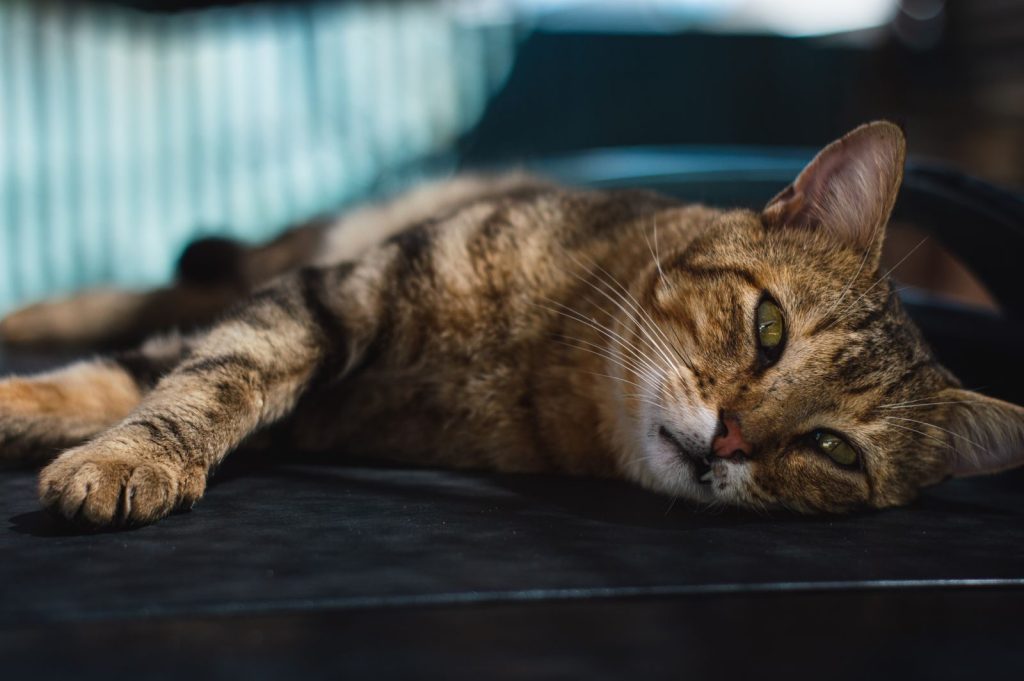
Pain can sharply reduce a cat’s tolerance for touch or movement. Arthritis, dental disease, injuries, skin problems, and other medical conditions may cause a normally friendly cat to hiss, swat, or bite when handled. This is why sudden aggression should not automatically be treated as a training problem. A veterinary examination can look for physical causes, especially when reactions occur after touching one body area or lifting the cat. Treating the underlying discomfort may improve behavior significantly. Owners should never deliberately press or manipulate a painful area to confirm their suspicion at home.
Redirected Aggression Happens
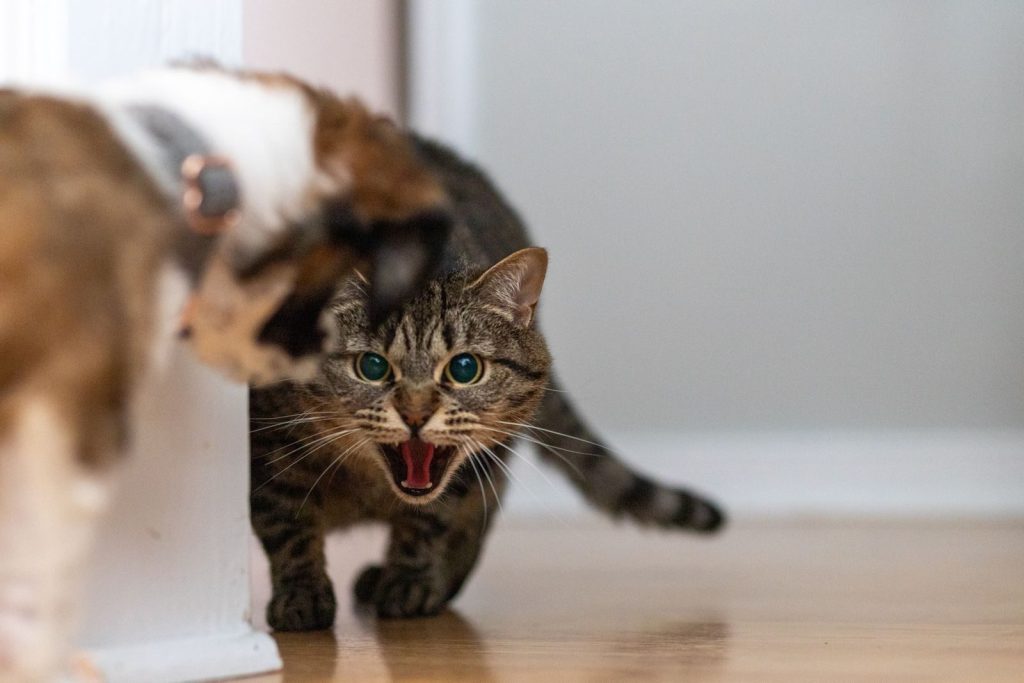
Redirected aggression occurs when a cat becomes highly aroused by something it cannot reach and then directs that aggression toward a nearby person or animal. A common example is a cat becoming intensely upset by another cat outside a window and attacking a housemate that happens to approach. The victim did not cause the original reaction. A highly aroused cat should be given space to settle rather than immediately handled. After a serious incident, household cats may need temporary separation and gradual reintroduction because the redirected attack itself can create fear and tension between them.
De-Escalation Comes First
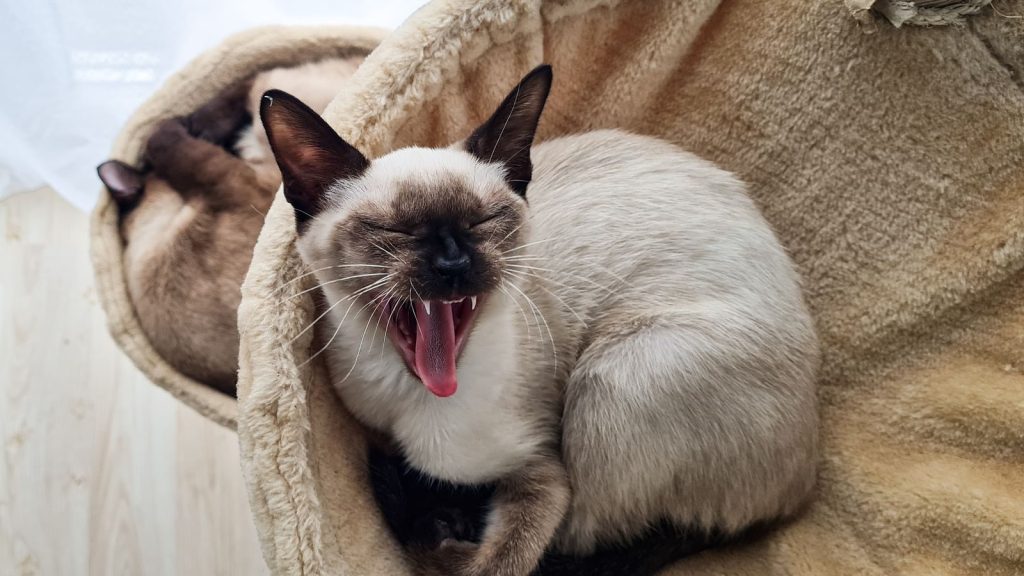
When a cat is highly aroused, the safest goal is to reduce pressure rather than prove who is in control. Stop touching or approaching, keep an escape route open, and avoid shouting or physical punishment. Never place bare hands between cats that are actively fighting. If aggression is repeated, severe, or new, veterinary assessment is important because medical problems can contribute. A qualified behavior professional can then help with environmental or social triggers. Cats can cause serious injuries when pushed far enough, but recognizing early warnings often prevents the interaction from ever reaching that stage.