Cats do not announce happiness with the same obvious signals people often associate with dogs, so a content cat can be easy to misread. In a 2026 Parade Pets feature, cat behavior expert Dr. Mikel Maria Delgado and certified behavior consultant Joey Lusvardi highlighted eight behaviors that can suggest a cat feels happy, secure, and strongly connected to a person. The signals range from slow blinking and kneading to simply choosing to remain nearby.
No single behavior should be treated as a guaranteed translation of a cat’s emotions. Context, body language, health, personality, and normal routine all matter, and some cats show affection more quietly than others. The useful approach is to look for patterns. A relaxed cat that repeatedly approaches you, sleeps nearby, greets you, and engages in comfortable social behavior is giving you more meaningful information than one isolated purr, blink, or tail movement ever could.
They Slow Blink at You

Slow blinking is one of the best-known feline signals of relaxed social interaction. Delgado describes it as a sign associated with trust, affection, and relaxation, and research published in Scientific Reports found that cats were more likely to narrow their eyes after people performed slow-blink sequences. Cats were also more likely to approach an unfamiliar experimenter after a slow blink than after a neutral expression. A slow blink is therefore more than internet folklore, although it should still be read alongside the cat’s overall body language.
They Choose to Stay Near You

A cat does not have to sit on your lap to show that your company matters. Delgado notes that some bonded cats simply choose to remain in the same room, follow their person between spaces, rub against them, or supervise from a comfortable distance. That voluntary proximity is important because the cat has other places it could go. Individual preferences vary widely, so a cat resting several feet away may be expressing as much comfort as another cat that insists on lying directly across its owner’s chest.
They Knead Around You
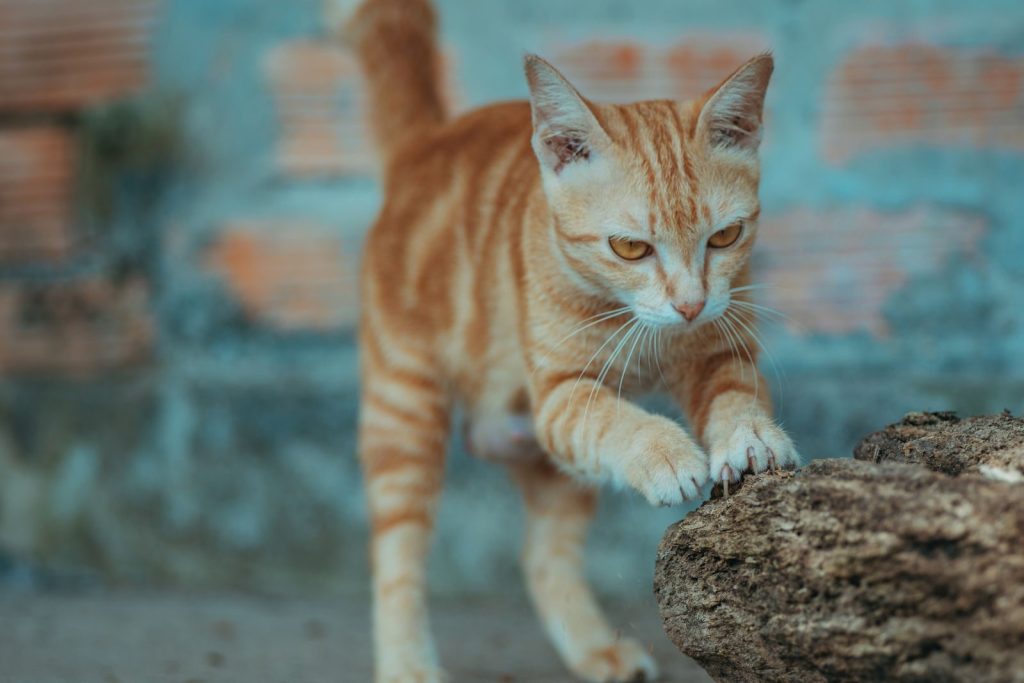
Kneading, often called making biscuits, begins during kittenhood when nursing kittens rhythmically press their paws against their mother. Delgado explains that some adult cats continue the motion when they feel secure and content. The behavior can appear on blankets, beds, other soft surfaces, or a trusted person’s lap. Kneading alone cannot diagnose happiness, but when it occurs with a loose body, relaxed eyes, purring, or comfortable resting, it becomes part of a broader pattern suggesting the cat feels safe enough to settle deeply.
They Sleep Close to You
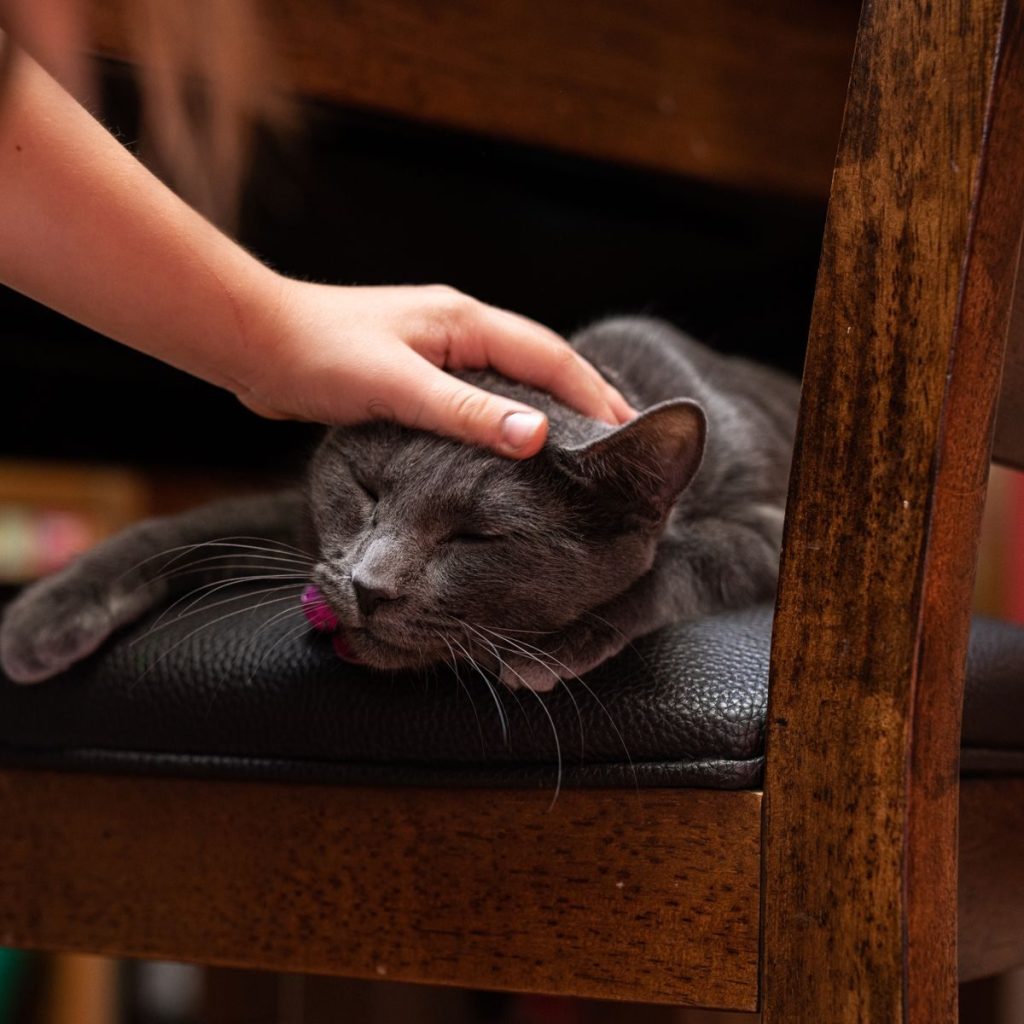
Sleeping near a person can be meaningful because sleep reduces a cat’s ability to monitor everything happening around it. Delgado says cats that choose to sleep with a familiar human are showing comfort and trust in that individual’s presence. The exact distance varies. Some cats sleep on a pillow, chest, or lap, while others prefer the foot of the bed or a nearby chair. What matters is the repeated voluntary choice to rest in the person’s vicinity without showing signs of tension or trying to escape.
Their Tail Shows a Friendly Greeting

Tail position can add another clue when a cat approaches. Parade Pets notes that an upright tail with a gentle curve or small quiver can occur during friendly, excited greetings. Lusvardi explains that a shaking tail can also appear during urine spraying, so context is essential. A relaxed cat walking toward you with an upright tail is very different from a cat backing toward a vertical surface to mark it. Read the tail together with posture, ears, movement, and the situation rather than relying on one shape alone.
They Show You Their Belly
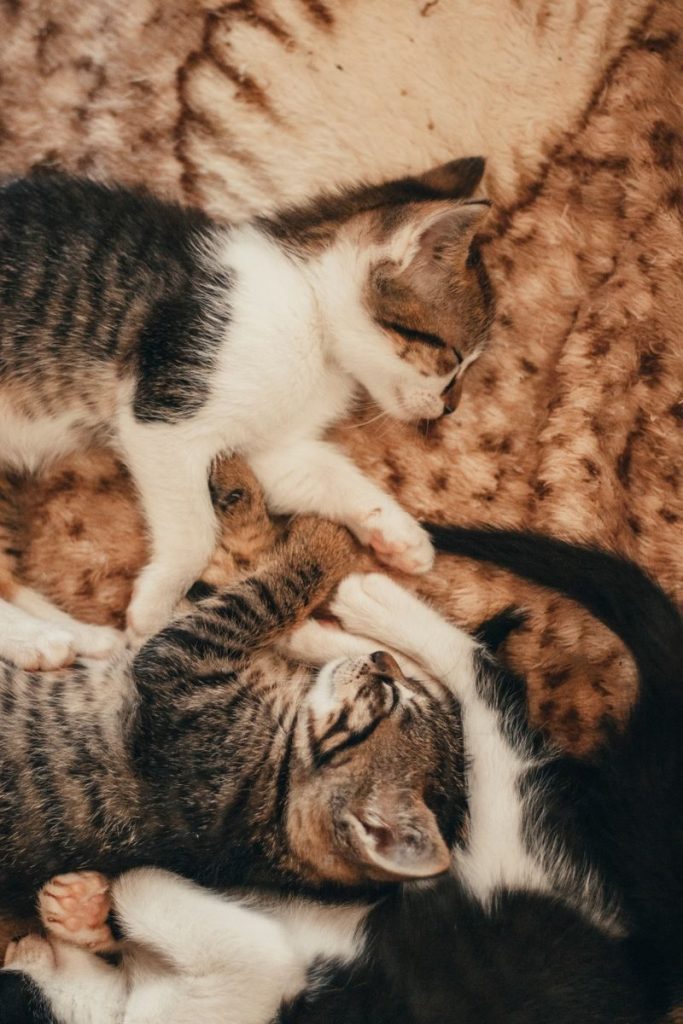
A cat exposing its belly often looks like an invitation for a rub, but the safer interpretation is that the posture can signal comfort and trust. The abdomen protects vulnerable organs, so a relaxed cat rolling onto its back around a familiar person may feel secure enough to adopt an exposed position. That does not automatically mean it wants its stomach touched. Many cats prefer affection around the cheeks, chin, or head and may grab a hand that reaches toward the belly even while remaining otherwise relaxed.
They Find You Predictable

Predictability sounds unromantic, but behavior consultant Joey Lusvardi says it can be an important part of feline trust. A cat that knows how a person handles feeding, grooming, nail care, play, and physical contact can anticipate what will happen instead of constantly preparing for surprises. That consistency may make mildly unpleasant routines easier to tolerate. Being predictable does not mean ignoring boundaries. It means responding in ways the cat can learn, stopping when appropriate, and building a history in which human interaction is generally safe and understandable.
They Wait for You to Come Home

Some cats make their attachment especially obvious by waiting near the door when a familiar person is due home. Lusvardi described seeing this pattern with his own cat through a security camera, with the cat appearing around the expected return time. Cats are excellent at learning daily routines, so the behavior may combine anticipation, pattern recognition, and social interest. A cat that regularly chooses to greet you is showing that your arrival matters, but quieter cats can be equally bonded without performing an enthusiastic doorway welcome.