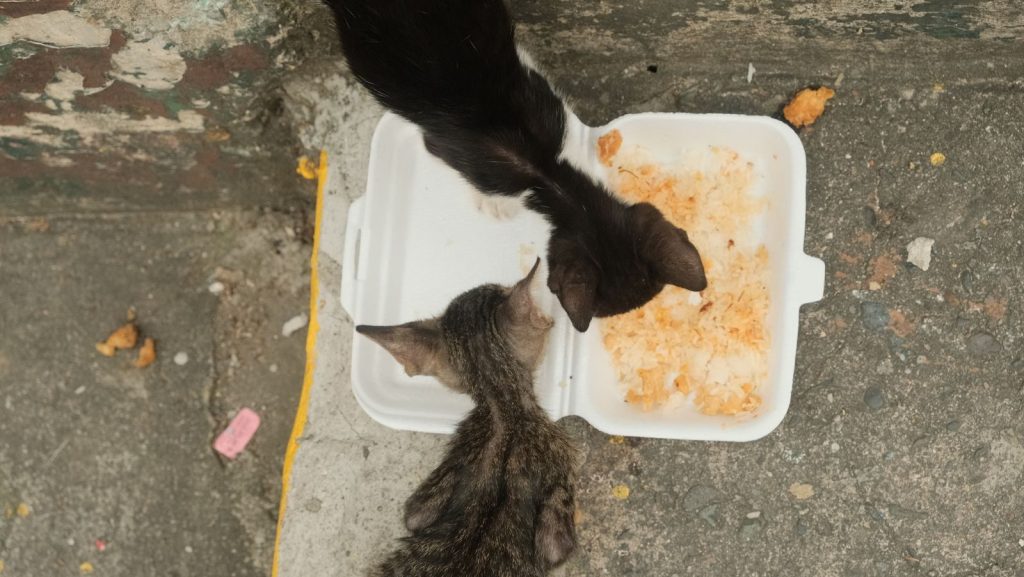

The exact viral clip behind “Sneaky cat discreetly tries to steal food” could not be independently traced to a trustworthy original source, so this article does not invent a name, location, or meal. The behavior itself is familiar to many cat owners. A paw slowly reaching toward a plate can look like a carefully planned theft, but cats may simply be responding to an appealing smell, learned opportunity, curiosity, or a history of being rewarded with table food.
Cats Protection advises against routinely sharing human meals because cats need a complete, balanced diet made for their nutritional needs, and some common foods can be harmful. The easiest way to handle a persistent food thief is not to punish the cat after the fact. Instead, remove access, avoid rewarding begging, feed on a predictable schedule, and give the cat appropriate ways to forage or work for its own food.
Human Food Smells Tempting
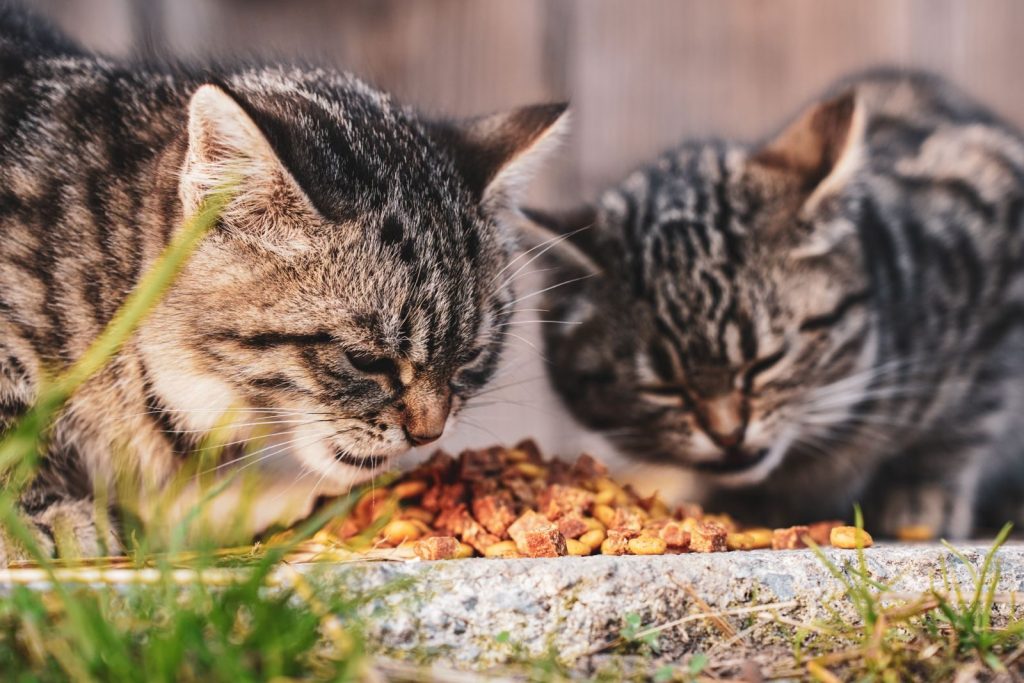
Human meals can smell extremely interesting to a cat, especially when they contain meat, fish, fats, or other strong aromas. Cats Protection notes that some cats are attracted to the smell or taste of food left on counters or served during human meals. A cat reaching toward a plate is therefore not evidence of guilt or a secret plan. The safer explanation is that something appealing is within reach. Keeping plates attended and leftovers covered removes the opportunity before the cat rehearses the behavior repeatedly.
Table Scraps Reinforce Begging

Giving a cat food from the table can teach the animal that hovering, pawing, or meowing near people works. Cats Protection specifically advises owners not to feed table scraps and to ask guests to follow the same rule. Inconsistent rewards can make begging especially persistent because the cat never knows which attempt will succeed. A clear household rule is easier to learn: human meals stay with people, while the cat receives its own food and treats in the appropriate place according to its normal daily allowance.
Some Human Foods Are Dangerous

Some foods are more than nutritionally unsuitable. Cats Protection lists chocolate, caffeine, onions, garlic, grapes, raisins, alcohol, raw dough, and several other human foods as potentially harmful to cats. Raw meat intended for human cooking can also carry bacteria or parasites, while cooked bones can create injury risks. Because a cat may grab food before anyone checks the ingredients, prevention matters. If you know or suspect your cat has swallowed something toxic, contact a veterinarian promptly rather than waiting for symptoms.
Feed Before Your Meal

Cats Protection suggests feeding a food-focused cat shortly before the household sits down to eat. That can reduce the appeal of competing for the same meal, especially when begging has become part of a predictable dinner routine. The cat should still receive the correct total amount of food for the day, so this is a timing change rather than an extra meal. A regular feeding schedule also makes behavior easier to understand because owners can separate genuine meal expectations from opportunistic interest in whatever happens to be on the table.
Puzzle Feeders Redirect Attention
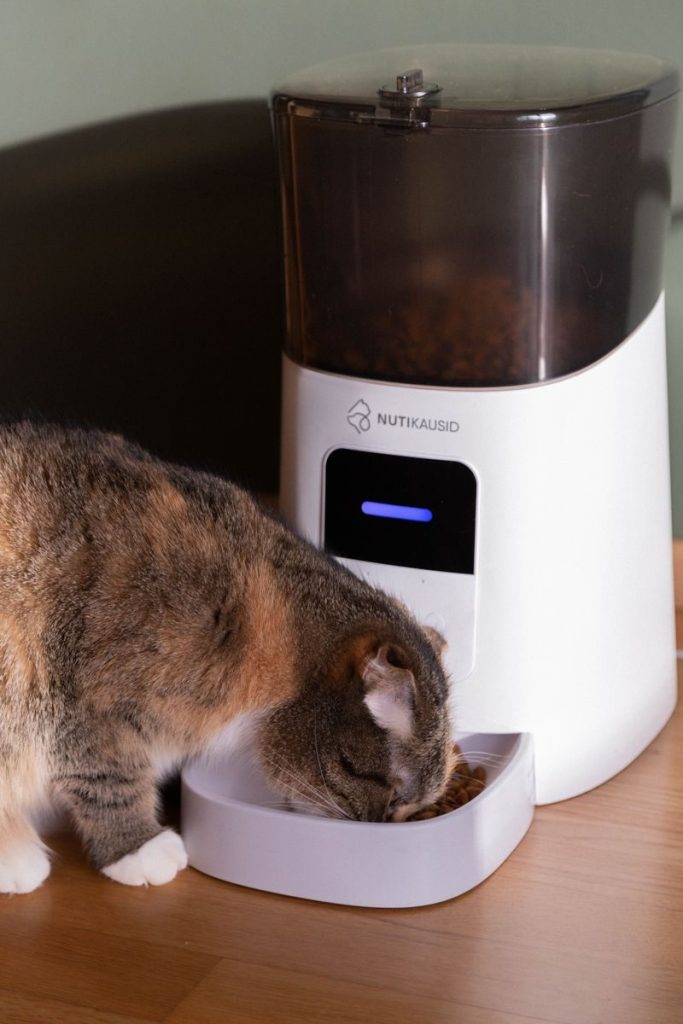
Puzzle feeders can redirect food-seeking behavior toward an activity designed for the cat. Cats Protection recommends them as one option for cats that repeatedly try to access human food during meals. A puzzle feeder turns part of the cat’s normal ration into a searching or problem-solving activity instead of adding extra calories. Start with an easy design so the cat learns how it works, then increase difficulty gradually. The goal is to provide an appropriate food challenge, not frustrate the animal while people eat nearby.
Keep Kitchen Counters Clear
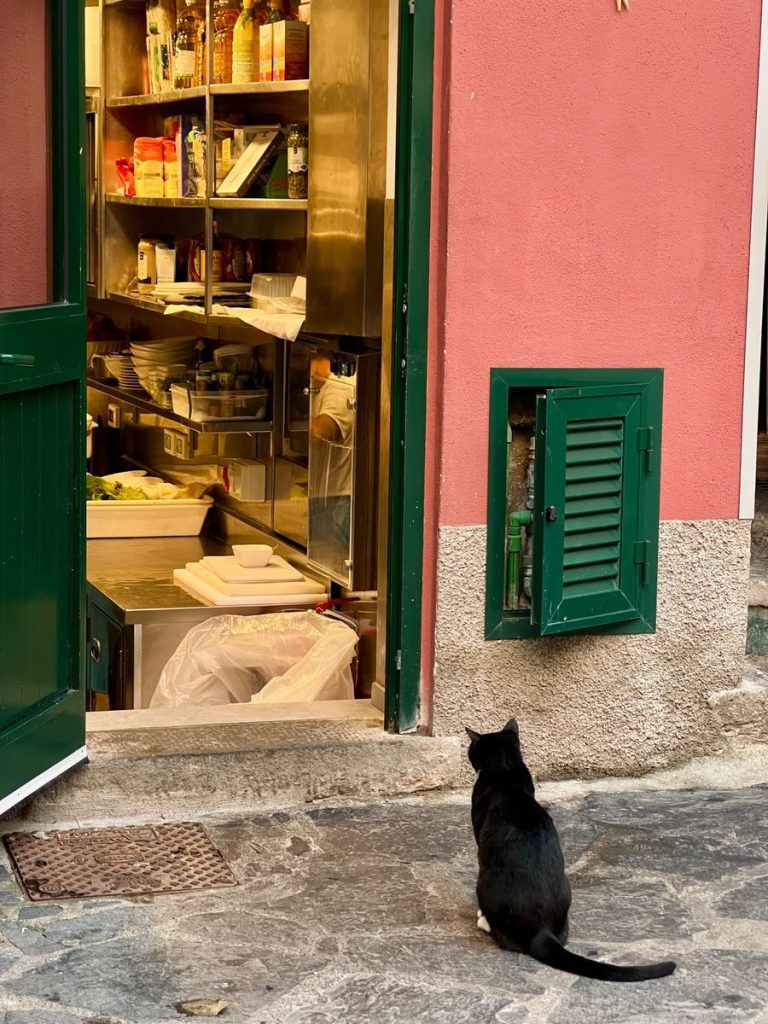
The easiest food theft to stop is the theft that never becomes possible. Store harmful foods securely, cover leftovers, clear plates promptly, and do not leave meat cooling where a cat can reach it. Cats Protection recommends gently moving cats away from counters during food preparation rather than turning the kitchen into a confrontation. Providing a nearby approved perch can also give a social cat somewhere to watch without standing beside knives, hot pans, raw ingredients, or food it should not be eating.
Consistency Makes the Rule Clear
Everyone in the household needs to respond the same way if the cat begs or reaches for human food. One person refusing while another quietly hands over chicken from a plate creates a mixed lesson. Keep rewards tied to the cat’s own feeding routine, and use praise, play, or an appropriate food puzzle instead of table scraps. Punishment is unnecessary and can make the cat fearful around people. Environmental management and consistency usually communicate the rule more clearly than shouting after the cat has already grabbed something.
Keep Extra Calories Under Control

Treats and extras still count toward a cat’s total calorie intake. The ASPCA recommends keeping treats to a small part of the overall diet, while Singapore’s Animal & Veterinary Service emphasizes complete, age-appropriate cat food and monitoring healthy body condition. A cat that repeatedly steals calorie-dense human food can gain weight without owners realizing how much extra energy is being consumed. If a cat’s appetite changes sharply or weight changes unexpectedly, discuss it with a veterinarian rather than assuming the behavior is simply greed.
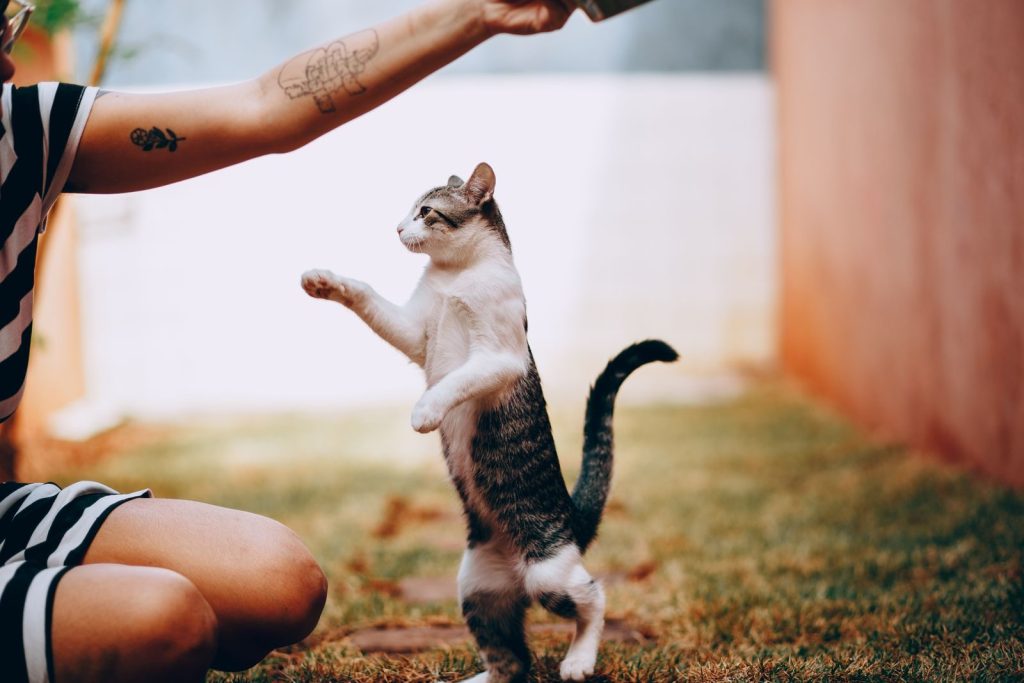
Featured Image: Photo by Zachary Angeles on Pexels