

Many owners talk to their pets like they are human babies. We ask them about their day and tell them we love them.
Science shows that felines are listening much closer than they appear. They decode your words using a highly surprising sensory system.
Recognizing their unique name in a crowd

You might think your pet ignores your voice completely. However, researchers at Sophia University in Tokyo proved that cats easily recognize their own names. They can distinguish their name from other random nouns, even when spoken by a stranger. This shows they pay close attention to your daily speech. But their decoding system goes much deeper than words.
Telling your voice apart from a stranger

Felines are highly sensitive to vocal sounds. A study published in Animal Cognition showed that cats behave differently when their owner speaks compared to a stranger. They twitch their ears and move their heads toward the familiar sound. They prioritize your voice because you represent safety. Yet, they do not understand the literal meaning of sentences.
The power of your emotional tone

Your pet focuses on the pitch and emotion of your voice. When you use high-pitched, happy tones, they feel relaxed. Deep, loud voices can make them feel threatened or scared. According to animal behaviorists, cats read your emotions to evaluate their environment. This explains why they run away when you are angry. But they also watch your face.
Reading your body language as you talk

Words are only part of the communication puzzle. Felines look at your eyes, shoulders, and hands when you speak. If you look at them and blink slowly, they interpret this as a friendly greeting. They combine these visual cues with your voice to understand your mood. This cooperative listening helps them survive in human homes. But one specific human vocal habit triggers a powerful response.
Why baby talk works so well

Humans naturally raise their pitch when talking to pets. This baby talk matches the frequency of a kitten’s cry. Cats are programmed to respond to these high frequencies. Your furry friend hears this and feels a deep sense of security. According to the Cornell Feline Health Center, this baby talk strengthens your bond. But you must watch for signs of vocal stress.
Identifying when your cat feels overwhelmed

Too much loud talking can stress a sensitive animal. If your pet twitches their tail or flattens their ears, they need quiet time. The American Veterinary Medical Association recommends keeping a calm home environment to support pet health. This article is for informational purposes only and does not constitute veterinary advice. But understanding their boundaries helps you unlock a different level of trust.
Building a secret language with your pet
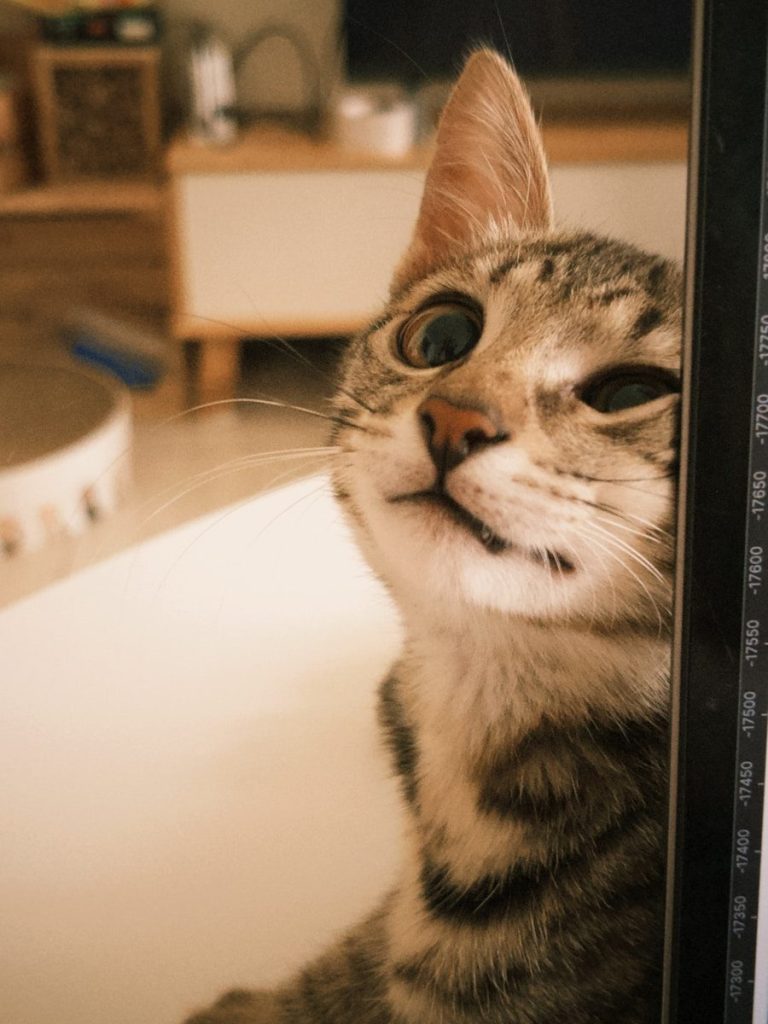
Consistency is the key to talking with your cat. Using the same words for feeding and play helps them learn your routine. They might not understand English, but they understand your love. Keep talking to them because they are always listening with their hearts.
Featured Image: Photo by Jessica Weiller on Unsplash