A tiny Ragdoll kitten named Unicorn found an irresistible moving target in a video shared by Pearl’s Ragdolls: her mother’s fluffy tail. Parade Pets covered the clip in April 2026, describing Unicorn repeatedly pouncing on tails, paws, toes, and other moving targets around her. The source’s playful language calls her a little villain, but the visible behavior has a much simpler explanation. Young kittens commonly explore movement through chasing, grabbing, wrestling, and pouncing.
Unicorn is being raised in a home environment with other cats, human family members, and a senior Golden Retriever, according to the published story. Her tail-pouncing moment is funny, but it also provides a useful training reminder. Kitten play can be redirected toward appropriate toys before grabbing hands, feet, or another animal becomes a persistent habit. The goal is not to punish normal predatory-style play, but to give that energy safer and more suitable targets.
Unicorn Targets Her Mom’s Tail

The video centers on Unicorn repeatedly focusing on her mother’s long, fluffy tail as it moves within reach. From a kitten’s perspective, movement is naturally interesting, and a swishing tail provides a changing target that can be stalked and pounced upon. Parade Pets reports that similar behavior has occurred with other kittens raised there. The scene looks mischievous because the tail belongs to another cat, but the kitten does not need a complicated motive. She is engaging with something that moves in a way that invites normal kitten play.
Pouncing Is Normal Kitten Play
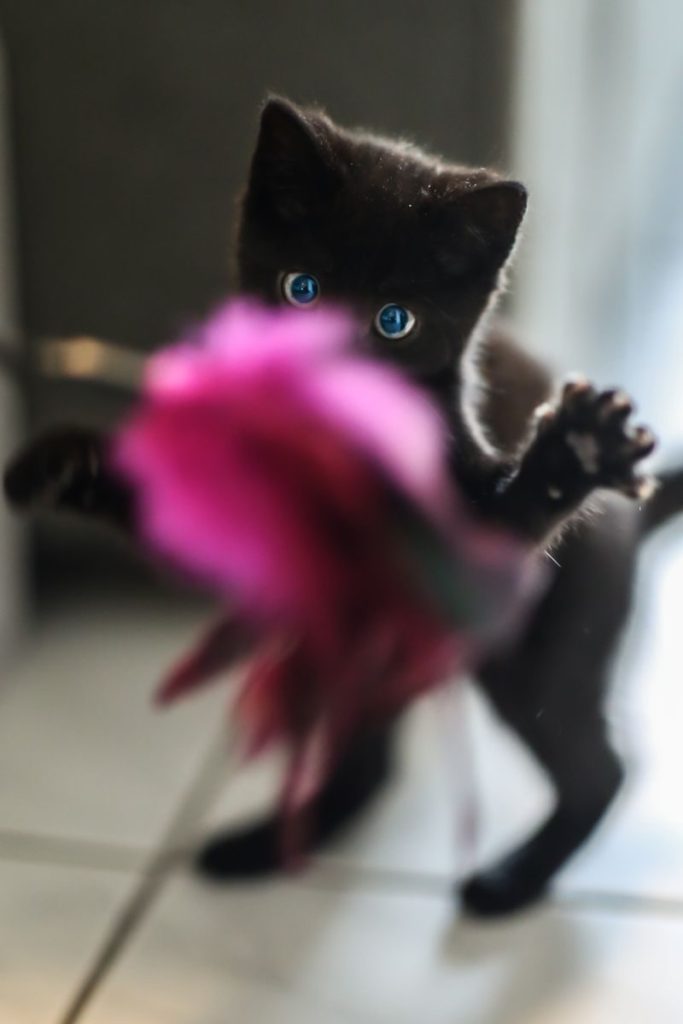
Young cats rehearse many adult movement patterns during play, including stalking, chasing, grabbing, kicking, and pouncing. These games help kittens practice coordination while giving them an outlet for high energy. Parade Pets correctly frames Unicorn’s behavior as exploratory play rather than deliberate bad behavior. That distinction matters when owners respond. Punishment can frighten a kitten without teaching what to do instead. Redirecting the same urge toward toys gives the kitten an appropriate way to continue chasing and catching while reducing unwanted attacks on people or other animals.
Moving Body Parts Become Tempting Targets

Tails are not the only body parts that can attract playful kittens. Unicorn reportedly targets paws and human toes too, which is common when movement repeatedly catches a young cat’s attention. A foot under a blanket can resemble something darting beneath cover, while wiggling fingers may function like a miniature moving toy. Allowing regular attacks on hands and feet can become uncomfortable as the kitten grows stronger. Owners can prevent mixed messages by making toys the exciting moving targets and keeping human skin out of rough play.
Wand Toys Offer a Better Target
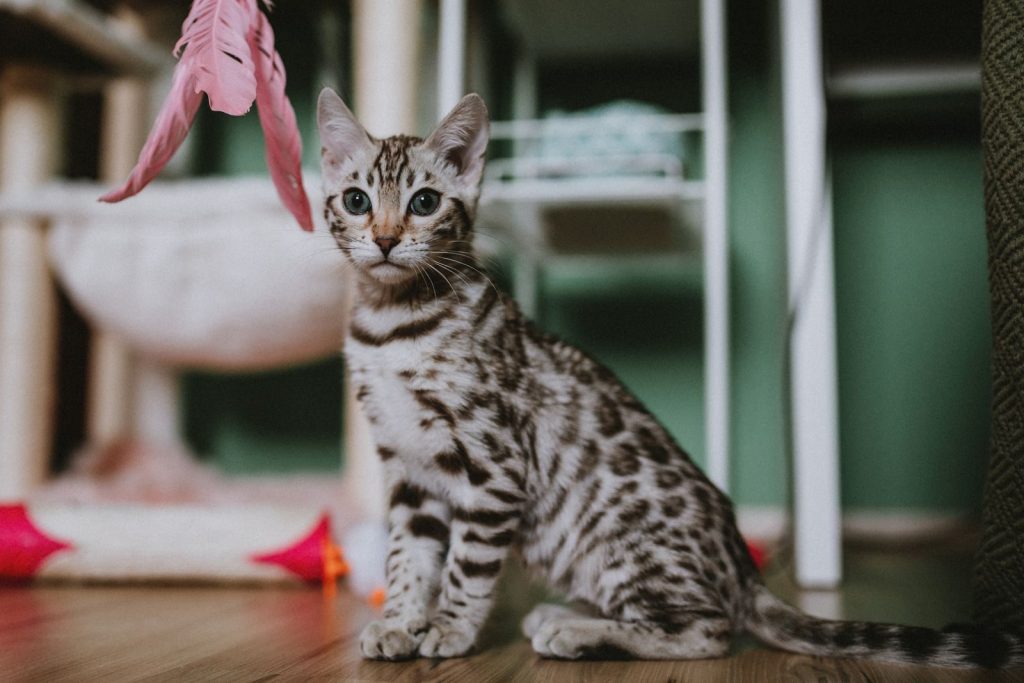
A wand toy can recreate many of the qualities that make a moving tail interesting without involving another cat’s body. The toy can dart, pause, hide, and change direction while keeping human hands farther from claws and teeth. Parade Pets recommends gentle redirection when kittens begin targeting fingers, toes, or feline body parts. The important word is gentle. The kitten can be invited away with movement rather than grabbed, shouted at, or punished. Over repeated play sessions, appropriate toys become a clearer outlet for chasing and pouncing.
Let the Older Cat Walk Away

Another cat should always be able to leave a kitten’s play session. An adult that tolerates one or two tail pounces may eventually become tired of the attention, and caregivers should watch the full interaction rather than assuming silence means unlimited permission. If the older cat moves away, hides, becomes tense, hisses repeatedly, or tries to escape, the kitten can be redirected elsewhere. Respecting that choice protects both cats. A tolerant adult can be a useful social partner, but it should not have to function as a kitten’s permanent toy.
Short Play Sessions Burn Energy

Kittens often cycle rapidly between energetic activity and rest, so several manageable play sessions can be more useful than expecting one long game to satisfy them. Toys that encourage chasing, climbing, pouncing, and searching can provide variety while reducing the temptation to ambush ankles or tails. The objective is not simply to exhaust a kitten until it stops moving. Good play gives the cat appropriate opportunities to perform natural sequences, succeed in catching something, and settle afterward. Unicorn’s enthusiasm shows just how strongly a moving target can capture kitten attention.
Consistency Makes Redirection Clearer

Training becomes confusing when hands are treated as toys one day and forbidden targets the next. Everyone in the household should follow the same basic rule: toys are for biting and pouncing, while hands are for calm handling and gentle interaction. If a kitten grabs skin during play, stop the interaction briefly and offer an appropriate toy instead. Consistent redirection does not eliminate kitten energy, but it teaches where that energy can go. Parade Pets gives essentially the same advice when discussing Unicorn’s interest in paws, toes, and tails.
Unicorn’s Game Is Funny but Familiar

What makes the clip memorable is not an unusual medical or behavioral problem. It is the recognizable determination of a kitten who has found something that moves exactly like a toy. Unicorn’s mother’s fluffy tail creates the perfect visual target, and the kitten repeatedly takes advantage of it. For owners, the practical lesson is straightforward: normal pouncing needs appropriate outlets. Giving kittens engaging toys, protecting hands and feet from rough games, and respecting other cats’ boundaries can keep the same playful instincts enjoyable as the kitten grows.
Featured Image: Photo by Peng Louis on Pexels