

A new Bernedoodle puppy walked into a household already occupied by several Maine Coons, and the resident cats did not rush forward with an enthusiastic welcome. In a TikTok video shared by @farmily.ties on September 25, 2025, and covered by Parade Pets the next day, the Maine Coons watch the puppy closely as the newcomer explores the room. Their serious expressions inspired jokes about “judgment,” but the more accurate description is simple observation. The cats were dealing with a new animal entering familiar territory and were taking time to assess the change.
That cautious reaction is not a reason to assume the cats dislike the puppy permanently. Cats Protection recommends gradual, controlled introductions between cats and dogs because first meetings can affect how comfortable the animals become around each other. Resident cats should keep access to safe spaces, high resting areas, food, water, litter boxes, and escape routes that the dog cannot block. The puppy should be managed calmly and prevented from chasing. The goal is not instant friendship; it is helping both species learn that sharing the home can be predictable and safe.
The Puppy Gets Their Attention

The puppy in the clip is a Bernedoodle, while the established pets are a group of large Maine Coon cats. Parade Pets describes the puppy wandering around and sniffing the room as the cats remain focused on the newcomer. That contrast creates the humor: the puppy appears busy exploring, while the cats look almost motionless as they watch. It is tempting to read those faces as disapproval, but a still photograph or short clip cannot prove a complex human emotion. What the video clearly shows is heightened attention toward a new animal in their environment.
Watching Can Be Normal

Watching from a distance can be a sensible first response for a resident cat. A new puppy brings unfamiliar smells, movements, sounds, and energy into territory the cat already knows well. International Cat Care advises minimizing disruption to the resident animal during introductions and giving both pets time to adjust. A cat does not need to walk up and greet a puppy immediately for the introduction to be successful. Remaining on a perch, observing, and choosing not to approach can be part of a calm assessment, especially when the cat has a safe route away.
Judgment Is a Human Label

Calling the Maine Coons “judgmental” makes the clip funny, but it should stay a joke rather than a behavioral diagnosis. Parade Pets cites a cat behavior consultant explaining that humans often project judgment onto feline facial expressions. A fixed stare or serious-looking face can reflect attention, uncertainty, discomfort, or simply the cat’s natural features. Owners get better information by watching the entire body: posture, ears, tail, movement, vocalization, hiding, and willingness to eat or play. Those signals reveal far more about comfort than a human interpretation of a cat’s expression.
Start With Scent
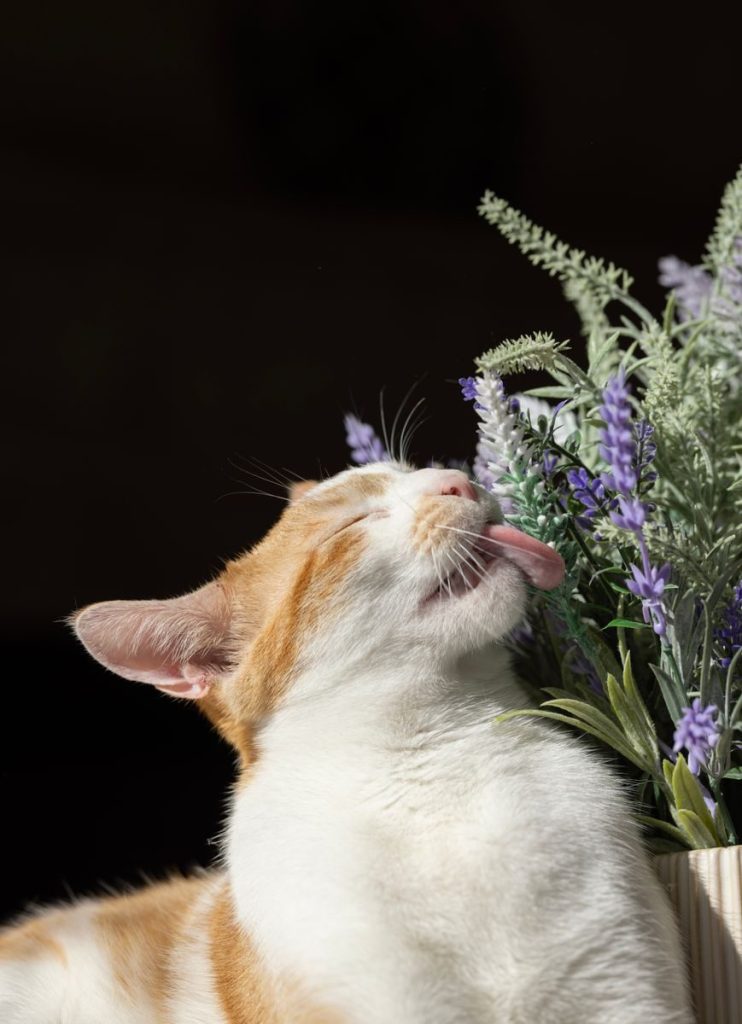
Before direct meetings, scent can help both animals become familiar without the pressure of face-to-face contact. Cats Protection recommends exchanging scents using separate soft cloths and allowing each pet to investigate the other’s smell at its own pace. Bedding can serve a similar purpose. The process may take days, and there is no benefit in rushing if either animal avoids the scent or becomes tense. Familiarity through smell does not guarantee friendship, but it can make the eventual visual introduction less abrupt by ensuring the other animal is no longer completely new.
Give Cats Safe Retreats

Cats need places a puppy cannot easily reach. High shelves, cat trees, gated rooms, and other elevated or protected areas allow the resident cat to watch without feeling trapped. Cats Protection specifically advises providing an escape route and never restraining a cat during introductions. Food bowls and litter trays should also remain inaccessible to the dog so the cat does not have to compete for essential resources. A cat that can leave an interaction is less likely to feel cornered, and the puppy has fewer opportunities to turn curiosity into chasing.
Keep the Puppy Controlled

The dog’s behavior should be managed just as carefully as the cat’s. Cats Protection recommends keeping the dog on a lead during early face-to-face meetings and rewarding relaxed behavior. Basic cues such as sit, down, and stay can help redirect a puppy that becomes overly interested in the cat. Chasing should never be allowed, even if the puppy appears playful, because the cat may experience it as threatening and learn to fear the dog. Short, controlled sessions are safer than letting both animals loose and hoping they work things out.
Move at Their Pace

Progress should happen at the pace of the more cautious animal. Some cats and dogs become comfortable within days, while others need weeks of scent exchange, barriers, and supervised meetings. If either animal shows persistent fear, intense fixation, chasing, or aggression, increasing distance and returning to an earlier stage is more useful than pushing forward. Cats Protection warns that rushing can damage the relationship. Peaceful coexistence is a perfectly good outcome. The pets do not need to sleep together or play together for a multi-species household to be successful.
First Impressions Can Change

The Maine Coons in the viral video may look like a stern committee evaluating the new Bernedoodle, but their first reaction does not determine the future relationship. They are watching a major household change unfold in front of them. With controlled introductions, safe spaces, scent work, calm puppy management, and freedom for the cats to retreat, cautious observation can gradually become ordinary coexistence. The best measure of success is not whether the animals produce a cute photo together, but whether each can eat, rest, move around, and use important resources without fear or conflict.
Featured Image: Photo by Bri Schneiter on Pexels