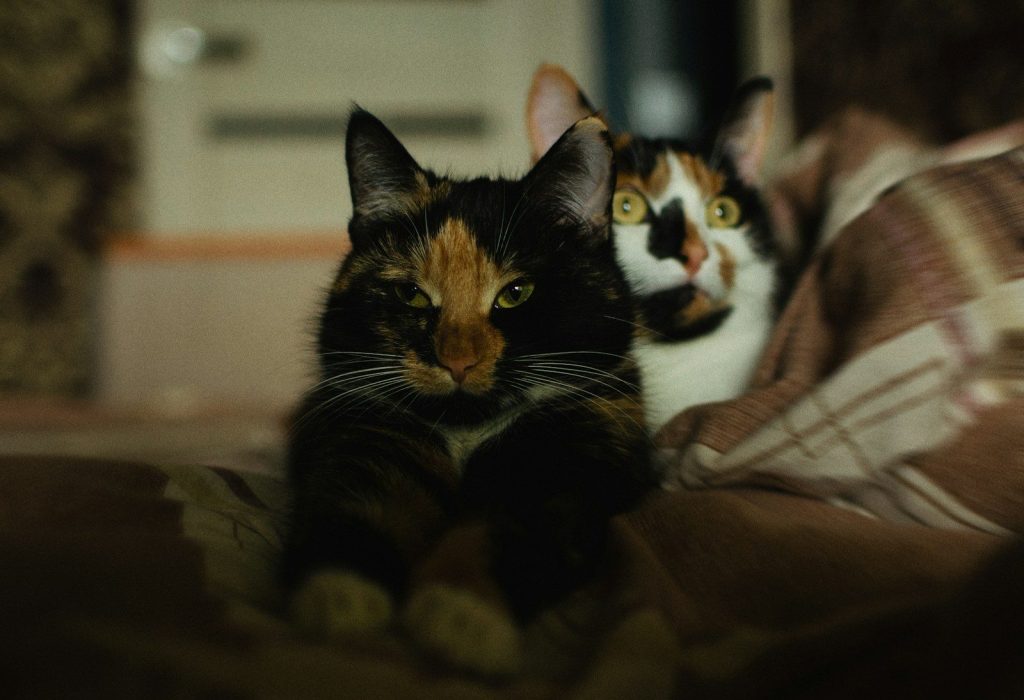

You watch your tiny kitten crawl on top of an older, sleeping cat. Instead of curling up to sleep, they begin licking the older pet’s ears.
This sweet display looks like pure affection to our human eyes. But feline behaviorists suggest there is a much more complex survival reason behind this comforting behavior.
The social biology of domestic allogrooming
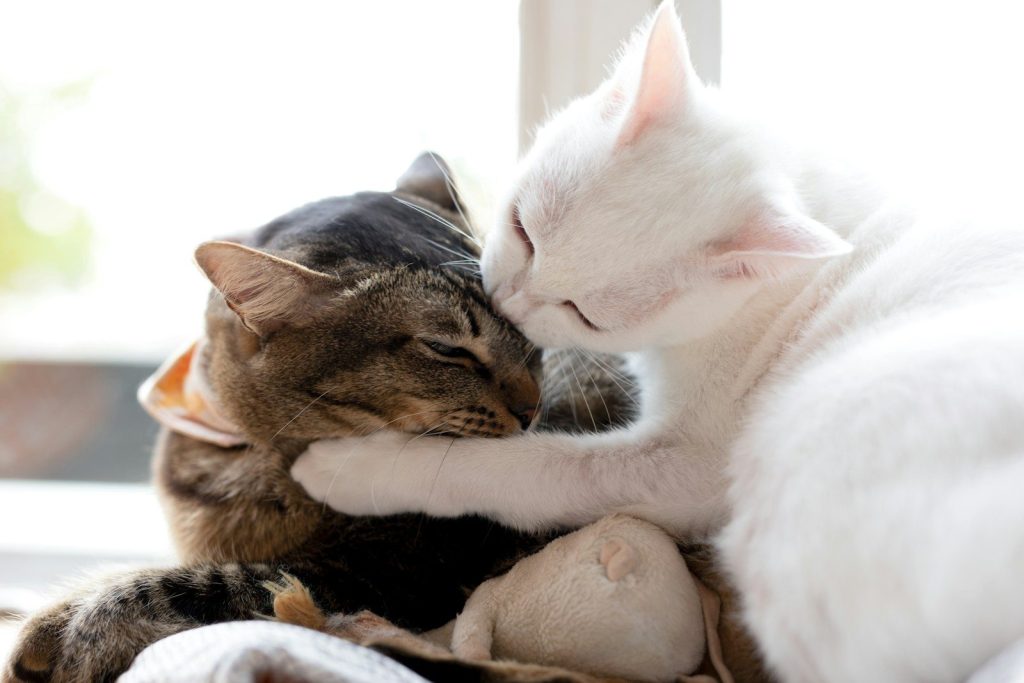
Cats lick each other to maintain social bonds. According to the Cornell Feline Health Center, this social behavior is called allogrooming. It helps them establish a group scent within their home. By choosing a sleeping target, the kitten bypasses any initial rejection from the adult. But this physical contact also triggers a deep developmental memory.
Recreating the comfort of the maternal nest
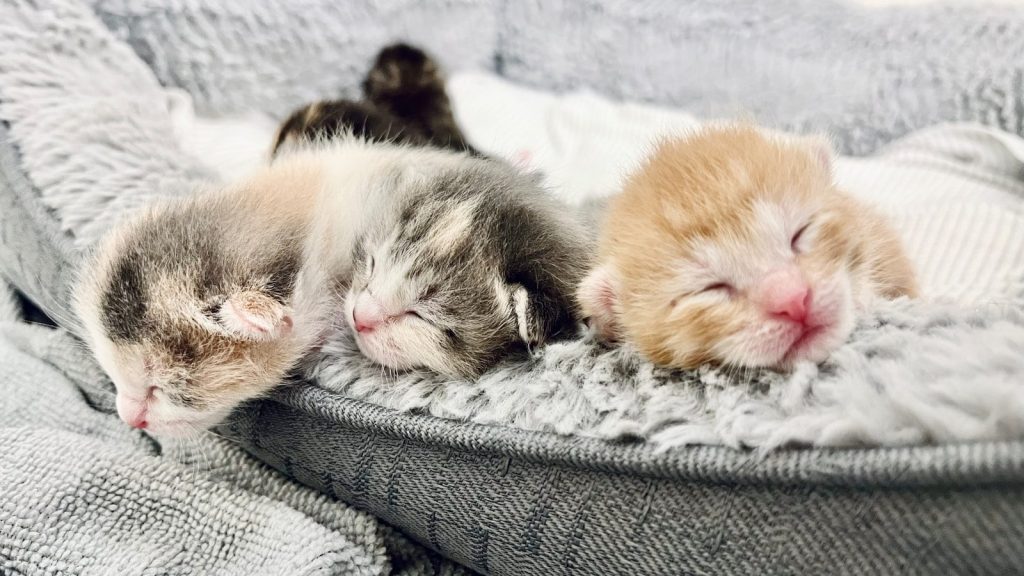
Newborn kittens depend entirely on their mothers for warmth and cleanliness. This early maternal grooming leaves a lasting psychological mark on their young brains. When a kitten licks a resting companion, they are recreating that peaceful state of safety. They associate the rhythmic movement with absolute security. However, this action also helps resolve a major survival problem.
Reaching the spots they cannot clean
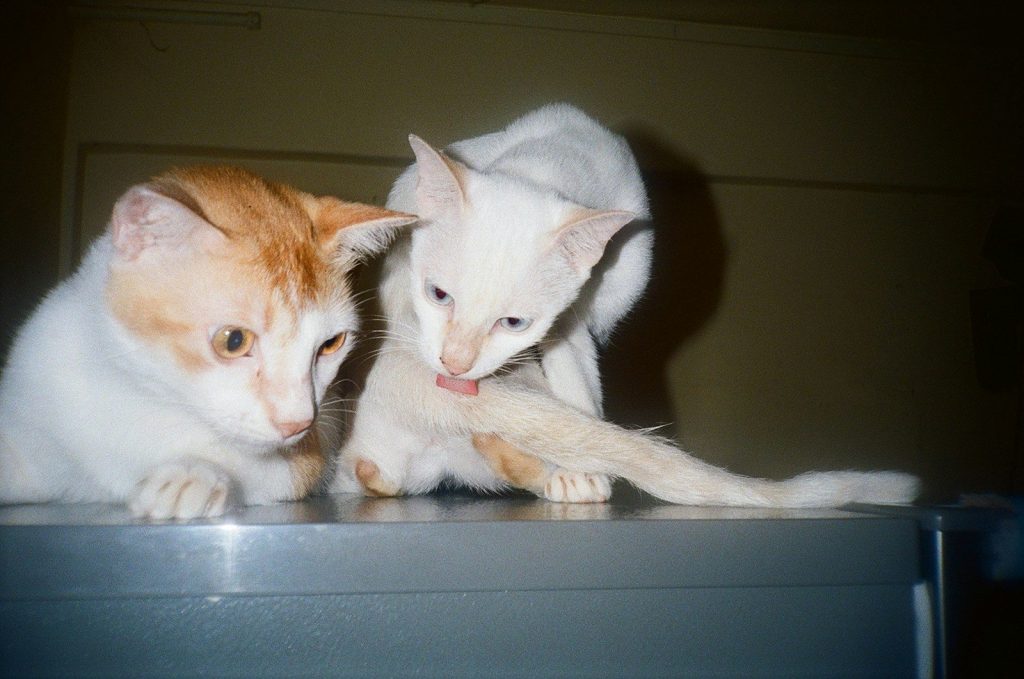
A cat cannot easily groom their own forehead, ears, or neck. Kittens instinctively focus their licking on these hard-to-reach zones to show helpful intent. This cooperative behavior helps keep the adult clean and healthy. It is a practical way of showing they are a peaceful addition to the household. Yet, this gentle gesture also acts as a subtle scent marker.
Claiming the older cat as family
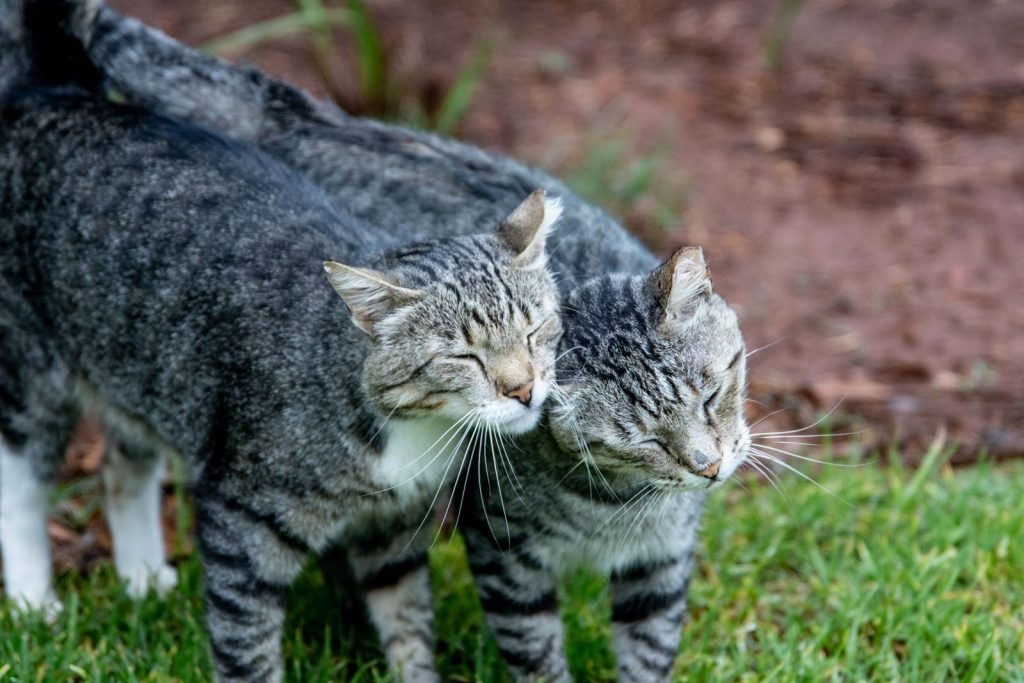
Felines have tiny scent glands located around their lips and cheeks. When the kitten licks another pet, they are depositing their unique pheromones onto the receiver. This process creates a collective profile that helps the group recognize each other as a safe family. It essentially labels the older cat as their personal territory. But the sleeping adult’s reaction holds the real test.
Testing the limits of adult patience
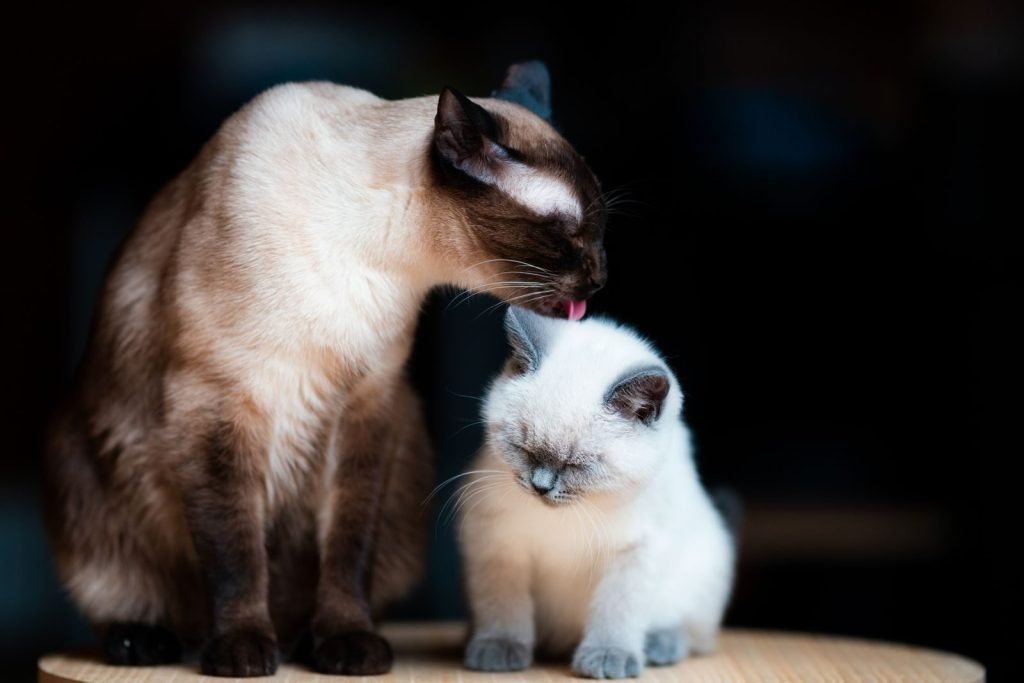
Older cats might tolerate this grooming for a short time before walking away. This reaction is a completely normal boundary check for growing kittens. The adult uses brief physical cues to teach the young pet about personal space. Experiencing these mild corrections is highly important for a kitten’s social training. But how do you know if this behavior is safe?
Monitoring for signs of physical stress
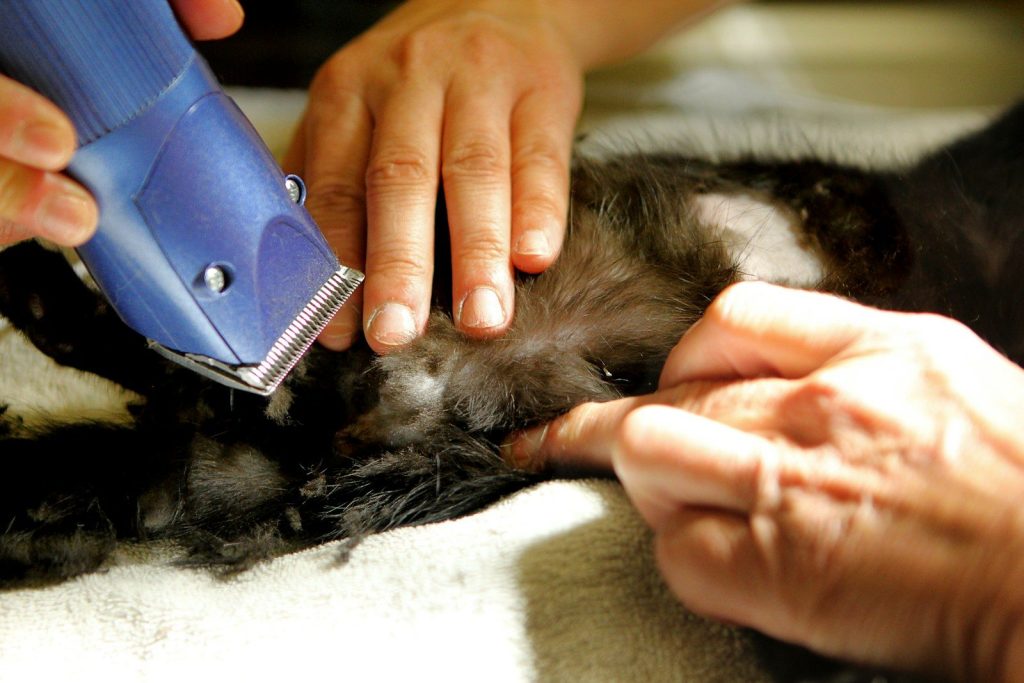
Sometimes, obsessive grooming can point to underlying health issues. According to the ASPCA, skin parasites or food allergies can make a cat seek extra physical attention from companions. You should always check both animals for clean skin and healthy coats. If you notice raw spots, a prompt veterinary visit is essential. Fortunately, you can support their bonding process with simple tools.
Supporting their growing family bond
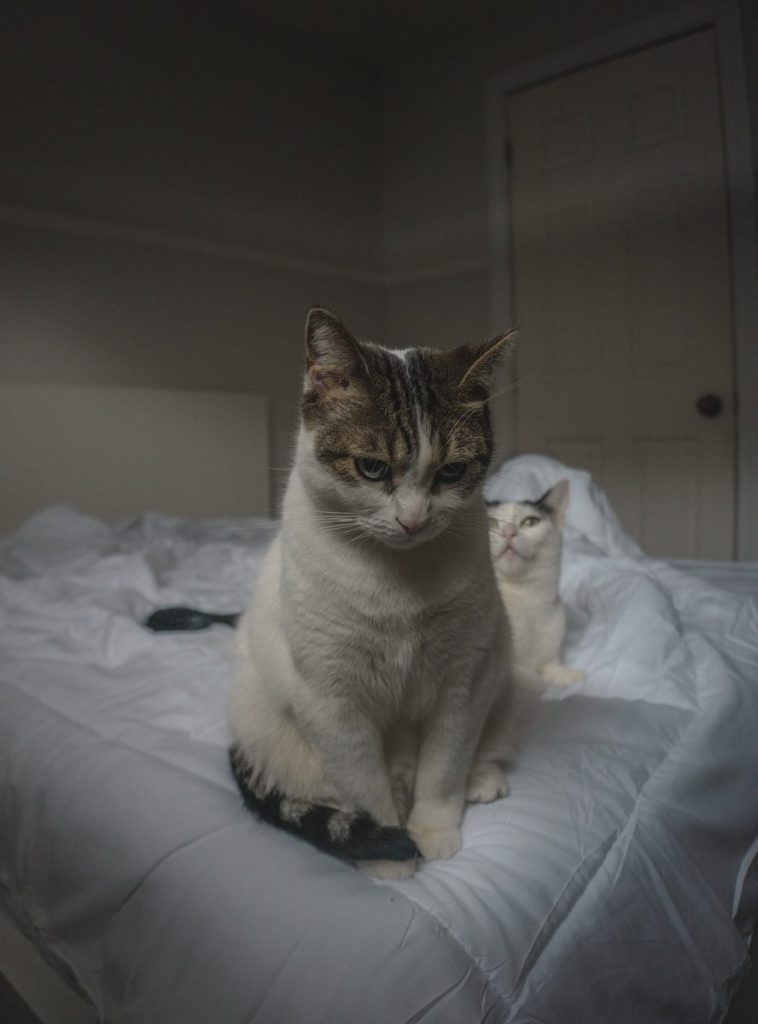
Encouraging calm interactions helps your pets feel secure in their shared home. Offer them cozy beds where they can snuggle together safely. Giving them high-value treats during grooming sessions reinforces their positive association. This simple routine helps your kitten transition into a confident and loving adult companion.
Featured Image: Photo by Vitaliy Shevchenko on Unsplash