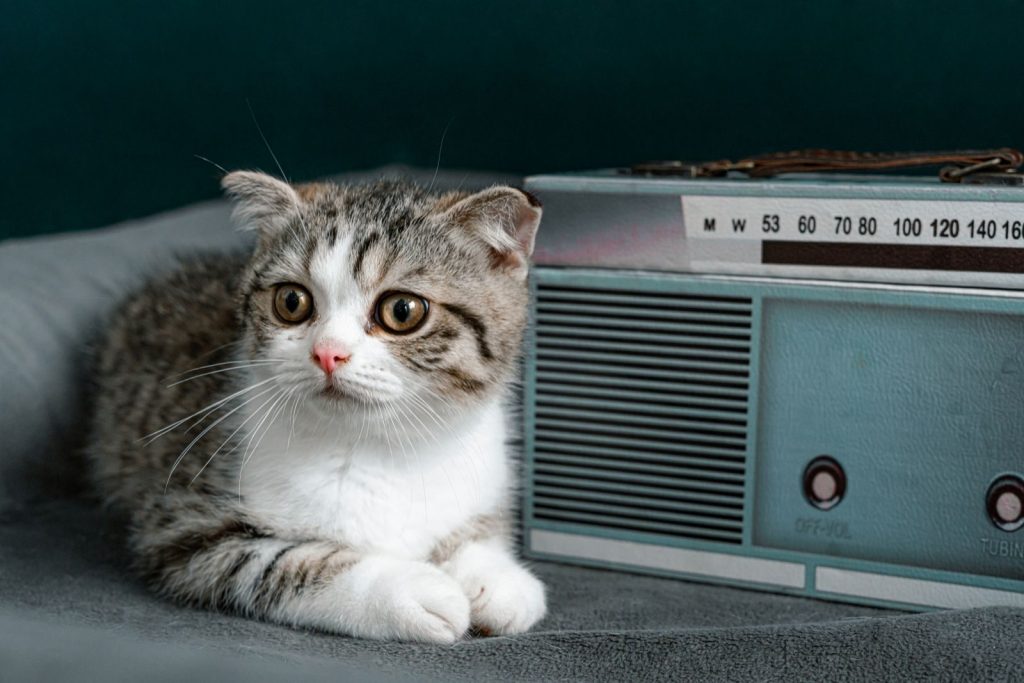

A new study examined whether domestic cats distinguish emotions when people communicate through nonverbal vocal sounds.
The findings are more nuanced than claims that cats cannot understand human voices. Cats reacted to the sounds, but researchers found no clear evidence that vocal cues alone let them distinguish specific emotional categories.
Researchers Tested 20 Cats

The study involved 20 domestic cats tested inside their own homes. Researchers used playback experiments rather than placing the animals in an unfamiliar laboratory, helping them observe reactions in a more familiar environment.
Four Human Emotions Were Tested

The recordings represented happiness, anger, fear and sadness through nonverbal human vocalizations. Researchers wanted to know whether cats reacted differently depending on the emotional meaning behind each sound.
Researchers Watched Their Behavior

The team recorded stress-related behaviors, how quickly cats responded, how long they looked toward speakers and which direction they turned their heads after hearing the vocalizations.
Human Sounds Increased Arousal

The cats showed measurable behavioral changes when exposed to human vocal cues. Overall, however, their responses suggested moderate generalized arousal rather than a distinctive reaction to each individual emotion.
Emotions Were Not Clearly Separated
Researchers found no evidence that the cats reliably distinguished happiness, anger, fear and sadness from these vocal sounds alone. That does not mean all human voices sound identical to cats.
The Headline Needs a Correction

Saying cats “cannot understand human voices” goes far beyond the experiment. The study tested nonverbal emotional sounds under specific conditions, not whether cats recognize words, familiar people, names or ordinary speech.
Context May Provide More Information

Cats normally encounter human emotion alongside facial expressions, posture, movement, scent and previous experience. Vocalization by itself removes much of that additional information, which may partly explain the broad response researchers observed.
Cats Still Pay Attention

The important finding is not that cats ignore human emotion. They clearly responded to human sounds, but the experiment suggests that sound alone may provide limited information for fine emotional discrimination.
Featured Image: Photo by Foden Nguyen on Pexels