

Millions of pet owners drift off to sleep with a warm cat curled up beside them. It feels like the ultimate comforting routine.
However, this nightly habit impacts your physical health and sleep cycles in surprising ways. Experts warn there are hidden costs to this cozy arrangement.
The unexpected calming power of feline purrs

Resting with a cat can actively lower your physical anxiety levels before sleep. The gentle, rhythmic vibration of a purring cat helps regulate your heart rate. According to the Human Animal Bond Research Institute, this physical closeness triggers the release of oxytocin, the feel-good hormone. But how does this habit disrupt your sleep architecture?
The nocturnal habits that wake you up

Cats are naturally crepuscular, meaning they are most active during dawn and dusk. Your pet might decide to play, pounce, or groom themselves while you are in a deep sleep. A study from the Mayo Clinic revealed that many pet owners experience multiple micro-awakenings each night due to their animals. But what are the respiratory risks?
How trapped dander affects your breathing

Sharing a mattress means you are inhaling pet dander, dust, and pollen all night. These microscopic particles settle deep into your pillows and sheets. The Asthma and Allergy Foundation of America notes that this constant exposure can trigger nocturnal congestion and asthma flares. But are there more serious health concerns to worry about?
The hidden parasites hiding in their fur

Even indoor cats can carry tiny outdoor hitchhikers on their coats. Fleas, ticks, and microscopic roundworm eggs can easily transfer onto your bedding. According to the Cornell Feline Health Center, close contact increases the risk of zoonotic infections. This article is for informational purposes only and does not constitute medical advice. But can your cat benefit from this layout?
The psychological boost for your furry friend

Your bed is the ultimate secure territory for a domestic feline. Sleeping near you reinforces their social bond and makes them feel safe from household threats. It is a major compliment, as cats only sleep where they feel completely vulnerable. But how can you set healthy bedtime boundaries?
Establishing a designated pet sleeping zone

You do not have to banish your pet from the bedroom entirely. Placing a heated cat bed right next to your mattress can satisfy their need for warmth and closeness. This keeps the physical allergens off your pillows while keeping them nearby. But what if they refuse to stay in their own bed?
Using positive reinforcement to guide them

Reward your cat with a high-value treat when they choose their own bed over yours. Consistency is the secret to changing this deeply ingrained nightly habit. According to the American Veterinary Medical Association, patient training can successfully reshape feline sleep patterns. But how do you ensure long-term success?
Finding the perfect sleep balance together
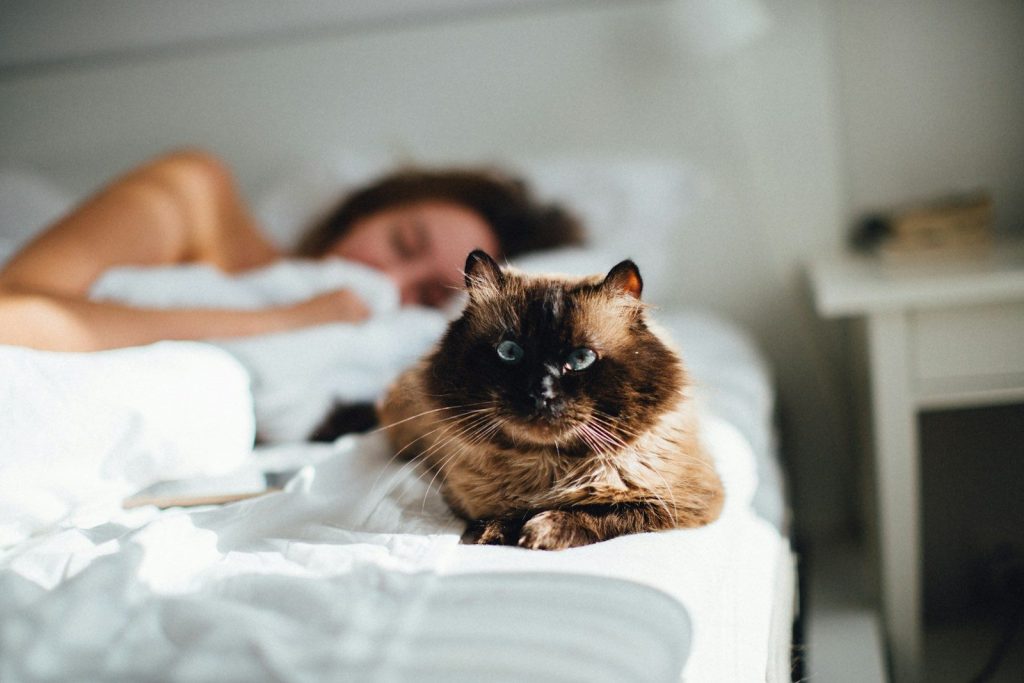
With clear boundaries, you can enjoy the best of both worlds. You will wake up feeling refreshed while your cat rests happily nearby. Protecting your sleep quality ensures you have the energy to care for your beloved companion for years to come.
Featured Image: Photo by Felippe Lopes on Unsplash