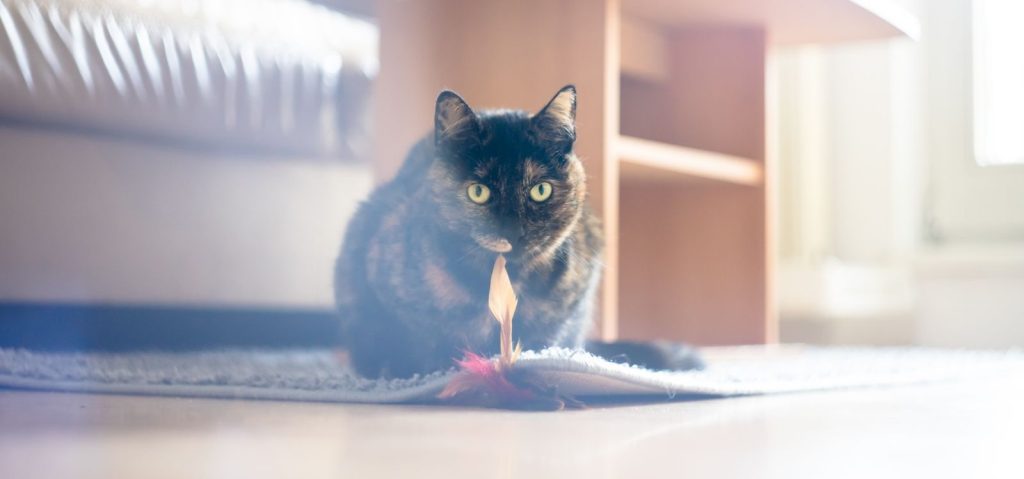

A cat staring at a target, lowering its body, and pausing before jumping can look as though it is carefully calculating danger. In many cases, however, this is normal stalking or play behavior. Cats naturally watch movement, position their bodies, and prepare their hind legs before making a pounce.
The full body tells you whether the cat is playing or feeling threatened. Relaxed stalking looks different from defensive aggression, which may include flattened ears, tension, hissing, growling, or attempts to escape. A dramatic pause before jumping does not mean the cat is literally calculating a threat level.
Eyes Track Movement

Cats are strongly attracted to movement, which is why a toy, insect, or small object can quickly capture their attention. During predatory-style play, kittens commonly stalk, chase, pounce, bite, and claw at things that behave like prey. A fixed stare can therefore be part of normal hunting practice rather than a sign that the cat feels threatened. The key is context: a loose, playful body focused on a moving toy is very different from a rigid cat staring at another animal while also showing defensive signals.
The Body Drops Low

Crouching helps a cat prepare for a fast, controlled launch. During normal stalking, the body often lowers close to the floor while the cat watches the target and waits for a useful moment to move. Kittens practice this posture repeatedly during play, building coordination and hunting-related skills. A low body position alone does not prove aggression. If the cat is also flattening its ears, hissing, puffing its fur, or trying to retreat, the crouch is more likely connected to fear or defensive behavior and should be given space.
Ears Show the Context
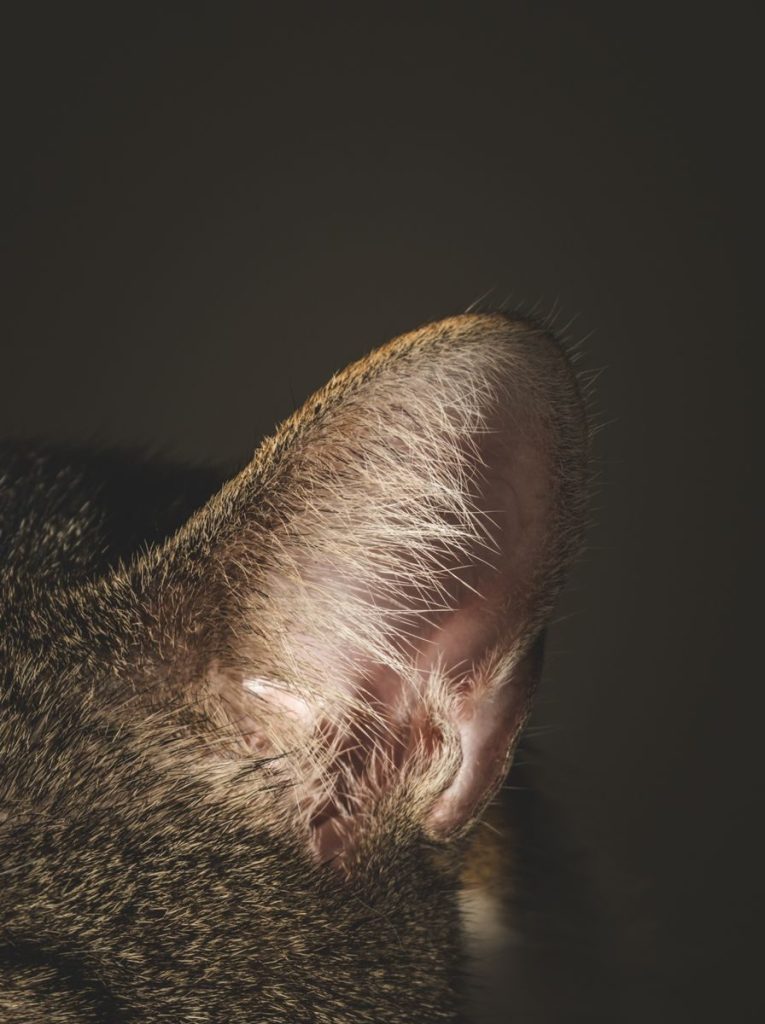
Ear position can help separate playful focus from discomfort. A curious cat may keep its ears forward while watching something interesting, whereas flat or strongly turned-back ears are commonly associated with stress or fear. No single ear position should be interpreted in isolation, because cats move their ears constantly to follow sounds. When flattened ears appear together with wide pupils, a tense body, hissing, or retreat, the message is clearer: the cat is uncomfortable. At that point, creating distance is safer than continuing to approach or touch it.
The Tail Adds Clues
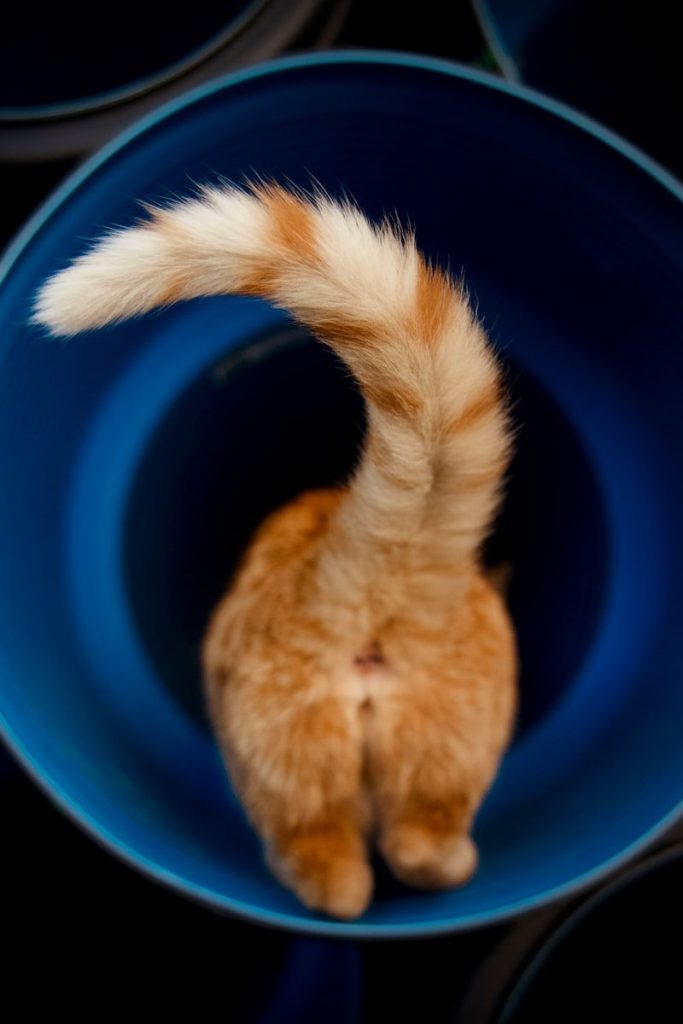
Tail movement adds useful context to the pre-pounce stare. A slowly moving tail can appear when a cat is focused or preparing to spring, while fast, forceful swishing can accompany agitation or frustration. Because tail signals change with context, owners should look at the ears, posture, eyes, and surrounding situation too. A cat stalking a wand toy may move its tail while remaining relaxed. A cat facing another animal with a stiff body, flattened ears, and rapid tail lashing is communicating something very different and should not be pressured closer.
Hind Legs Prepare

Many cats briefly shift or wiggle their hindquarters before they pounce. Cats Protection notes several plausible explanations, including adjusting balance, checking the stability of the ground, and preparing the muscles for a powerful jump. These explanations are possibilities rather than a single proven reason for every wiggle. What can be observed is that the movement occurs immediately before some launches and helps position the rear legs. Not every cat wiggles before pouncing, and skipping that step does not suggest anything is wrong with the animal.
Distance Shapes the Pounce

A cat needs to place its body within a useful range before a successful pounce. That is why stalking often includes pauses, slow steps, and changes in position as the target moves. The behavior can look highly calculated because the cat may freeze when the target stops and move again when it becomes active. It is reasonable to describe this as positioning for a jump, but not to claim that the cat is measuring an exact danger score. The visible behavior shows preparation and orientation; the cat’s precise internal thought process cannot be known.
Play Attacks Look Different

Play pounces can look intense because normal feline play includes stalking, jumping, grabbing, biting, and clawing. With toys, the target is obviously inanimate, but play between cats can be harder to judge. Healthy play is generally more reciprocal, with pauses and role changes, while serious fighting tends to include greater tension, hostile vocalizing, and attempts by one cat to escape. If a kitten repeatedly attacks hands or ankles, redirecting the behavior toward wand toys or other safe moving targets helps preserve normal play without teaching the cat to use people as prey.
Defensive Attacks Need Space

A defensive cat may also stare and crouch before striking, but its other signals usually show discomfort. Flattened ears, a tense body, hissing, growling, wide eyes, or attempts to hide indicate that the cat wants more distance. If those warnings appear, stop approaching and leave an escape route open. Do not test how close you can get before the cat reacts. Sudden new aggression can also be linked to pain or illness, so repeated defensive behavior that is unusual for the individual cat deserves veterinary attention rather than punishment.
Featured Image: Photo by Andreas N. on Pexels